Beomeosa Temple and Geumjeongsan
A mountain temple on Line 1, the fortress walls above it, goat bulgogi in Sanseong Village and the Dongnae hot springs
Intro
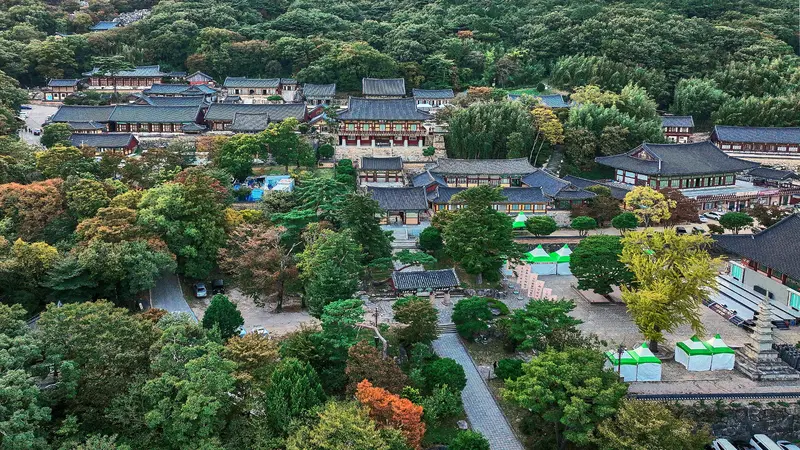
Beomeosa is a large mountain temple on the lower slopes of Geumjeongsan, the mountain on the northern edge of Busan, reached by subway and a short bus ride from central Busan. Founded in 678, it is counted with Haeinsa and Tongdosa as one of the three great temples of the Yeongnam region, and it runs a temple stay that the national Templestay website lists as one for foreigners. Above the temple, the walls of Geumjeongsanseong Fortress run along the ridges for more than 18 km. Inside them sits Sanseong Village, where Korean hikers eat black goat bulgogi and drink the village’s own makgeolli after a walk. On the southern side of the mountain, a 1966 cable car climbs from Geumgang Park, and at its foot is Oncheonjang, the Dongnae hot spring area, with the large Hurshimchung bath and a free foot bath.
Geumjeongsan became Korea’s 24th national park in 2026: 66.859 km² across seven cities and districts of Busan and Yangsan, according to the Korea National Park Service. All of the places on this page are on Busan Metro Line 1, at Beomeosa and Oncheonjang stations, or a bus ride from them. If you only want to see the temple, half a day is enough. Adding the walk to the fortress and a meal in the village takes most of a day.
Beomeosa Temple
The temple’s name comes from a legend of a golden fish that came down from the sky on five-colored clouds to play in a golden well (geumsaem); the mountain, Geumjeongsan (“golden well mountain”), takes its name from the same well. Founded by the monk Uisang in 678, Beomeosa was burned during the Japanese invasions of the 1590s and rebuilt in 1613. When Geumjeongsanseong Fortress was built in 1703, it became the headquarters of the monk soldiers who guarded the walls. In 1919 the temple led a protest during the March First independence movement, known as the Beomeosa Hangnim uprising. Today it is the head temple of the 14th district of the Jogye Order.
Tongdosa, another of the three great temples of the Yeongnam region, is a day trip from Busan by intercity bus from Nopo; see Day Trips from Busan: Tongdosa Temple and Gimhae.
From the bus stop you walk up through a sequence of gates, as the temple’s own guide lists them: the One Pillar Gate (Jogyemun), the Gate of the Four Heavenly Kings, the Gate of Non-duality and Bojeru pavilion, then the bell pavilion, the three-story stone pagoda and the Main Buddha Hall. The Templestay website lists the One Pillar Gate, the pagoda and the Main Buddha Hall (built in 1614) as National Treasures. Admission is free and the grounds are open from 8:00 to 17:00 every day. The Seongbo Museum, the temple’s museum of Buddhist heritage, is open from Tuesday to Sunday (9:30 to 17:00).
For the shuttle bus’s return times from the temple, check the temple’s official directions page (Korean) before you go.
Temple stay
Participants sleep in the Seon Culture Training Center, 800 m from the main temple. The Templestay website lists two programs in English for 2026: a Relaxation Templestay (70,000 won per night for adults), with a forest walk and temple tour on the first afternoon, and an Experiential Templestay on weekends (100,000 won), with services and 108 prostrations. There are no programs on Mondays and Tuesdays, and you need to book at least 2 days ahead on the English Templestay website; you can pay by bank transfer, or in cash on arrival if you ask for it in a message when you book. The relaxation program only runs when at least 5 people have signed up, Korean participants included, so book early and keep your dates flexible.
Rooms are shared and separated by sex, with no single rooms. Check in by 14:00. On the relaxation program, the dawn service at 4:30 and the evening service are optional; dinner is at 17:00 and check-out at 9:30 the next morning.
Walking routes on Geumjeongsan
Geumjeong District lists ten trails on the mountain. These are the ones that link the places on this page, with distances from official sources where they exist.
- Beomeosa to the North Gate: Geumjeong District’s No. 2 trail, from behind the temple entrance to the North Gate: 1.45 km, about 40 minutes by the district’s guidebook. The Korea National Park Service gives Beomeosa, the North Gate and Godangbong as its “Beomeosa course”.
- North Gate to Godangbong: 1 km by the signpost at the gate, in a November 2026 blog post. Godangbong (801.5 m) is the main peak of Geumjeongsan.
- North Gate to Sanseong Village: no official distance or time. The signpost at the North Gate gives 3.2 km to Geumseong-dong, the neighborhood that includes the village. One November 2026 blog post walked it the other way, from the bus 203 terminus at Jukjeon village up to the North Gate, in about 1 hour 20 minutes including breaks, then on down to Beomeosa: about 6 km in all, from 9:24 to 12:10.
- Cable car to the South and East Gates: from the upper cable car station, the South Gate is about 1.1 km by the signpost, and the East Gate 2.1 km beyond it. One November 2026 blog post went from the cable car past the South Gate and along the walls to the East Gate in about 2 hours 30 minutes.
- The long walk: Busan’s Galmaetgil route 7-2 runs 13 km from the East Gate past Uisangbong and the North Gate to Beomeosa and on to Sanghyeon village. Busan City gives it as 4 to 5 hours, of medium difficulty.
The trails are rocky in places. Wear proper shoes, carry water and start down in good time; the days are short in late autumn.
Sanseong Village: goat bulgogi and makgeolli
Sanseong Village is a cluster of three hamlets in a high basin inside the fortress walls, about 400 m above sea level. Most visitors come for the food: black goat bulgogi (heukyeomso bulgogi), marinated and grilled straight over charcoal, which Geumjeong District calls a food designated by Busan City, and duck, either grilled or boiled with medicinal herbs (ori baeksuk). Wash it down with Geumjeongsanseong makgeolli, brewed in the village.
Portions are the thing to watch. At Cheongsachorong, goat bulgogi is sold by the 500 g (90,000 won), a dish for sharing. If you are one or two, Changnyeongjip sells fresh duck on the charcoal grill by the person (23,000 won), and pajeon (15,000 to 20,000 won) and makgeolli (4,000 won a bottle at Changnyeongjip) round out a meal. Menus in English have not been confirmed; the Korean names are on the cards. The brewery, open 8:30 to 18:00 daily, sells bottles to take away.
Bus 203 runs from the Oncheonjang Station bus stop up to the village (Geumseong-dong Community Center stop, 금성동주민센터, and the terminus at Jukjeon village, 죽전마을), passing the Sanseong Pass stop by the South Gate on the way. The same bus takes you back down.
Oncheonjang: the cable car and the Dongnae hot springs
Geumgang Park is a free park at the foot of the mountain, about 15 minutes on foot from Oncheonjang Station. Its cable car, opened in 1966, is still running: in November it runs from 10:00 (9:30 on weekends) to 17:30, and costs 11,000 won round trip for adults. It is closed on Mondays.
Hurshimchung, about 9 minutes from Exit 5 of Oncheonjang Station, is Oncheonjang’s biggest bath: 15,000 won on weekdays and 18,000 won on weekends, open from 5:30 to 22:00 (last entry 21:30), so it works after a day on the mountain. Its rules do not allow anyone with tattoos. If you have tattoos, or no time, the free open-air foot bath is 10 minutes from the same exit, but it is open only from 10:00 to 17:00, Wednesday to Sunday.
Autumn colors and when to go
In the southern mountains of Korea, autumn colors usually peak in early November, later than in the north. The Korea Forest Service publishes a forecast map of peak colors, but it gives no separate date for Busan or Geumjeongsan.
Go on a Wednesday to Sunday if you can. On Mondays the cable car, the temple museum, the foot bath and the temple stay are all closed; on Tuesdays the foot bath and the temple stay. Beomeosa opens at 8:00; the foot bath closes at 17:00, and Hurshimchung takes its last entry at 21:30.
Getting there
To Beomeosa. Take Line 1 north from Busan Station to Beomeosa Station without changing (zone 2, 1,800 won with a transit card; see Busan Day Courses for fares and paying on the bus). From Exit 5 or 7, walk under 5 minutes to the bus stop in front of BI Mart and take bus 90 to the Beomeosa ticket office stop, about 3.5 km. Bus 90 also runs from the stop outside Exit 2 of Nopo Station, the end of the line. In the morning from Monday to Saturday, the temple’s shuttle bus leaves from Exit 3 of Beomeosa Station at 7:10, 7:40, 8:10, 8:40, 9:10 and 9:40.
To Oncheonjang and Sanseong Village. Oncheonjang Station is on Line 1 too. Hurshimchung and the foot bath are 9 and 10 minutes from Exit 5; Geumgang Park is about 15 minutes on foot from the station. Bus 203 goes up to Sanseong Village from the Oncheonjang Station bus stop.
Bus times. Neither the temple nor Geumjeong District publishes a timetable for bus 90 or bus 203. Check live times in a map app such as Naver Map; see Map Apps in Korea.
Common questions
- How much is Beomeosa’s entrance fee? It is free. The grounds are open from 8:00 to 17:00 every day.
- How do I get to Beomeosa by bus? Line 1 to Beomeosa Station, then bus 90 from the stop in front of BI Mart, near Exit 5 or 7, to the Beomeosa ticket office stop. In the morning from Monday to Saturday, the temple shuttle leaves from Exit 3.
- Can foreigners do a temple stay at Beomeosa? Yes. The Templestay website lists it as a temple for foreigners, with English pages for a relaxation stay (70,000 won a night) and a weekend program (100,000 won). Book on the English Templestay website at least 2 days ahead; no programs on Mondays and Tuesdays.
- Can I hike from Beomeosa to Geumjeongsanseong Fortress? Yes. The trail from behind the temple entrance to the North Gate is 1.45 km, about 40 minutes by Geumjeong District’s guidebook, and Godangbong is 1 km further.
- Is the Geumgang Park cable car running? Yes. Busan Facilities Corporation lists hours and fares and no suspension notice; it is closed on Mondays. In November it runs from 10:00 (9:30 on weekends) to 17:30, 11,000 won round trip.
- Where do I buy Geumjeongsanseong makgeolli? At the brewery in Sanseong Village, 8:30 to 18:00 daily, and in the village restaurants (4,000 won a bottle at Changnyeongjip).
- How much is Hurshimchung? 15,000 won on weekdays and 18,000 won on weekends and public holidays for adults; the jjimjilbang is 4,000 won extra. No tattoos.
- Is there a free foot bath in Busan? Yes, the Dongnae open-air foot bath in Oncheonjang, 10:00 to 17:00, Wednesday to Sunday.
- When are the autumn colors at Beomeosa? In the southern mountains they usually peak in early November. The Korea Forest Service’s forecast map gives no separate date for Busan or Geumjeongsan.
- Is Geumjeongsan a national park? Yes, since 2026, Korea’s 24th.
Practical information
- Tattoos: Hurshimchung does not allow anyone with tattoos into its baths.
- Shoes and daylight: the trails to the fortress are rocky; bring water and finish before dark.
- Booking: nothing on this page needs a booking except the temple stay (English Templestay website) and the brewery’s classes for groups. The Sanseong Village restaurants on this page take walk-ins.
- Where to stay: the temple stay is the only overnight option on this page. Otherwise stay in Seomyeon or near Busan Station on Line 1; see Where to stay in Busan.
- Nearby: Choryang and the Busan Station area, where the Line 1 ride to Beomeosa starts. For a temple by the sea, see Haedong Yonggungsa. Back to the Busan guide.
Get There
-
Beomeosa StationBusan Metro Line 1
- Korean
- 범어사역
- Exit
- Exit 5 or 7 (bus 90), Exit 3 (temple shuttle)
- Walk
- 5 min
For Beomeosa Temple. From Exit 5 or 7, walk under 5 minutes to the stop in front of BI Mart and take bus 90 to the Beomeosa ticket office stop (범어사매표소), about 3.5 km. In the morning from Monday to Saturday, the temple's own shuttle bus leaves from Exit 3. Line 1 runs here from Busan Station without changing.
-
Nopo StationBusan Metro Line 1
- Korean
- 노포역
- Exit
- Exit 2
- Walk
- unconfirmed
The end of Line 1. Bus 90 to Beomeosa also leaves from the stop outside Exit 2.
-
Oncheonjang StationBusan Metro Line 1
- Korean
- 온천장역
- Exit
- Exit 5
- Walk
- 9 min
For the Dongnae hot springs: Hurshimchung is 539 m (about 9 minutes) and the open-air foot bath 628 m (about 10 minutes) from Exit 5. Geumgang Park is about 15 minutes on foot from the station; the cable car station is inside the park. Bus 203 to Sanseong Village leaves from the Oncheonjang Station bus stop.
Hours & Fees
- Subway
- 1,600 won with a transit card for zone 1 (up to 10 km) or 1,800 won for zone 2. Busan Station to Beomeosa Station is zone 2, 1,800 won
- Buses 90 and 203
- Neither the temple nor the district publishes a timetable. Check live times in a map app such as Naver Map before you set off
- Mondays
- Closed: Geumgang Park cable car (closed the next day instead when Monday is a public holiday), Beomeosa Seongbo Museum, the Dongnae open-air foot bath, the Beomeosa temple stay and Cheongsachorong
- Tuesdays
- Closed: the Dongnae open-air foot bath and the Beomeosa temple stay
Places by area
Beomeosa
-
Beomeosa Temple
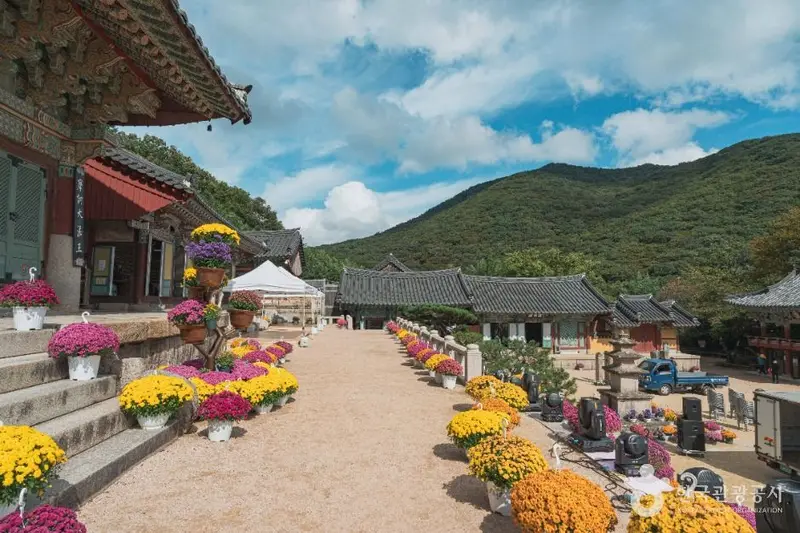
A large Buddhist temple on the lower slopes of Geumjeongsan in the north of Busan, reached by Line 1 and a short bus ride. It was founded in 678 by the monk Uisang and is counted with Haeinsa and Tongdosa as one of the three great temples of the Yeongnam region. It burned during the Japanese invasions of the 1590s and was rebuilt in 1613. After Geumjeongsanseong Fortress was built in 1703, Beomeosa was the headquarters of the monk soldiers who guarded it. The Templestay website lists three National Treasures here: the One Pillar Gate, a three-story stone pagoda and the Main Buddha Hall (1614). The trail to the fortress's North Gate starts behind the temple; see Walking routes on Geumjeongsan.
- Hours
- 8:00 to 17:00 daily
- Admission
- Free
- Bus 90
- From the stop in front of BI Mart, under 5 minutes on foot from Exit 5 or 7 of Beomeosa Station, to the Beomeosa ticket office stop, about 3.5 km. Also from Exit 2 of Nopo Station. Timetable unconfirmed
- Temple shuttle
- From Exit 3 of Beomeosa Station, Monday to Saturday at 7:10, 7:40, 8:10, 8:40, 9:10 and 9:40, with extra runs on some Buddhist observance days. Times vary with traffic
- Seongbo Museum
- The temple's museum of Buddhist heritage: Tuesday to Sunday 9:30 to 17:00, last entry 16:30, closed on Mondays. Admission unconfirmed. 051-508-2200 (Korean)
- Phone
- 051-508-3122 (temple office, Korean)
Foreigner access
- Korean name
- 범어사
- Booking
- None needed to visit
- English
- Signs: unconfirmed · Staff: Partly
An English guide is available on request in advance, and the temple has an English website.
-
Beomeosa Temple Stay
An overnight stay at Beomeosa, which the national Templestay website marks as a temple for foreigners. Two programs are listed in English for 2026: a relaxation stay with a walk in the forest and a temple tour, and a weekend experience program with Buddhist services and 108 prostrations. Rooms are in the Seon Culture Training Center, 800 m from the main temple, not inside it. Men and women sleep in separate shared rooms (2 to 3 or 4 to 8 people); there are no single rooms. Check in by 14:00; on the relaxation program, dinner is at 17:00 and the next day starts with the 4:30 dawn service (optional) and ends with check-out at 9:30.
- Relaxation Templestay
- 70,000 won per night for adults, 60,000 won for teenagers, 50,000 won for children. Runs when there are at least 5 participants in all, Korean participants included; if not, you are told at least 3 days ahead
- Experiential Templestay (Weekends)
- 100,000 won per night for adults, 90,000 won for teenagers, 80,000 won for children
- Days
- No programs on Mondays and Tuesdays. Ages 5 and over. Book at least 2 days before the start date
- Payment and refunds
- Bank transfer, or cash on arrival if you leave a message asking for it when you book. Refunds: 100% up to 3 days before, 70% 2 days before, 50% 1 day before, none on the day
- Contact
- beomeosa@templestay.com, 051-508-5726. Enquiries Wednesday to Saturday 9:00 to 17:00 and Sunday 9:00 to 12:00
Foreigner access
Google Maps for Beomeosa Temple Stay Naver Map: unconfirmed- Korean name
- 범어사 선문화교육관
- Booking
- Book on the English Templestay website (templestay.com), which offers guest booking without signing up
Korean phone number needed: unconfirmed - English
- Signs: unconfirmed · Staff: Partly
Beomeosa is listed by the Templestay website as a temple for foreigners, and both programs have English pages.
The fortress and Sanseong Village
-
Geumjeongsanseong Fortress and the North Gate
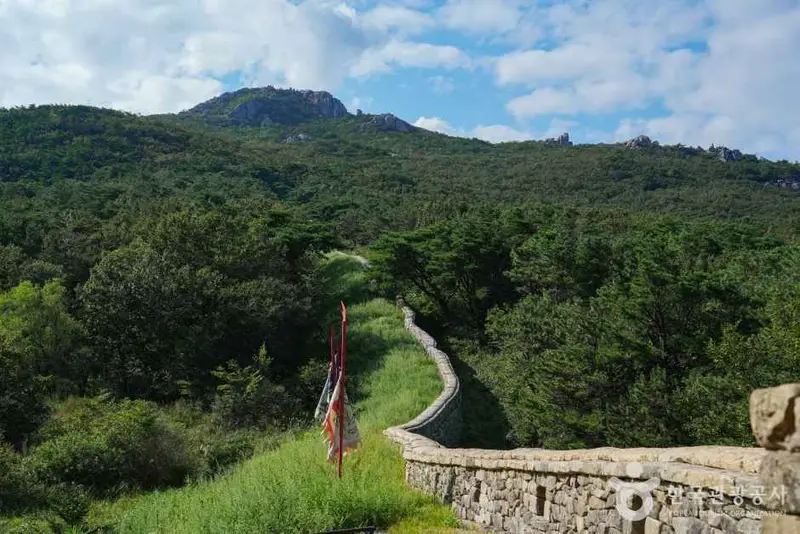
Geumjeongsanseong is the largest mountain fortress in Korea, by Geumjeong District's count: 18,845 m of walls around about 8.2 km² of the mountain, with four gates and four watchtowers. The present walls date from 1703. The North Gate (Bukmun) is the smallest and plainest of the four gates, 1.6 km west of Beomeosa. The open ground in front of it is called Hwaeombeol, where the monk Wonhyo is said to have preached and where monk soldiers once trained. From the gate, paths lead on to Godangbong, the 801.5 m main peak of Geumjeongsan, and down to Sanseong Village; see Walking routes on Geumjeongsan.
- Hours
- Open at all times
- Admission
- Free
- From Beomeosa
- The district's No. 2 trail, from behind the temple entrance to the North Gate: 1.45 km, about 40 minutes
- To Godangbong
- 1 km from the North Gate by the signpost there, in a November 2026 blog post
Foreigner access
Google Maps for Geumjeongsanseong Fortress and the North Gate Naver Map: unconfirmed- Korean name
- 금정산성 북문
Foreigner access details not yet confirmed
-
East and South Gates
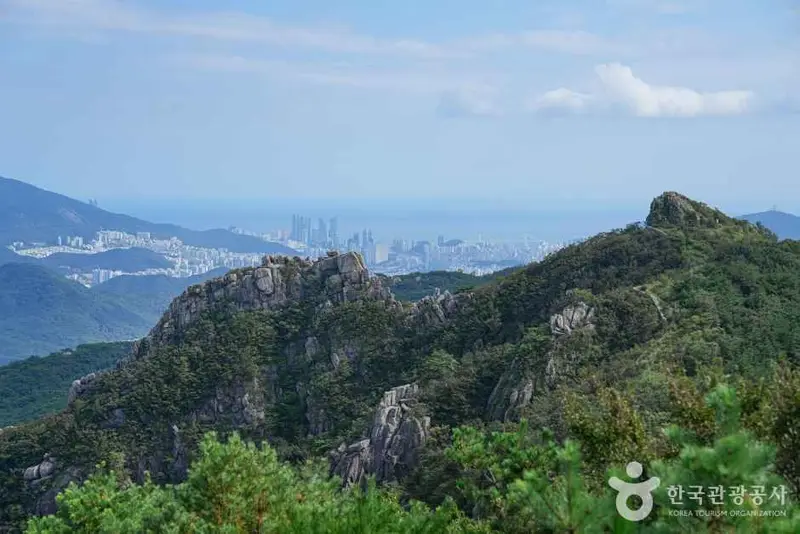
The southern stretch of the fortress walls, reached most easily by the Geumgang Park cable car. The East Gate stands on a 415 m pass and was finished in one month in late autumn 1807; it is the largest of the four gates, with an arched opening and a pavilion on top. The South Gate's pavilion was finished in 1808, facing Godangbong to the north. By the signposts, the South Gate is about 1.1 km from the upper cable car station and 2.1 km from the East Gate.
- Hours
- Open at all times
- Admission
- Free
- Walking times
- From the upper cable car station by the South Gate and along the walls to the East Gate took about 2 hours 30 minutes in a November 2026 blog post
Foreigner access
- Korean name
- 금정산성 동문
Foreigner access details not yet confirmed
-
Sanseong Village
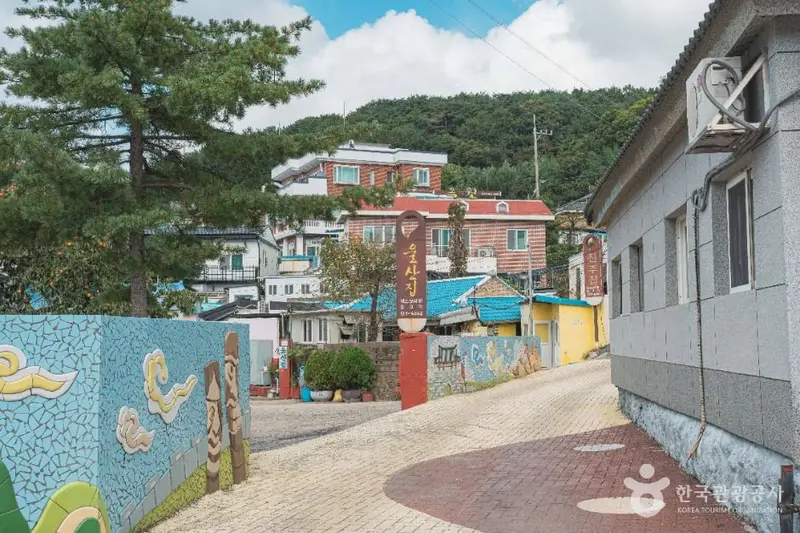
A farming village inside the fortress walls, in a basin about 400 m up the mountain, where hikers come down from the trails to eat. It is known for black goat bulgogi, marinated and grilled straight over charcoal, which the district calls a food designated by Busan City, and for Geumjeongsanseong makgeolli, brewed in the village. Dozens of restaurants serve goat, duck bulgogi and duck boiled with herbs (ori baeksuk). It is on average 2 to 3 degrees cooler than the city.
- Hours
- Each restaurant sets its own
- Getting there
- Bus 203 from Oncheonjang Station to the Sanseong Village stops (Geumseong-dong Community Center, 금성동주민센터, or the terminus at Jukjeon village, 죽전마을). Or walk down from the North Gate
Foreigner access
- Korean name
- 금정산성마을
Foreigner access details not yet confirmed
-
Geumjeongsanseong Makgeolli Brewery
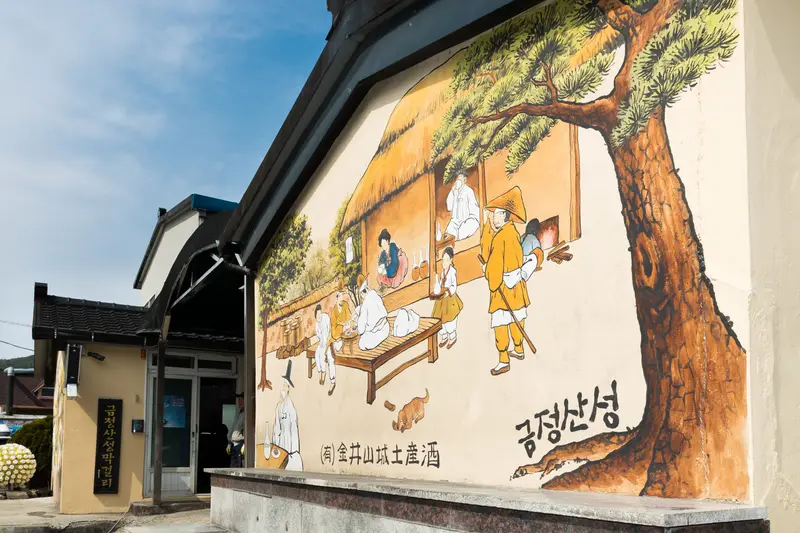
The brewery of the village's own rice wine. The Korea Tourism Organization says its nuruk (fermentation starter) is still made by treading with the feet, that its brewer was the first food master (sikpum myeongin) named for makgeolli in Korea, and that it is the only makgeolli designated as a local folk liquor. Bottles are sold at the brewery, at a discount on site, and groups can book hands-on classes.
- Hours
- 8:30 to 18:00 daily
- Classes
- Treading nuruk 10,000 won, brewing makgeolli 20,000 won, straining makgeolli 15,000 won, for groups of 5 or more by booking (Korea Tourism Organization)
- Phone
- 051-517-0202 (Korean)
Foreigner access
Google Maps for Geumjeongsanseong Makgeolli Brewery Naver Map for Geumjeongsanseong Makgeolli Brewery- Korean name
- 금정산성막걸리
- Booking
- Walk in to buy. Classes for groups of 5 or more are booked by phone
- English
- Signs: unconfirmed · Staff: unconfirmed
-
Changnyeongjip
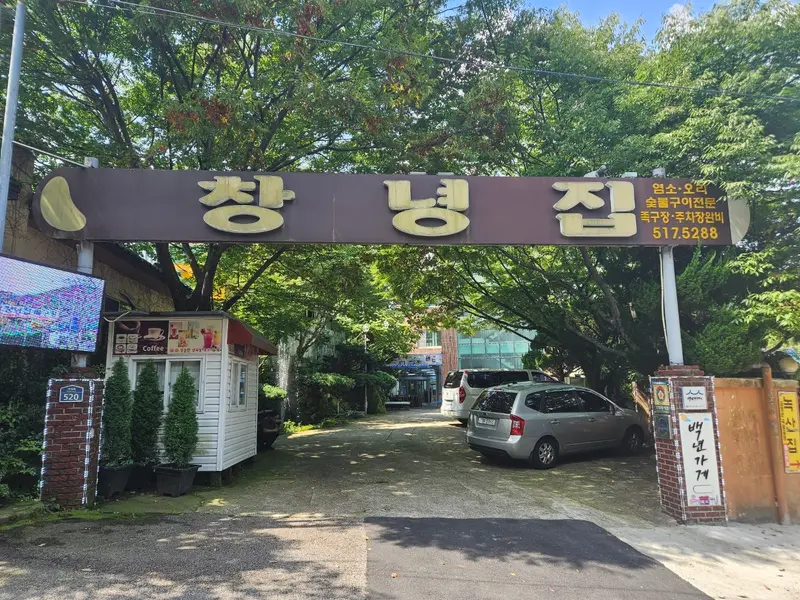
A charcoal grill restaurant for goat and duck in Sanseong Village, on Geumjeong District's list of village restaurants. Fresh duck is sold by the person (23,000 won), so it works for one or two people as well as for groups; black goat is grilled over charcoal too. Order Geumjeongsanseong makgeolli with it. A Korean hiker's June 2026 blog post ends a walk from the cable car past the South Gate with duck and makgeolli here.
- Hours
- 10:00 to 22:00 daily
- Prices
- Native black goat charcoal grill 45,000 won, fresh duck charcoal grill 23,000 won per person, herbal duck baeksuk 55,000 won, pajeon (green onion pancake) 15,000 won, muk (acorn jelly) 10,000 won, Sanseong makgeolli 4,000 won
Foreigner access
- Korean name
- 금정산성 창녕집
- Booking
- Walk-in
- English
- Menu: unconfirmed · Signs: unconfirmed · Staff: unconfirmed
- Queue app
- none
-
Cheongsachorong
A black goat bulgogi restaurant next door to the makgeolli brewery, on Geumjeong District's list of village restaurants for goat bulgogi. Goat and duck are sold by the 500 g, and it also serves raw goat (yukhoe).
- Hours
- 10:00 to 20:00, Tuesday to Sunday. Closed on Mondays, but open when Monday is a public holiday
- Prices
- Black goat bulgogi 90,000 won for 500 g, goat yukhoe 50,000 won for 250 g, duck bulgogi 50,000 won for 500 g, duck baeksuk 55,000 won, pajeon 20,000 won, rice 3,000 won
Foreigner access
- Korean name
- 청사초롱
- Booking
- Walk-in
- English
- Menu: unconfirmed · Signs: unconfirmed · Staff: unconfirmed
- Queue app
- none
Oncheonjang (Dongnae Hot Springs)
-
Geumgang Park Cable Car
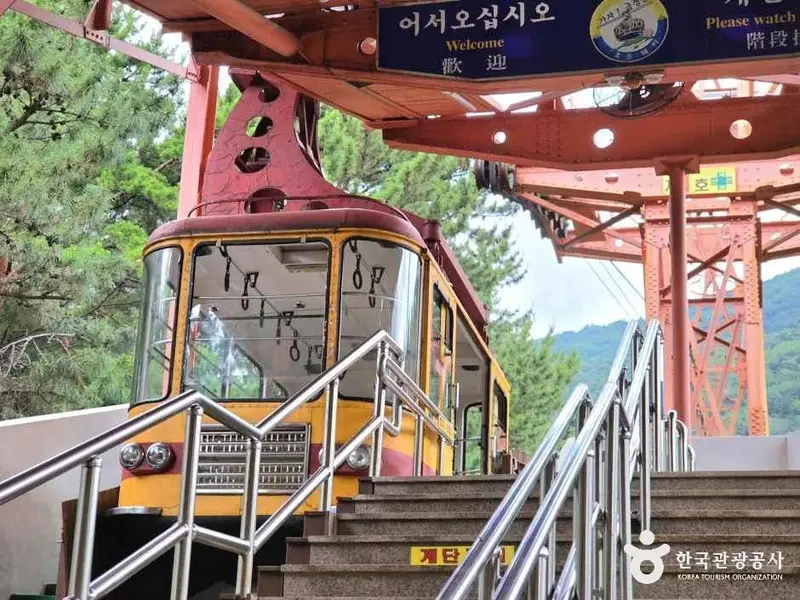
A cable car that opened in September 1966 and climbs 1,260 m from Geumgang Park to the ridge of Geumjeongsan at 540 m in about 6 minutes. It is the way up for walkers who want the fortress walls without the climb: from the upper station, the South Gate is about 1.1 km by the signpost. The boarding station is in the building to the left of Geumgang Gymnasium, inside the park. Entry to Geumgang Park has been free since 2004.
- Hours in November
- Weekdays 10:00 to 17:30, weekends 9:30 to 17:30
- Hours from December to February
- Weekdays 10:00 to 17:00, weekends 9:30 to 17:30
- Hours from March to October
- Weekdays 9:30 to 17:30, weekends 9:30 to 18:00
- Closed
- Mondays (the next day when Monday is a public holiday). Hours may change with the weather
- Fares
- Adults and teenagers 11,000 won round trip, 7,000 won one way. Children (age 4 to elementary school) 8,000 won round trip, 5,000 won one way. Seniors and people with disabilities (grades 1 to 3) 9,000 won round trip, 6,000 won one way. No group discount
- Phone
- 051-552-1761 (Korean)
Foreigner access
- Korean name
- 금강공원 케이블카
- Booking
- Buy tickets at the station
Korean phone number needed: No - English
- Signs: Partly · Staff: unconfirmed
The station building carries the words ROPEWAY STATION in English.
-
Hurshimchung
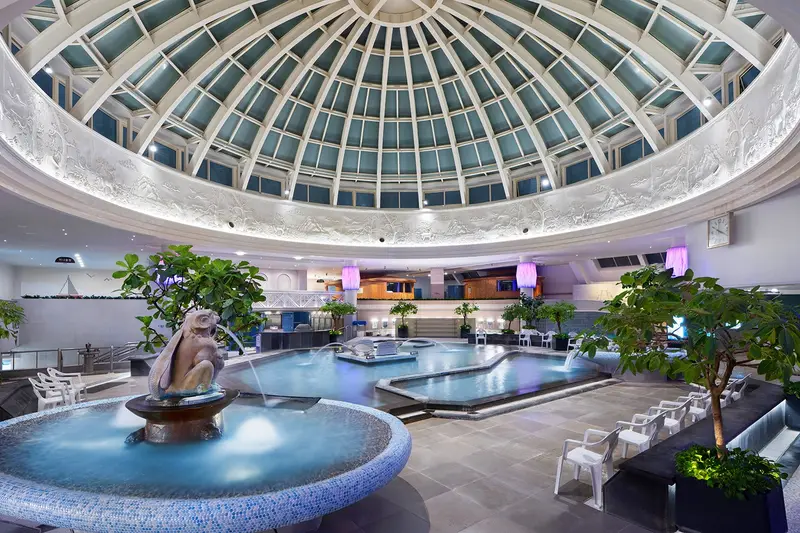
No tattoos: the spa's rules say people with tattoos or skin conditions may not enter. Hurshimchung is the big hot spring bath of Dongnae, opened in October 1991 and run by Hotel Nongshim: 4,300 m² of baths for up to 3,000 people at once, with more than 40 kinds of bath, among them a cave bath and an open-air bath. The Dongnae spring water is alkaline and slightly salty, 46 to 60 °C. Lockers and the front desk are on the 4th floor, the baths (separate for men and women) on the 5th and the jjimjilbang (sauna rooms) on the 3rd. You pay on the way out. The spa's website has a bathing guide in English.
- Hours
- Baths 5:30 to 22:00, last entry 21:30, open every day. Jjimjilbang 6:30 to 21:00
- Admission
- Middle school age and over 15,000 won on weekdays, 18,000 won on weekends and public holidays. Elementary school children 11,000 won (weekends 12,000 won). Ages 12 months to preschool 7,000 won. Jjimjilbang (with gown) 4,000 won extra
- Time limits
- 4 hours for the baths, 6 hours with the jjimjilbang, 7 hours at most; 2,000 won for each extra hour
- Children
- Only children aged 48 months or under and shorter than 100 cm may go into the other sex's bath with a parent
- Phone
- 051-550-2200 (Korean)
Foreigner access
- Korean name
- 허심청
- Booking
- Walk-in
Korean phone number needed: No - English
- Signs: Partly · Staff: unconfirmed
The official website's bathing guide comes in English, Chinese and Japanese versions.
-
Dongnae Hot Spring Open-Air Foot Bath
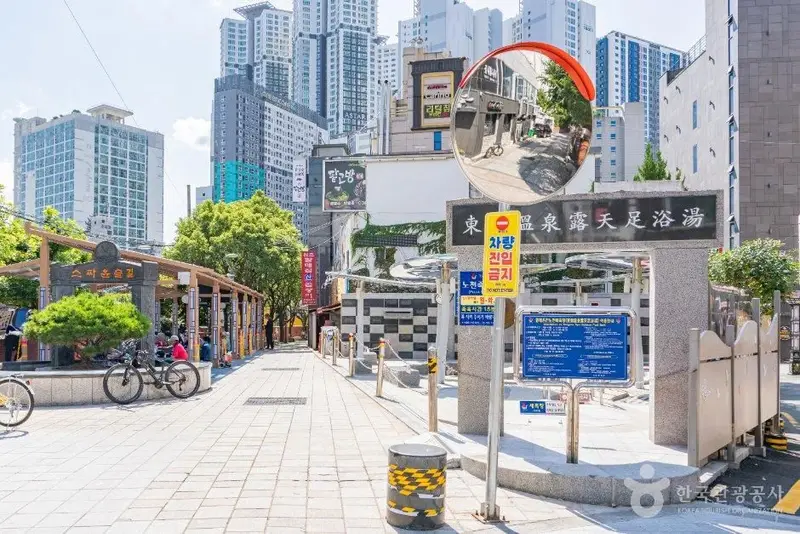
A free foot bath in the middle of Oncheonjang, fed with hot spring water that flows from a dragon's head sculpture. Hurshimchung, Nokcheontang and other large bathhouses are around it. A short stop if you have no time for a full bath, but it closes at 17:00.
- Hours
- 10:00 to 17:00, Wednesday to Sunday. Closed on Mondays, Tuesdays, January 1 and the Seollal and Chuseok holidays
- Admission
- Free
Foreigner access
Google Maps for Dongnae Hot Spring Open-Air Foot Bath Naver Map for Dongnae Hot Spring Open-Air Foot Bath- Korean name
- 동래온천 노천족욕탕
Foreigner access details not yet confirmed
Hotels
Experiences
Sources
- Beomeosa: temple history, buildings and contact numbers (Korean) (accessed 2026-11-14)
- Beomeosa: directions, bus 90 and the temple shuttle timetable (Korean) (accessed 2026-11-14)
- Templestay: Beomeosa, temple for foreigners and its National Treasures (accessed 2026-11-14)
- Templestay: Beomeosa Relaxation Templestay (prices, rules, schedule, 800 m from the temple) (accessed 2026-11-14)
- Templestay: Beomeosa Experiential Templestay (Weekends) (prices, cash on arrival, refunds, contact) (accessed 2026-11-14)
- Templestay: Beomeosa relaxation program, bank transfer and enquiry hours (Korean) (accessed 2026-11-14)
- Korea National Park Service: Geumjeongsan National Park (24th national park, 2026, 66.859 km²; Korean) (accessed 2026-11-14)
- Geumjeong District: Geumjeongsanseong Fortress, its gates and history (Korean) (accessed 2026-11-14)
- Geumjeong District: Geumjeong tourist guidebook (PDF, December 2019; trails with distances and times, Sanseong Village, bus 203; Korean) (accessed 2026-11-14)
- Busan City: Galmaetgil route 7-2, East Gate to Sanghyeon village (Korean) (accessed 2026-11-14)
- Korea Forest Service via Korea.kr: 2026 forecast map of peak autumn colors (2026-09-22, Korean) (accessed 2026-11-14)
- Busan Facilities Corporation: Geumgang Park ropeway (cable car) hours and fares (Korean) (accessed 2026-11-14)
- Busan Facilities Corporation: Geumgang Park introduction (free entry since 2004, cable car location; Korean) (accessed 2026-11-14)
- Busan Facilities Corporation: Geumgang Park directions (Korean) (accessed 2026-11-14)
- Hotel Nongshim: Hurshimchung introduction (Korean) (accessed 2026-11-14)
- Hotel Nongshim: Hurshimchung hours, fees and rules, including no tattoos (Korean) (accessed 2026-11-14)
- Busan Transportation Corporation: subway fares and distances (accessed 2026-11-14)
- Korea Tourism Organization (TourAPI): Beomeosa, Geumjeongsanseong Fortress, East Gate, Geumjeongsanseong Village food street, Geumjeongsanseong Makgeolli, Geumgang Park, Hurshimchung, Dongnae Hot Spring Open-Air Foot Bath (Korean; search by name) (accessed 2026-11-14)
- Naver Place: Beomeosa (hours) (accessed 2026-11-14)
- Naver Place: Beomeosa Seongbo Museum (hours) (accessed 2026-11-14)
- Naver Place: Hurshimchung (hours, walk from Oncheonjang Station) (accessed 2026-11-14)
- Naver Place: Dongnae Hot Spring Open-Air Foot Bath (hours, walk from Oncheonjang Station) (accessed 2026-11-14)
- Naver Place: Geumjeongsanseong Makgeolli main brewery (hours) (accessed 2026-11-14)
- Naver Place: Changnyeongjip (hours, menu) (accessed 2026-11-14)
- Naver Place: Cheongsachorong (hours, menu) (accessed 2026-11-14)
- Naver blog: Jukjeon village by bus 203 to the North Gate and down to Beomeosa, with signpost distances (2026-11-07) (accessed 2026-11-14)
- Naver blog: South Gate signpost distances and bus 203 at Sanseong Pass (2026-10-31) (accessed 2026-11-14)
- Naver blog: cable car to the South Gate and along the walls to the East Gate (2026-11-10) (accessed 2026-11-14)
- Naver blog: cable car, South Gate and lunch at Changnyeongjip in Sanseong Village (2026-06) (accessed 2026-11-14)