Yangdong Folk Village
A Joseon clan village where families still live, a World Heritage Site since 2010, reached by bus 203 from Gyeongju
Intro
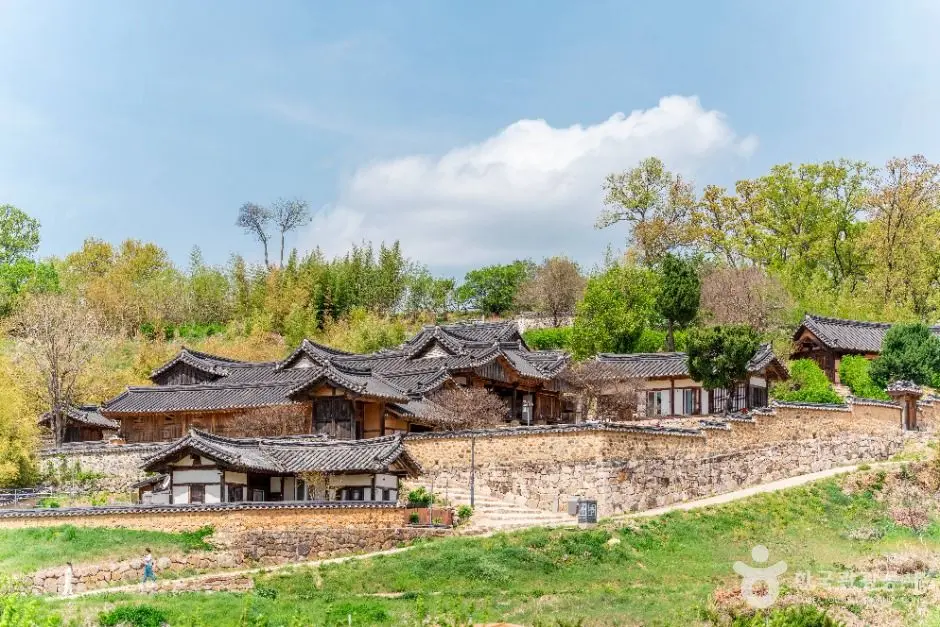
Yangdong is a village from the Joseon era that is still lived in. Two clans, the Son family of Wolseong and the Yi family of Yeogang, have shared it for more than 500 years, with tiled-roof and thatched houses spread over the hills and valleys. It is the largest village of yangban, the Joseon aristocracy, in Korea: 54 houses are more than 200 years old, and the whole village is a national folklore heritage site. On July 31, 2010, the 34th session of the World Heritage Committee in Brasilia listed it with Hahoe in Andong as “Historic Villages of Korea: Hahoe and Yangdong”. Prince Charles visited in 1993.
Yangdong is worth the trip out of Gyeongju if you have a second night: it is a real village, on hills and in valleys rather than laid out for visitors, and a different side of Gyeongju from the Silla tombs and temples in town. Plan around bus 203, which runs about every one to two hours.
What to see
Many houses are lived in and not open to visitors. At the designated heritage houses, such as the head houses (jongtaek) of the two clans, only the outer areas are open, not the inner quarters.
Seobaekdang (Songcheom Jongtaek) is the head house of the Son clan, built by Son So (1433 to 1484). His son Son Jung-don and his grandson through his daughter, the scholar Yi Eon-jeok, were both born here. The inner quarters form a square around a courtyard, and an old juniper tree, several hundred years old, stands behind the men’s quarters.
Mucheomdang is the detached hall of Yi Eon-jeok’s head house, from the mid-Joseon period: an L-shaped building five bays wide, used for receiving guests and reading, where the Yi family keeps his belongings. Its name comes from the pen name of his grandson, Yi Ui-yun.
Hyangdan and Gwangajeong are the other two houses that recent visitors make a point of seeing; one recent visitor walked a clockwise loop from Hyangdan to Gwangajeong, the Jeongchung memorial pavilion and the experience hall.
In summer, recent visitors photograph lotus ponds and pink crape myrtle among the houses. The paths climb between the clusters of houses, with little shade.
Visiting a village where people live
These rules come from the village website:
- Ordinary houses are not open. Do not go into a house or yard without the owner’s permission. At the designated heritage houses, only the outer areas are open, not the inner quarters.
- No bicycles or pets in the village.
- No cooking, camping, littering, or smoking near heritage buildings. Keep your voice down.
- Do not shake buildings or fences, pick flowers or break branches, or sit on the railings of pavilions. Keep children with you.
- No filming with special equipment and no commercial filming without permission.
The Korea Tourism Organization asks visitors to take care not to disturb the people who live in the houses.
Guided tours
Village interpreters lead free tours of about 2 hours at 10:00, 11:00, 13:00, 14:00, 15:00 and 16:00 (none at noon). Sign up at the interpreters’ house in front of the main gate of Yangdong Elementary School, at the start of the village. Tours run in Korean, English, Japanese and Chinese; the village website lists the times for all four languages, and the Korea Tourism Organization says to ask in advance for a foreign-language tour, so call +82-70-7718-0333 before you go. There are no tours on the village’s free days.
When to go
The village is open every day. From October to March the ticket office closes at 17:00, and in November the sun sets at about the same time, so come in the morning or early afternoon. In summer there are lotuses and crape myrtle but little shade on the slopes; bring water. One recent visitor in November 2026 found few autumn colors.
Getting there
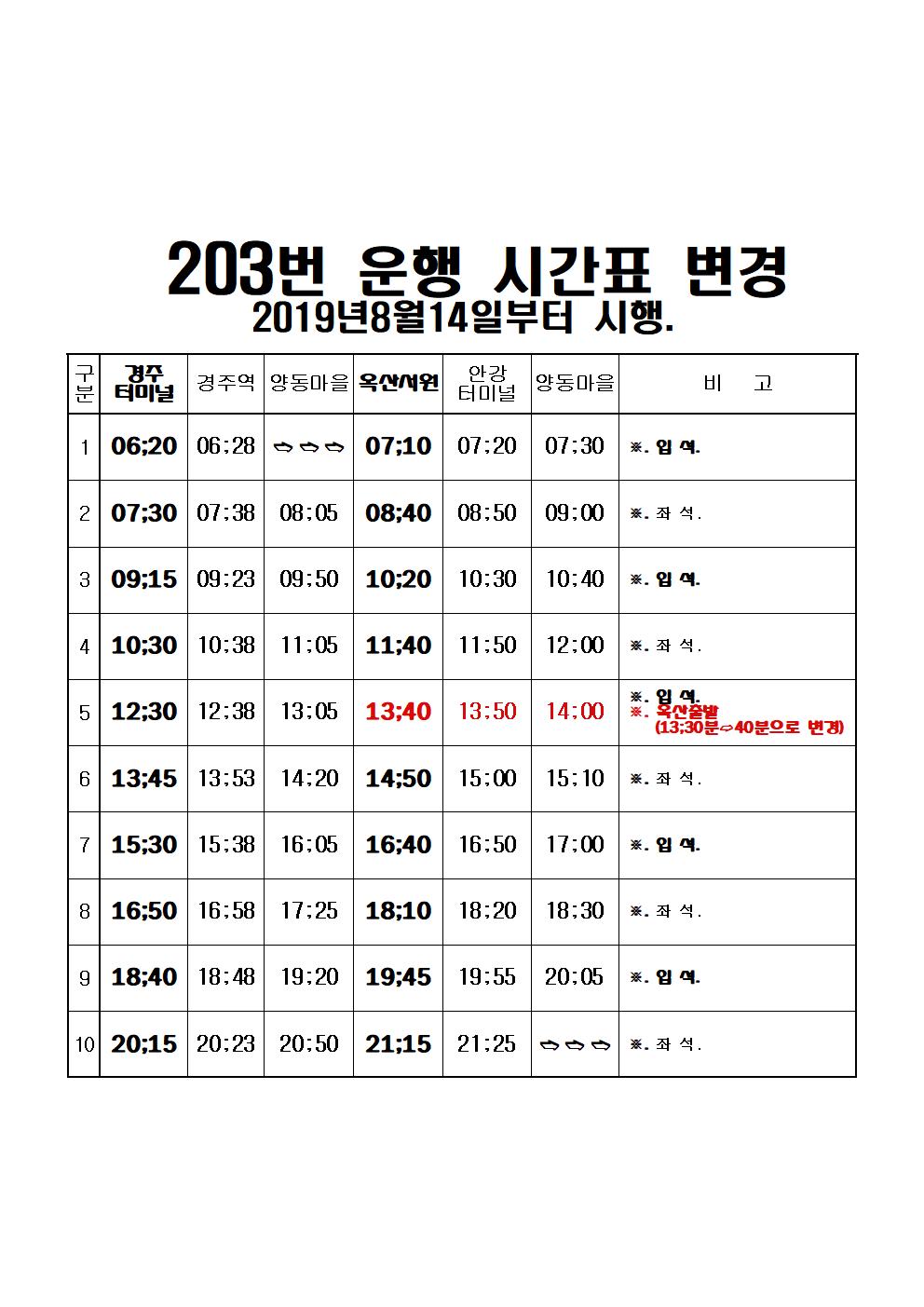
Yangdong is in Gangdong-myeon, north of the city. Bus 203 is the only bus into the village: it starts at the intercity bus terminal in town and reaches the Yangdong Folk Village stop, the village parking lot, in about 35 minutes. Its route continues to Oksan Seowon and Angang and comes back through the village toward town. Times in both directions are in Hours & Fees above; the 6:20 morning bus does not go into the village, and ordinary and seat buses alternate. The timetable posted by the operator dates from August 14, 2019, but a visitor in August 2026 caught the same buses (9:50 into the village, 11:05 on to Oksan Seowon, 12:00 back to town).
Other buses in the 200s (the village website lists 200, 202 to 208 and 212; recent visitors used 207 and 217) leave the bus terminal toward Gangdong and Angang and stop at the Yangdong Village Entrance stop on the main road, about 1.2 km from the village. The village website gives a bus about every 15 minutes across these routes.
From Gyeongju Station (KTX): no bus goes straight to the village. Take bus 50, 51 or 70 to the bus terminal (about 20 minutes) and change to bus 203 there. A change within 30 minutes of tapping off the first bus is free with a transit card.
Fare: 1,500 won per ride, or 1,450 won with a transit card.
Taxi: one recent visitor (September 2026) gives about 22 to 25 minutes and about 30,000 won from the bus terminal, with a suburban surcharge added. To get a taxi back, another visitor asked the desk at the culture center to call one.
The last bus back: bus 203 leaves the village for town at 17:00, 18:30 and 20:05 in the late afternoon and evening. In winter, the 15:30 bus from the terminal (16:05 in the village) is the last that arrives before the ticket office closes.
Half a day at Yangdong
- Take bus 203 at 9:15 from the bus terminal; it reaches the village at 9:50.
- Look round the culture center (closed Mondays), then join the 10:00 or 11:00 guided tour, or walk the village yourself.
- Lunch at Odongnamu Sikdang (11:00 to 17:00) or another restaurant in the village.
- Take bus 203 back to town at 12:00 or 14:00, or on to Oksan Seowon at 13:05.
Don’t confuse the two directions at the stop: one recent visitor missed a bus by reading the timetable for the wrong one.
Experiences and staying the night
The village runs hands-on programs such as rice cake pounding, making yakgwa (honey cookies), wearing hanbok and a hanbok walk through the village (+82-54-762-2633). Some houses take overnight guests: you book each homestay directly with the house, and check-in is from 14:00 to 22:00. Ask about fees when you book.
Nearby
Oksan Seowon: a Confucian academy (seowon) founded in 1572 in honor of Yi Eon-jeok, one of 47 academies that survived when Heungseon Daewongun closed most of them, and part of the World Heritage listing “Seowon, Korean Neo-Confucian Academies” since 2019. Free, open every day from 9:00 to 18:00 (17:00 in winter). It is on the bus 203 route after the village, at the Oksan 2-ri, Oksan Seowon stop; one recent visitor took a taxi between the two in about 15 minutes for 16,500 won.
Common questions
- Can you go inside the houses? Not into private homes, and not without the owner’s permission. At the designated heritage houses only the outer areas are open.
- Yangdong or Hahoe? The two villages share one World Heritage listing. Recent visitors describe Yangdong as spread over hills with more climbing and fewer people, and Hahoe in Andong as flat, in a bend of a river. See Hahoe Village.
- Is Yangdong the same as Gyochon Village? No. Gyochon is a small hanok village in the center of Gyeongju next to Woljeonggyo Bridge, covered in Daereungwon and Hwangnidan-gil. Yangdong is a separate clan village north of the city.
- Is there food at Yangdong? Yes, a few restaurants in the village serve Korean set meals; see the cards above.
Combine with
- Daereungwon and Hwangnidan-gil: bus 203 also stops at Seorabeol Sageori, Hwangnidan-gil on its way back to the terminal.
- Bomun Lake Resort and Bulguksa and Seokguram are on the other side of the city; leave them for another half day.
Back to the Gyeongju guide.
Get There
-
Yangdong Folk Village stopCity bus 203 from the bus terminal (the only bus into the village)
- Korean
- 양동민속마을
- Exit
- unconfirmed
- Walk
- 5 min
The stop is the village parking lot. Recent visitors give about 5 minutes on foot to the ticket office.
-
Yangdong Village Entrance stopOther city buses in the 200s from the bus terminal, such as 200, 207 and 217
- Korean
- 양동마을입구
- Exit
- unconfirmed
- Walk
- unconfirmed
On the main road. The village website gives a walk of about 1.2 km to the village; Naver Map gives 18 minutes from this stop to Odongnamu Sikdang at the edge of the village.
Hours & Fees
- Hours (April to September)
- 9:00 to 19:00; tickets until 18:00
- Hours (October to March)
- 9:00 to 18:00; tickets until 17:00
- Open
- Every day. The Yangdong Village Culture Center is closed on Mondays
- Admission
- Adults 4,000 won, teenagers and soldiers 2,000 won, elementary school children 1,500 won. Free for children 7 and under with a guardian, people aged 65 and over, Gyeongju residents, people with disabilities and some other groups
- Free days
- January 1, Seollal day, Jeongwol Daeboreum (the first full moon of the lunar year) and Chuseok day; there are no guided tours on these days
- Free guided tours
- Daily at 10:00, 11:00, 13:00, 14:00, 15:00 and 16:00, about 2 hours, in Korean, English, Japanese or Chinese. No booking for Korean; for other languages, call ahead (+82-70-7718-0333)
- Bus 203 from the bus terminal
- 7:30, 9:15, 10:30, 12:30, 13:45, 15:30, 16:50, 18:40 and 20:15, reaching the village about 35 minutes later (8:05, 9:50, 11:05, 13:05, 14:20, 16:05, 17:25, 19:20, 20:50). The 6:20 bus does not go into the village
- Bus 203 from the village back to town
- 7:30, 9:00, 10:40, 12:00, 14:00, 15:10, 17:00, 18:30 and 20:05
- Bus timetable date
- The operator's posted 203 timetable has been in force since August 14, 2019. A visitor in August 2026 reported the same times, and the parking attendant hands out a paper timetable
- Typical visit
- 30 minutes to 1 hour for a quick loop, about 2 hours to see the main houses, according to recent visitors; the guided tour also takes about 2 hours. The village is on hillsides, so allow for slopes
Places in Yangdong Folk Village
-
Yangdong Village
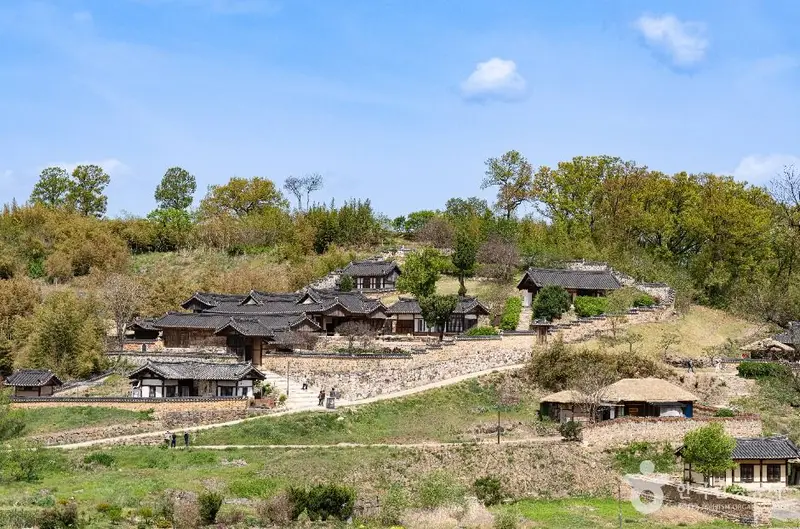
A clan village of the Son family of Wolseong (Gyeongju) and the Yi family of Yeogang (Yeoju), who have lived here side by side for more than 500 years, with houses spread over the hills and valleys of Gangdong-myeon north of Gyeongju. It is the largest village of yangban (Joseon aristocratic) families in Korea; 54 houses are over 200 years old, and the whole village is a national folklore heritage site. Families still live in many of the houses. Phone: +82-54-762-2630.
- Hours
- See the seasonal hours in Hours & Fees above
- Admission
- Adults 4,000 won
Foreigner access
- Korean name
- 경주 양동마을
- Booking
- No booking to enter. Guided tours are joined on the hour at the interpreters' house
- English
- Signs: unconfirmed · Staff: Partly
Guided tours are offered in English; call ahead (+82-70-7718-0333). The Korea Tourism Organization says audio guide devices are lent free with an ID.
-
Yangdong Village Culture Center
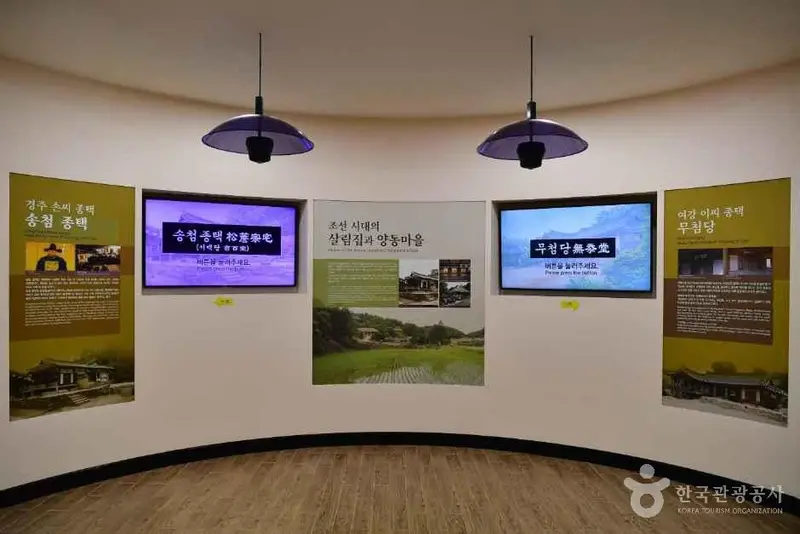
The exhibition hall at the entrance to the village, on the village's history and the people born here, with free admission. A good first stop to get your bearings; one recent visitor waited here out of the summer heat before the bus. Closed on Mondays.
- Hours
- Until 17:00 in winter, according to the village website. Closed Mondays
- Admission
- Free
Foreigner access
- Korean name
- 양동마을 문화관
- Booking
- No booking; free entry
- English
- Signs: unconfirmed · Staff: unconfirmed
-
Odongnamu Sikdang
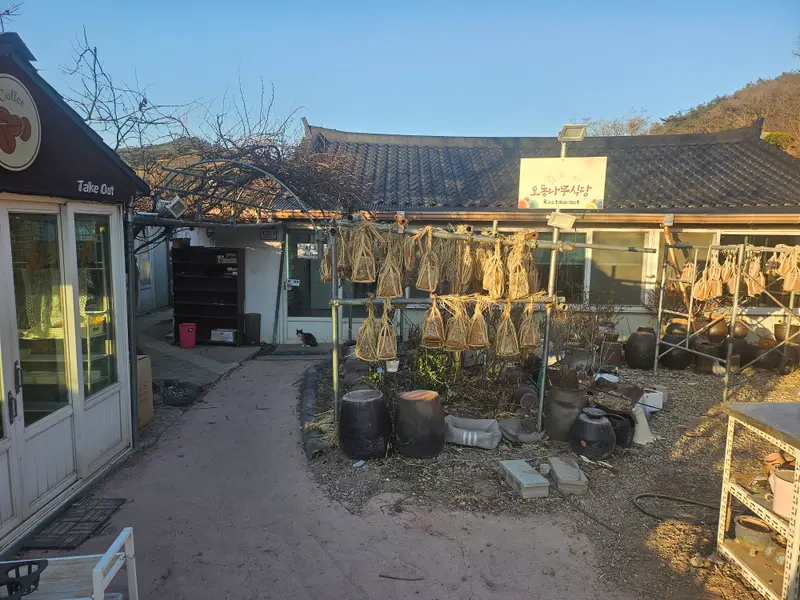
A home-style Korean restaurant in a hanok at the edge of the village, on the village website's list of restaurants. The main meal is a set of rice with many side dishes (hanjeongsik) for two or more; there are also potato pancakes, acorn jelly salad and rice wine (dongdongju). Lunch only: it closes at 17:00.
Featured on Gamjaejjang TV (YouTube)
- Hours
- 11:00 to 17:00, daily; last order 16:30
- Prices
- Hanjeongsik set 35,000 won for 2, 55,000 won for 3, 72,000 won for 4; shredded potato pancake 15,000 won, acorn jelly salad 15,000 won, dongdongju 10,000 won
Foreigner access
- Korean name
- 오동나무식당
- Booking
- Walk-in
- English
- Menu: unconfirmed · Signs: unconfirmed · Staff: unconfirmed
-
Chowon Sikdang
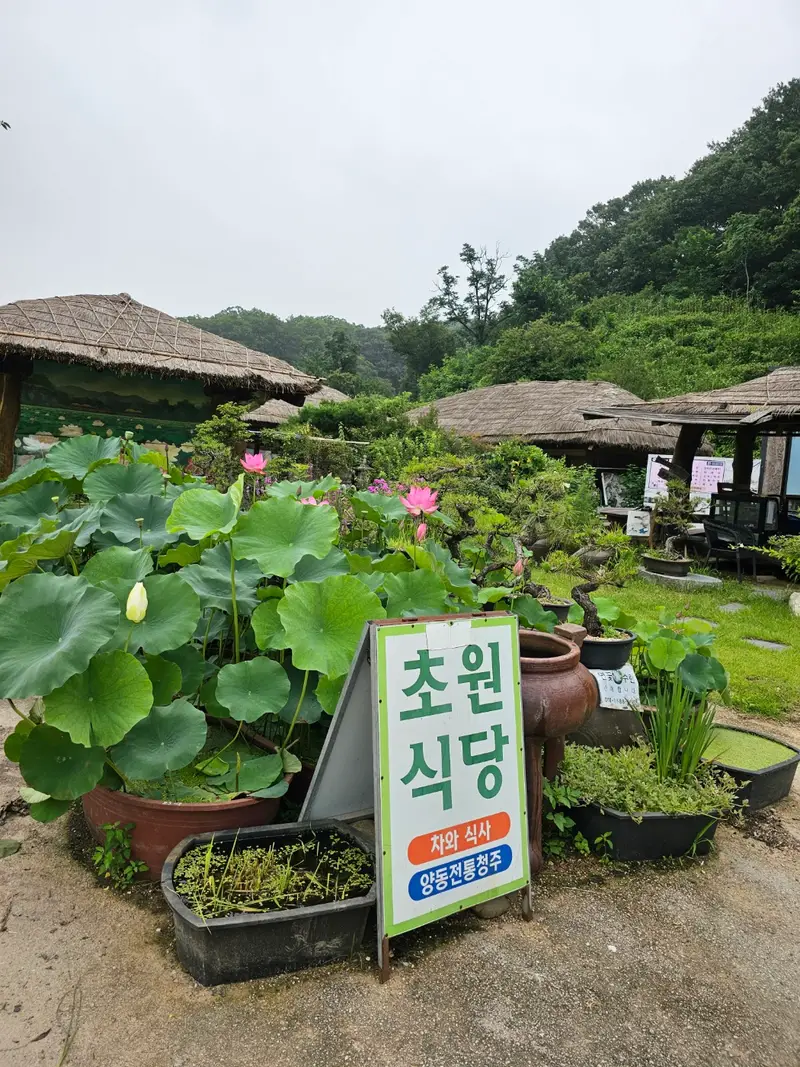
A restaurant in the village, on the village website's list, serving rice steamed in a lotus leaf (yeonnipbap) as a set meal, bulgogi with rice, buckwheat crepes and pancakes. It also sells its own grain syrup (jocheong), yakgwa (honey cookies) and rice taffy. The lotus-leaf rice and bulgogi sets are for two or more.
- Hours
- Not listed; check on Naver Map before you go
- Prices
- Lotus-leaf rice set 15,000 won, bulgogi set 13,000 won (both per person, 2 or more), bulgogi lotus-leaf rice set 25,000 won, buckwheat crepe or pajeon 12,000 won, maesaengi (seaweed) kalguksu 8,000 won
Foreigner access
- Korean name
- 초원식당
Foreigner access details not yet confirmed
-
Uhyang Daok
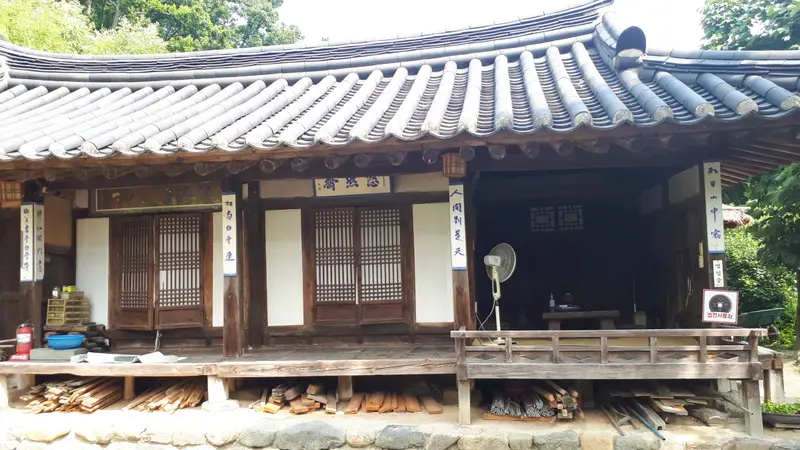
A Korean restaurant in a hanok inside the village, listed on the village website under the house name Yuyeonje. The menu is a set meal of rice and side dishes (Uhyang jeongsik or deodeok jeongsik), stews and pancakes, and whole chicken soup (baeksuk) for a group. The menu board is in Korean only.
- Hours
- 9:00 to 20:00, daily
- Prices
- Uhyang jeongsik 15,000 won, deodeok jeongsik 19,000 won, doenjang stew 8,000 won, cheonggukjang (strong soybean paste stew) 10,000 won, pajeon or chive pancake 10,000 won, chicken baeksuk 45,000 to 50,000 won
Foreigner access
- Korean name
- 우향다옥
- Booking
- Walk-in
- English
- Menu: No · Signs: unconfirmed · Staff: unconfirmed
The menu board in the restaurant's photos on Naver is in Korean only.
Hotels
Experiences
Sources
- Yangdong Village: visitor information (hours, admission, house access, rules) (Korean) (accessed 2026-11-13)
- Yangdong Village: directions (Korean) (accessed 2026-11-13)
- Yangdong Village: guided tours (Korean) (accessed 2026-11-13)
- Yangdong Village: frequently asked questions (Korean) (accessed 2026-11-13)
- Yangdong Village: UNESCO World Heritage listing (Korean) (accessed 2026-11-13)
- Yangdong Village: restaurants (Korean) (accessed 2026-11-13)
- Yangdong Village: homestays (Korean) (accessed 2026-11-13)
- Yangdong Village: experience programs (Korean) (accessed 2026-11-13)
- Korea Tourism Organization (TourAPI): Gyeongju Yangdong Village, Songcheom Jongtaek (Seobaekdang), Mucheomdang and Oksan Seowon entries (Korean; search by name) (accessed 2026-11-13)
- Gyeongju City Transportation Information Center: bus fares (Korean) (accessed 2026-11-13)
- Saecheonnyeon Miso (Gyeongju city bus operator): route search for Yangdong (Korean) (accessed 2026-11-13)
- Saecheonnyeon Miso: bus 203 stops (Korean) (accessed 2026-11-13)
- Saecheonnyeon Miso: bus 203 timetable from August 14, 2019 (Korean) (accessed 2026-11-13)
- Saecheonnyeon Miso: bus 203 route map (Korean) (accessed 2026-11-13)
- Naver Place: Odongnamu Sikdang (hours, menu, walk to the bus stop) (accessed 2026-11-13)
- Naver Place: Chowon Sikdang (menu) (accessed 2026-11-13)
- Naver Place: Uhyang Daok (hours, menu) (accessed 2026-11-13)
- Naver blog: bus 203 times, the paper timetable, a taxi to Oksan Seowon (2026-08-03) (accessed 2026-11-13)
- Naver blog: only bus 203 goes into the village (2026-10-27) (accessed 2026-11-13)
- Naver blog: bus 217 to the village entrance, bus 203 from Oksan Seowon (2026-06-06) (accessed 2026-11-13)
- Naver blog: winter ticket hours and sunset (2026-11-13) (accessed 2026-11-13)
- Naver blog: Gyeongju taxi fares, terminal to Yangdong (2026-09-28) (accessed 2026-11-13)
- Naver blog: time needed, parking lot to ticket office, tours on the hour (2026-09-19) (accessed 2026-11-13)
- Naver blog: Yangdong and Hahoe compared (2026-10-16) (accessed 2026-11-13)
- Naver blog: a route past Hyangdan and Gwangajeong (2026-11-11) (accessed 2026-11-13)
- Naver blog: Yangdong in November, few autumn colors (2026-11-13) (accessed 2026-11-13)
- Naver blog: Oksan Seowon by bus (2026-11-03) (accessed 2026-11-13)
- YouTube: Gaksi Beosi, Yangdong Village in summer, lotus fields (2022-09-17) (Korean) (accessed 2026-11-13)
203번[터미널-안강 옥산]001.jpg)