Yangpyeong and Namyangju: Day Trip from Seoul
Two rivers, a lotus garden and a hillside temple on one subway line east of Seoul: two day routes with times and fares

Two day trips east of Seoul without a car, both on the Gyeongui-Jungang Line from Cheongnyangni (about 40 to 60 minutes, around 2,000 won with a transit card). Course A is a flat walk from Yangsu Station: lotus-leaf rice for lunch, the Semiwon water garden, a pontoon bridge and Dumulmeori, where two rivers meet to form the Hangang. Course B starts one stop earlier at Ungilsan Station in Namyangju: an hour's walk uphill to Sujongsa Temple, which looks down on the same meeting of the rivers, then lunch and the riverside Water Garden.
Intro
These two routes follow the order in which recent travelers without a car most often spent a day here. Both start on the Gyeongui-Jungang Line and both look at the same place: Dumulmeori, where the Bukhangang (North Han) and Namhangang (South Han) rivers join. Course A walks to it on the flat from Yangsu Station, through the Semiwon garden. Course B climbs to Sujongsa Temple on the hill above it from Ungilsan Station, one stop closer to Seoul, in Namyangju. Pick A for an easy half day or a summer lotus visit, B for a walk with a view. Times are approximate; the cards give hours and prices for each stop.
Timetable
| Time | Stop |
|---|---|
| Course A | |
| 11:12 | Arrive at Yangsu Station (Exit 1) |
| 11:30 | Lunch: Yeonbat |
| 12:40 | Semiwon |
| 13:50 | Pontoon bridge to Dumulmeori |
| 15:00 | Dumulmeori Lotus Hot Dog |
| 15:30 | Riverside at Dumulmeori until sunset |
| After sunset | Walk to Yangsu Station, train to Seoul |
| Course B | |
| 10:14 | Arrive at Ungilsan Station (Exit 2) |
| 10:20 | Walk up to Sujongsa (about 1 hour) |
| 11:30 | Sujongsa Temple and the tea room |
| 13:30 | Lunch: Chorok Hyanggi (Wednesdays: Ungilsan Daborok) |
| 14:30 | Water Garden |
| 15:30 | Ungilsan Station, or the railway bridge walk to Dumulmeori |
Mondays. Most lunch stops on this page close on Mondays: Yeonbat on Course A, Ungilsan Daborok on Course B, and Hanmadang on the Yongmunsa day below. Semiwon also closes on Mondays from December to March. On a Monday, take Course B and have lunch at Chorok Hyanggi, which closes on Wednesdays instead; on Course A, the only food stop on this page that is open is the hot dog stand, so ride one stop back to Ungilsan for lunch at Chorok Hyanggi (about 13 minutes from Exit 2). For the Yongmunsa day, Yongmun Wonjo Neungi Beoseot Gukbap by Yongmun Station shows no closing day.
Doing both: the Bukhangang Railway Bridge links the two: one recent walker went from Ungilsan Station across it to Dumulmeori on foot. Adding the climb to Sujongsa makes a long day; start early and skip Semiwon.
Getting there and back
The line. Both routes use the Gyeongui-Jungang Line, a Korail commuter line that you ride with a transit card such as T-money, like the subway. You can change onto it in Seoul at Yongsan, Ichon, Oksu, Wangsimni, Cheongnyangni, Hoegi or Sangbong. From Cheongnyangni, Yangsu is 39 to 59 minutes away on weekdays and 42 to 56 at weekends (2,050 won with a transit card); Ungilsan is 37 to 55 minutes (1,950 won). From Yongsan allow 57 to 81 minutes to Yangsu (2,250 won); from Wangsimni 43 to 64 minutes (2,050 won); from Seoul Station the fare is 2,150 won and from Hongik Univ. 2,250 won. There is no express on this stretch: every train stops at every station.
Take a train for Yongmun or Jipyeong. Many trains heading out of Seoul end at Deokso or Paldang, short of Ungilsan and Yangsu. Only trains showing Yongmun (용문) or Jipyeong (지평) as their destination go all the way; on weekdays that is 48 of 92 trains. One recent traveler boarded a train at Hoegi without checking, found it ended at Paldang and had to wait for the next. During the day there is a train to Yangsu every 15 to 56 minutes on weekdays and every 21 to 42 minutes at weekends, so check the departure board before you go down to the platform.
Get off at Yangsu, not Yangpyeong. Yangpyeong Station is further down the line. For Semiwon and Dumulmeori the station is Yangsu (양수).
Climate Card. The Seoul Climate Card covers only Seoul. Yangsu, Ungilsan and Yongmun are in Gyeonggi-do, so if you ride on a Climate Card, station staff charge you the fare for the whole trip when you get off; two recent travelers paid this way at Yangsu Station. Use T-money or another transit card instead. See Paying with Foreign Cards in Korea.
First and last trains. The first trains reach Yangsu at 5:42 on weekdays and 6:16 at weekends and holidays. The last train back leaves Yangsu at 23:10 and Ungilsan at 23:13, reaching Cheongnyangni at 0:07 to 0:08.
By bus. Semiwon lists buses 2000-1 from Gangbyeon Station and 2000-2 from Jamsil Station, which stop in front of the garden but run on weekdays only, on a limited schedule, and the G9311 express bus to Yangsu Police Box, about 600 m from the garden (3,200 won). The train is simpler and more frequent.
Another day: Yongmunsa
At the end of the line, Yongmunsa Temple (용문사) in the mountains above Yongmun has a ginkgo tree about 1,100 years old and 42 m tall, a natural monument recorded as the oldest and tallest ginkgo in Korea. Entry to the temple is free, and it is open every day. It does not fit on the same day as either course.
- Train: the Gyeongui-Jungang Line to Yongmun (용문역) takes 63 to 94 minutes from Cheongnyangni on weekdays, 2,550 won with a transit card. On weekdays the 8:51 from Cheongnyangni arrives at 10:07; at weekends and on holidays the 8:55 arrives at 10:18.
- Bus: city buses 7-4 and 7-8, and at weekends also 33-2, run to Yongmunsan Tourist Site (용문산관광지). They are infrequent; check the timetable at Yongmun Station. The fare is 1,650 won with a transit card. A taxi from the station takes about 15 minutes and costs about 14,000 won, according to recent travelers.
- Lunch: the restaurants by the tourist site serve mountain-greens bibimbap; at Hanmadang (한마당식당) it is 11,000 won and a grilled deodeok root set meal 16,000 won (closed Mondays). By Yongmun Station, 2 minutes from Exit 1, Yongmun Wonjo Neungi Beoseot Gukbap (용문원조능이버섯국밥) serves wild mushroom soup with rice (neungi gukbap, 15,000 won), weekdays 9:30 to 20:00 and weekends 7:00 to 20:00, with no closing day listed.
- The walk: from the tourist site, the temple is about 20 minutes uphill on foot.
- When: the ginkgo turns yellow in early November. In 2026 it was still green on October 29 and yellow by November 9 and 10.
Getting around
- Transit card: a T-money card pays for the Gyeongui-Jungang Line and the local buses (Yangpyeong city buses 1,650 won by card, 1,700 won in cash).
- On foot: both courses are walking days. Course A is flat; Course B has an hour’s climb and a steep paved descent.
- Taxis: useful for Yongmunsa (about 15 minutes from Yongmun Station); on weekdays ordinary cars cannot drive up to Sujongsa. See Taxis in Korea.
- By car: at weekends and holidays the roads around Dumulmeori back up; a sign at the car park warns of more than two hours to drive out. The train avoids it.
- Maps: search the Korean names on each card in a map app; see Map apps in Korea.
Seasons
- Summer, for the lotus: Semiwon’s pink and white lotuses bloom from late June to early August, Victoria water lilies in July and August and tropical water lilies from July to October. In 2026 the Semiwon Lotus Festival ran from June 26 to August 17 with longer hours (8:00 to 20:00), and a water lily festival from September 1 to October 31.
- Autumn: yellow cosmos at the Water Garden in mid-October and yellow ginkgos in early November: at Sujongsa they had turned by November 6 in 2026, at Yongmunsa by November 9.
- Winter: no flowers, and Semiwon closes on Mondays from December to March, but Sangchunwon, its indoor garden of plum trees and camellias, is under cover. On days with a big gap between night and day temperatures, mist rises from the river at Dumulmeori early in the morning. The road to Sujongsa closes when it is icy.
- Spring: poppies at the Water Garden.
- Market days: Yangsu-ri Market near Yangsu Station holds its 5-day market on dates ending in 1 and 6; the markets in Yangpyeong town and Yongmun on dates ending in 3 and 8, and 5 and 10.
- For temperatures and what to wear each month, see Korea Weather by Month and When to Go. For other trips from Seoul, see Day Trips from Seoul.
Questions travelers ask
How far is Yangpyeong from Seoul?
One train ride. Yangsu Station, for Dumulmeori and Semiwon, is 40 to 60 minutes from Cheongnyangni on the Gyeongui-Jungang Line (2,050 won with a transit card). Yongmun, for Yongmunsa, is 63 to 94 minutes (2,550 won). The last trains back leave Yangsu at 23:10 and Yongmun at 22:41.
Can I use the Climate Card on the Gyeongui-Jungang Line?
Only within Seoul. If you get off at Yangsu, Ungilsan or Yongmun, which are outside Seoul, station staff charge the fare for the trip. Use T-money or another transit card.
Is there an express train, and how often do trains run?
There is no express between Cheongnyangni and Yangsu. On weekdays 48 trains a day reach Yangsu, and 37 at weekends and holidays; in the daytime that is about two an hour at weekends and one to four an hour on weekdays. Board trains for Yongmun or Jipyeong; trains for Deokso or Paldang stop short.
When is the Semiwon lotus festival?
In 2026 it ran from June 26 to August 17, from 8:00 to 20:00. The lotuses bloom from late June to early August. Admission is 7,000 won for adults.
Is Dumulmeori worth visiting in winter?
For a quiet walk, yes: it is free, open at all hours and on the train line, and on cold mornings mist rises from the river. There are no flowers, and Semiwon closes on Mondays from December to March, though its indoor Sangchunwon garden is open on other days.
How hard is the walk up to Sujongsa Temple?
About an hour uphill from Ungilsan Station, or about 45 minutes from the bus stop at Sujongsa Entrance; one recent walker took 1 hour 20 minutes from the station. It is steady climbing on a steep road, so wear good shoes and take water. On weekdays ordinary cars cannot drive up, and the road closes when it is icy. At the top, the tea room is free.
When does the Yongmunsa ginkgo turn yellow, and can I get there without a car?
In early November: in 2026 it was still green on October 29 and yellow by November 9. Take the Gyeongui-Jungang Line to Yongmun, then city bus 7-4 or 7-8 (also 33-2 at weekends), which are infrequent, or a taxi of about 15 minutes. The temple is free.
What is the Water Garden in Namyangju?
Mul-ui Jeongwon, a free riverside park 10 minutes on foot from Ungilsan Station Exit 1, with an arched footbridge, riverside paths and fields of poppies in spring and yellow cosmos in autumn.
When is the Yangpyeong 5-day market?
Yangsu-ri Market, near Dumulmeori, on dates ending in 1 and 6 (the 1st, 6th, 11th, 16th, 21st and 26th). Yangpyeong Mulmalgeun Market, in Yangpyeong town, on dates ending in 3 and 8, and Yongmun Cheonnyeon Market on dates ending in 5 and 10.
Places by area
Course A: Semiwon and Dumulmeori (Yangsu Station)
-
Yeonbat
A Korean restaurant known for yeonnipbap, rice steamed in a lotus leaf, the food that goes with Semiwon's lotus ponds. Lunch comes first because it is 5 minutes from the station and opens at 11:30, and Semiwon does not allow food inside. Closed on Mondays.
- Time
- About 11:30 (opening time)
- Getting there
- Walk about 5 minutes from Yangsu Station Exit 1 (about 360 m). On weekdays the 10:25 from Cheongnyangni reaches Yangsu at 11:12; at weekends and on holidays the 10:28 arrives at 11:16. 2,050 won with a transit card
- Hours
- 11:30 to 19:00, break 15:00 to 16:00, last order 18:00. Closed Mondays (map listing)
- Prices
- Yeonbat set meal (braised half-dried pollock, kodari-jjim, with lotus-leaf rice) 22,000 won; ssam (lettuce-wrap) set meal 18,000 or 23,000 won, for two or more; set for two 45,000 won; lotus-leaf rice on its own 6,000 won (map listing)
Foreigner access
- Korean name
- 연밭
Foreigner access details not yet confirmed
-
Semiwon
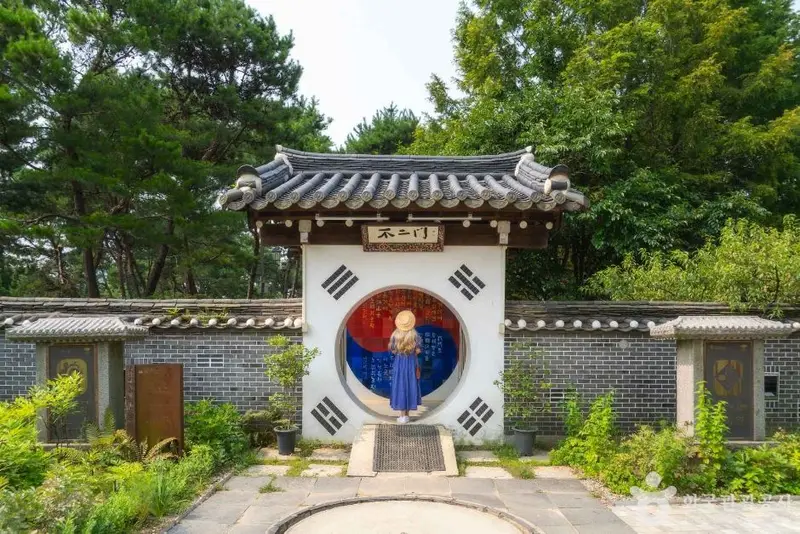
A water and flower garden of lotus and water lily ponds on the riverbank. At its far end, a pontoon bridge of boats tied together, a reconstruction of the boat bridges of King Jeongjo's time, crosses to Dumulmeori. The garden's own suggested route takes about an hour.
- Time
- About 12:40, for about 1 hour
- Getting there
- Walk about 10 minutes from Yeonbat (about 650 m in a straight line). The garden is 700 to 800 m from Yangsu Station
- Hours
- 9:00 to 18:00, last entry 17:30. Open every day from April to October and throughout November 2026; closed on Mondays from December to March (the next day when Monday is a public holiday)
- Admission
- 7,000 won for adults (19 and over), which includes a 2,000 won Yangpyeong gift voucher; 4,000 won for ages 6 to 18 and 65 and over (1,000 won voucher); free for 5 and under
- Rules
- No food (drinks only), no pets except assistance dogs, no bicycles, scooters or drones. Wheelchairs can be borrowed
Foreigner access
- Korean name
- 세미원
- Booking
- No booking; tickets at the gate
- English
- Signs: unconfirmed · Staff: unconfirmed
The garden's guided tours are free with admission but booked by phone in Korean.
-
Dumulmeori
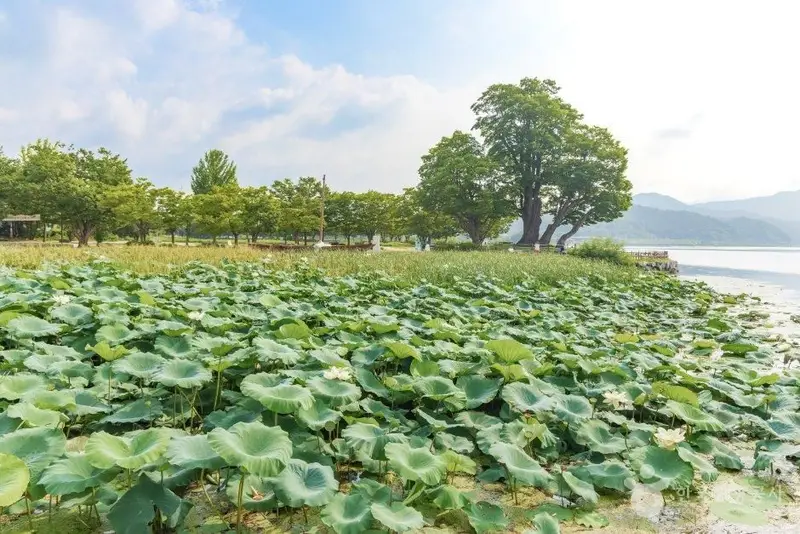
The point where the Bukhangang and Namhangang rivers meet and become the Hangang, with a zelkova tree more than 400 years old, a yellow-sailed wooden boat and a picture-frame sculpture for photos. Free and open at all hours, it ends the day: stay by the water until sunset, then walk back to the station.
- Time
- About 13:50 to sunset
- Getting there
- Cross Semiwon's pontoon bridge at the end of the garden, then walk a few minutes. If you go back into Semiwon afterwards, keep your ticket; recent visitors say crossing the bridge from the Dumulmeori side is paid at a separate booth
- Hours
- Open at all hours, every day
- Admission
- Free
- To Seoul
- Walk 15 to 30 minutes to Yangsu Station. Trains to Cheongnyangni (about 42 to 58 minutes): weekdays 16:53, 17:09, 17:31, 17:45, 18:17, 18:40; weekends and holidays 16:38, 17:07, 17:29, 17:50, 18:32, 18:55. The last train leaves Yangsu at 23:10, reaching Cheongnyangni at 0:07 to 0:08
Foreigner access
- Korean name
- 두물머리
Foreigner access details not yet confirmed
- English
- Tourist information center at Dumulmeori: 031-775-8700.
-
Dumulmeori Lotus Hot Dog
A hot dog stand by the Dumulmeori entrance where most recent day-trippers on this route stopped, with a mild and a spicy hot dog. It closes at 17:40, so go before the sunset. Another stand nearby has a similar name; this one is 두물머리연핫도그.
- Time
- About 15:00
- Getting there
- Walk about 3 minutes from the riverside at Dumulmeori
- Hours
- Monday to Friday 10:00 to 17:40, Saturday and Sunday 9:00 to 17:40 (map listing)
- Prices
- Mild or spicy hot dog 4,000 won; beer 5,000 won; soft drinks 2,500 won (map listing)
Foreigner access
- Korean name
- 두물머리연핫도그
- Booking
- No booking; queue at the counter
- English
- Menu: unconfirmed · Signs: unconfirmed · Staff: unconfirmed
Course B: Sujongsa and the Water Garden (Ungilsan Station)
-
Sujongsa Temple
A small temple on the slope of Ungilsan that looks straight down on Dumulmeori, where the two rivers meet; the 15th-century scholar Seo Geo-jeong called its view the finest of any temple in the East. Inside is Samjeongheon, a free tea room where you brew your own tea at windows over the rivers, and a ginkgo that legend says King Sejo planted. The climb is the reason to come and the hard part: about an hour uphill.
- Time
- About 11:30 (start walking at about 10:20)
- Getting there
- From Ungilsan Station Exit 2, turn right, walk about 100 m and turn right under the railway bridge: about 1 hour on foot, uphill all the way (one recent walker took 1 hour 20 minutes). Or take bus 58, 63 or Thank-you 58-3 three stops to Sujongsa Entrance (Joan Health Center) and walk about 45 minutes up the 1.5 km road. On weekdays the 9:23 from Cheongnyangni reaches Ungilsan at 10:14; at weekends and on holidays the 9:28 arrives at 10:21. 1,950 won with a transit card
- Hours
- Open every day
- Admission
- Free
- Road
- Because of road safety works, ordinary cars cannot drive up on weekdays (Monday to Friday) and can at weekends (temple notice, September 2026), so plan to walk. The road is closed when it is icy. The paved road is steep; recent walkers found it hard on the knees coming down, so wear proper walking shoes
Foreigner access
- Korean name
- 수종사
Foreigner access details not yet confirmed
- English
- For the tea room's hours, ask the temple office (031-576-8411). There is also a small paid tea and coffee counter in the temple.
-
Chorok Hyanggi Nongbu-ui Bapsang
A Korean set-meal restaurant (the name means farmer's table) near Ungilsan Station. On this route lunch comes after the temple, the order recent walkers followed: do the climb in the morning and eat on the way down. Closed on Wednesdays, but open on Mondays.
- Time
- About 13:30
- Getting there
- Walk back down from the temple the way you came (about 1.5 km in a straight line). The restaurant is about 13 minutes from Ungilsan Station Exit 2
- Hours
- 11:00 to 20:00, last order 19:30. Closed Wednesdays (map listing)
- Prices
- Spicy stir-fried pork (jeyuk) set meal 15,000 won; tofu hot pot or braised tofu set meal 15,000 won; grilled eel set 28,000 won; minari (water dropwort) pancake 10,000 won; acorn jelly 12,000 won (map listing)
Foreigner access
- Korean name
- 초록향기 농부의밥상
Foreigner access details not yet confirmed
-
Ungilsan Daborok
A second-floor restaurant near Ungilsan Station serving mukbap (acorn jelly in a cold broth over rice), sujebi (hand-torn noodle soup) and pancakes. Use it on Wednesdays, when Chorok Hyanggi is closed. Closed on Mondays, and on weekdays it closes at 16:00.
- Time
- About 13:30 (instead of Chorok Hyanggi)
- Getting there
- About 11 minutes on foot from Ungilsan Station Exit 2
- Hours
- Tuesday to Friday 11:00 to 16:00 (last order 15:00), Saturday and Sunday 11:00 to 20:00 (last order 19:00). Closed Mondays (map listing)
- Prices
- Cold mukbap 10,000 won; seafood sujebi 10,000 won; minari pancake 12,000 won; seafood and green onion pancake 15,000 won (map listing)
Foreigner access
- Korean name
- 운길산 다보록
Foreigner access details not yet confirmed
-
Water Garden (Mul-ui Jeongwon)
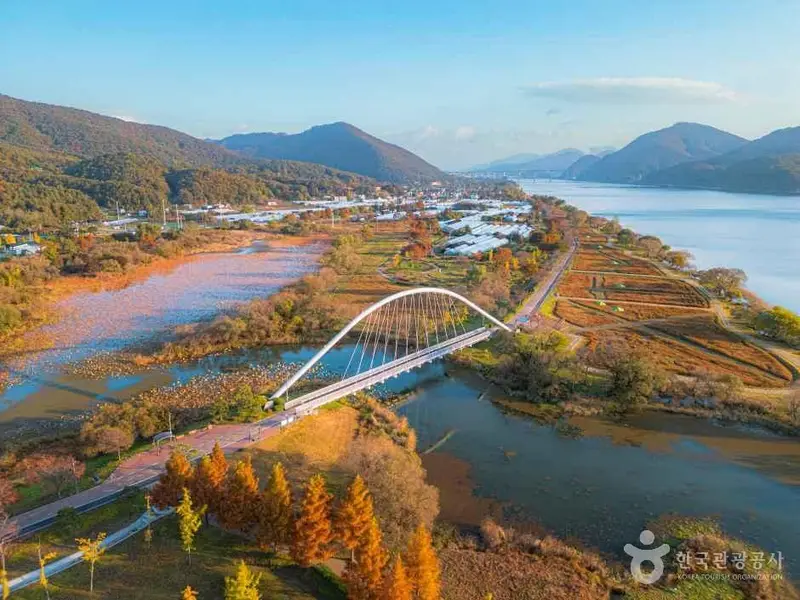
A riverside park on the Bukhangang made in 2012, entered over the white arch of Baetnadeuli Bridge, with walking and cycling paths and flower fields: poppies in spring and yellow cosmos in autumn (in full bloom in mid-October in 2026). It is flat and 10 minutes from the station, a gentle end after the climb.
- Time
- About 14:30
- Getting there
- From Chorok Hyanggi about 600 m in a straight line, roughly 10 to 15 minutes on foot. From Ungilsan Station Exit 1, about 10 minutes (about 710 m)
- Hours
- Open at all hours, every day
- Admission
- Free
- To Seoul
- Trains from Ungilsan to Cheongnyangni: weekdays 16:29, 16:56, 17:16, 17:34, 17:48, 18:19; weekends and holidays 16:06, 16:41, 17:09, 17:31, 17:53, 18:35. The last train leaves at 23:13, reaching Cheongnyangni at 0:07 to 0:08
Foreigner access
- Korean name
- 물의정원
Foreigner access details not yet confirmed
-
Bukhangang Railway Bridge walk to Dumulmeori
Optional, if you still have the legs: an old railway bridge over the Bukhangang, now for walkers and cyclists, with a glass-floored section. It takes you from the Namyangju side into Yangsu-ri and on to Dumulmeori for the sunset, joining the end of Course A. Keep to the right; bicycles share the bridge.
- Time
- About 15:30 to sunset
- Getting there
- From the Water Garden it is about 2.6 km in a straight line to Dumulmeori; allow about an hour on foot (estimate)
- Back to Seoul
- From Dumulmeori, walk 15 to 30 minutes to Yangsu Station (trains on the Dumulmeori card above), or take bus Thank-you 58-3 back to Ungilsan Station, as one recent walker did
Foreigner access
Google Maps for Bukhangang Railway Bridge walk to Dumulmeori Naver Map for Bukhangang Railway Bridge walk to Dumulmeori- Korean name
- 북한강철교
Foreigner access details not yet confirmed
Hotels
Experiences
Sources
- Korail: Gyeongui-Jungang, Gyeongchun (ITX-Cheongchun) and Seohae Line weekday timetable from September 1, 2026 (spreadsheet, Korean) (accessed 2026-11-13)
- Korail: the same timetable for weekends and holidays (spreadsheet, Korean) (accessed 2026-11-13)
- Korail: metropolitan subway fare table from February 28, 2026 (spreadsheet, Korean) (accessed 2026-11-13)
- Seoul Metropolitan Government: Climate Card short-term pass FAQ (Korean) (accessed 2026-11-13)
- Yangpyeong County: city bus routes and timetable page (Korean) (accessed 2026-11-13)
- Yangpyeong County: city bus fares from October 25, 2025 (Korean) (accessed 2026-11-13)
- Semiwon: visitor guide, hours and admission (Korean) (accessed 2026-11-13)
- Semiwon: garden guide, flowering seasons and pontoon bridge (Korean) (accessed 2026-11-13)
- Semiwon: directions by train and bus (Korean) (accessed 2026-11-13)
- Semiwon: notice of opening every day in November 2026 (Korean) (accessed 2026-11-13)
- Sujongsa Temple: directions (Korean) (accessed 2026-11-13)
- Sujongsa Temple: notice on vehicle access during road works (Korean) (accessed 2026-11-13)
- Korea Tourism Organization (VisitKorea): Dumulmeori, Semiwon, Semiwon lotus and water lily festivals 2026, Sujongsa, Water Garden, Yongmunsa, Yongmunsa ginkgo and the Yangsu-ri, Yangpyeong and Yongmun market entries (Korean; search by name) (accessed 2026-11-13)
- Naver Place: Semiwon (distance from Yangsu Station) (accessed 2026-11-13)
- Naver Place: Water Garden (distance from Ungilsan Station) (accessed 2026-11-13)
- Naver Place: Yeonbat (hours and menu) (accessed 2026-11-13)
- Naver Place: Dumulmeori Lotus Hot Dog (hours and menu) (accessed 2026-11-13)
- Naver Place: Chorok Hyanggi Nongbu-ui Bapsang (hours and menu) (accessed 2026-11-13)
- Naver Place: Ungilsan Daborok (hours and menu) (accessed 2026-11-13)
- Naver Place: Hanmadang Sikdang, Yongmunsan (hours and menu) (accessed 2026-11-13)
- Naver Place: Yongmun Wonjo Neungi Beoseot Gukbap (hours and menu) (accessed 2026-11-13)
- Naver blog: Yangsu Station, lotus-leaf rice lunch, Semiwon, the pontoon bridge and Dumulmeori on foot (2026-09) (accessed 2026-11-13)
- Naver blog: Yangsu Station day trip on a weekday, Climate Card fare at the station (2026-06) (accessed 2026-11-13)
- Naver blog: Yangsu Station, Semiwon, the pontoon bridge and Dumulmeori (2026-09) (accessed 2026-11-13)
- Naver blog: Semiwon and lunch at Yeonbat (2026-08) (accessed 2026-11-13)
- Naver blog: Yangsu Station by Gyeongui-Jungang Line, Climate Card fare at the station (2026-08) (accessed 2026-11-13)
- Naver blog: Ungilsan Station by bus 58 to Sujongsa, then down to the Water Garden (2026-11) (accessed 2026-11-13)
- Naver blog: Ungilsan, Sujongsa and down to the Water Garden on foot (2026-10) (accessed 2026-11-13)
- Naver blog: Ungilsan Station to Sujongsa on foot, with times (2026-11) (accessed 2026-11-13)
- Naver blog: lunch at Chorok Hyanggi after Ungilsan (2026-11) (accessed 2026-11-13)
- Naver blog: walking from Ungilsan Station to Sujongsa, time taken and the tea room (2026-06) (accessed 2026-11-13)
- Naver blog: Ungilsan Station across the Bukhangang Railway Bridge to Dumulmeori, bus 58-3 back (2026-11) (accessed 2026-11-13)
- Naver blog: Sujongsa tea rooms (2026-11) (accessed 2026-11-13)
- Naver blog: Water Garden yellow cosmos (2026-10) (accessed 2026-11-13)
- Naver blog: Yongmun Station by city bus to Yongmunsa (2026-08) (accessed 2026-11-13)
- Naver blog: Yongmunsa ginkgo by train and bus (2026-11-09) (accessed 2026-11-13)
- Naver blog: Yongmun Station, mushroom soup lunch and a taxi to Yongmunsa (2026-10) (accessed 2026-11-13)
- Naver blog: Yongmunsa ginkgo still green on October 29 (2026-10) (accessed 2026-11-13)