Pojangmacha (Street Tent Bars) in Seoul
What a Korean tent bar is, how to order, what to eat with soju, what it costs, and where to find them in Seoul
Intro
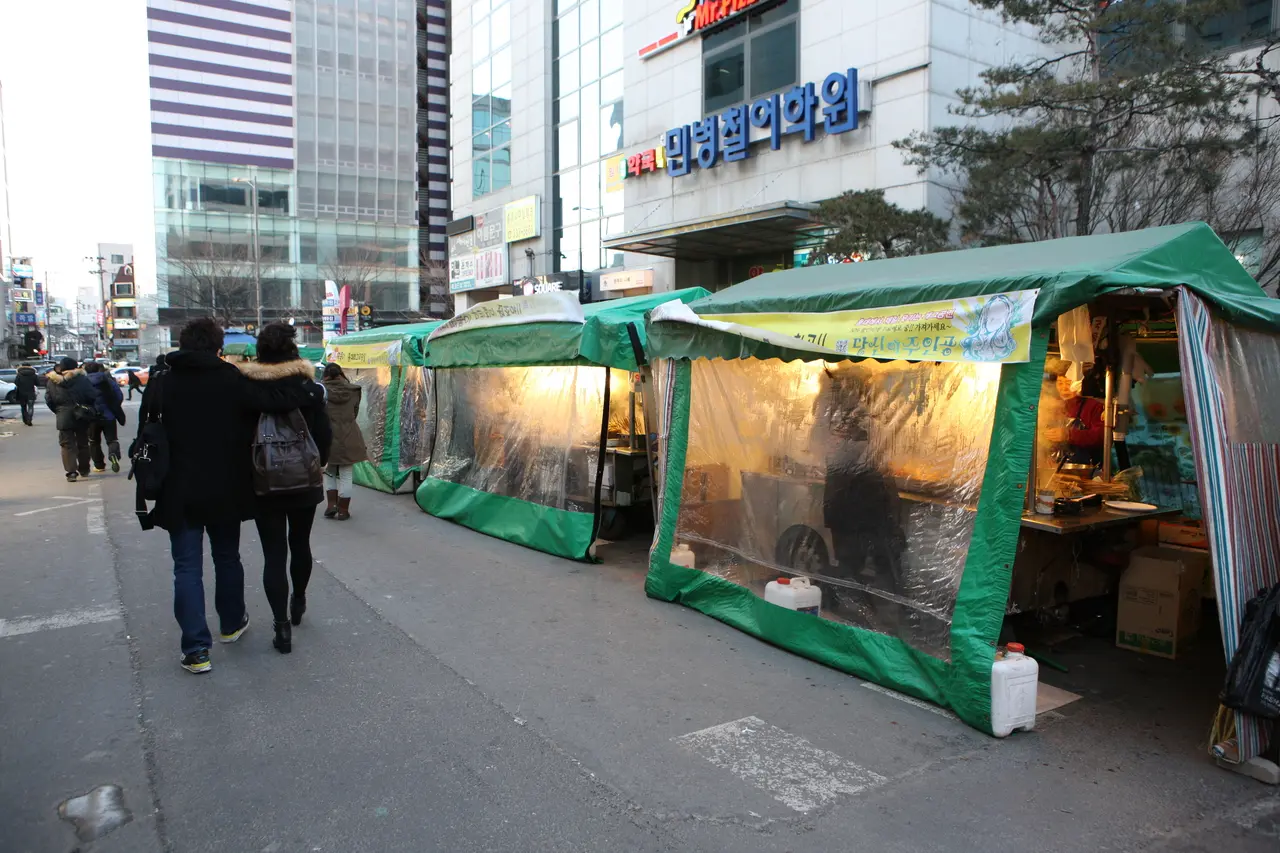
A pojangmacha (포장마차), often shortened to pocha, is a small bar that serves soju and dishes to go with it. The word means a covered wagon: one account traces the bars to wheeled street stalls of the 1950s and 1960s. The classic pojangmacha is a tent on the street, with plastic stools and a short menu. Office workers have long gone there for a cheap drink after work, often as the second stop of the night, and people also go alone. Today the Jongno tent bars draw a younger crowd and a growing number of foreign visitors.
Three kinds of pocha
- Street tent bars. Stalls set up on the pavement in the evening. In Seoul the largest group is around Jongno 3(sam)-ga Station, where Jongno-gu now manages them with road-use permits. These are the ones that take cash only.
- Indoor pocha. Bars that copy the tent-bar look indoors, with red awnings, bamboo blinds and steel tables. They are shops, not street stalls, and their prices are higher (below).
- Yajang (outdoor tables). Restaurants and pubs that put tables out on the street in the evening, as in Euljiro Nogari Alley and Jongno’s Galmaegisal Alley.
How it works
- Find a seat. There is no booking. Walk along the stalls and sit at any free table. Go early: the stalls in front of Nakwon Instrument Arcade are often full early in the evening.
- Order a main dish. Someone brings the menu when you sit down. Some stalls ask you to order one main dish before any small side orders.
- Side dishes arrive. Once you order, a few free small side dishes come, such as pickled radish and carrot sticks.
- Drinks. Soju, beer and makgeolli cost 5,000 won a bottle at a Jongno 3-ga stall in November 2026.
- Pay in cash. Street stalls do not take cards. The other option they offer, bank transfer, needs a Korean bank account, so bring enough cash for the evening.
What to eat (anju)
Food served with alcohol is called anju. At a pojangmacha it is mostly seafood and hot soup. The Korea Tourism Organization lists live octopus (sannakji), sea squirt (meongge), sea cucumber, udon and ramyeon at the Jongno stalls, with skewers, stews and stir-fries near Nakwon-dong. The Korea Herald adds bar classics such as chicken feet (dakbal), pork cartilage (odolppyeo) and chicken gizzards. Time Out mentions tteokbokki and ramyeon at the Jongno 3-ga stalls.
Prices at one Jongno 3-ga stall in November 2026:
| Dish | Price |
|---|---|
| Mussel soup (honghap-tang) | 15,000 won |
| Fish cake soup (odeng-tang) | 18,000 won |
| Boiled squid, or grilled yellow croaker | 18,000 won |
| Hard clam soup, boiled sea snail, or boiled octopus | 20,000 won |
| Soju, beer or makgeolli | 5,000 won a bottle |
A second stall nearby charged 20,000 won for spicy squid salad. Indoor pocha usually charge more: one on the same street lists dishes at 24,000 to 29,000 won.
Drinking etiquette
Korea.net, the government’s English portal, describes this custom today:
- Receive a glass with both hands. If the age gap is within five years, one hand is fine.
Korea.net also describes traditional etiquette from the Joseon-era Lesser Learning (Sohak): turning your head away from an elder to drink, rolling up the right sleeve with the left hand when pouring so it does not touch the food, and, if you do not drink, taking a sip and putting the cup back.
Late nights, toilets and winter
- Hours: stalls open in the evening and stay open until late. Jongno-gu closes one lane of the alley to traffic from 18:00 to 4:00 (2024) and runs safety patrols from 17:00 to 2:00. Check the last train if you are taking the subway home.
- Toilets: street stalls have no toilets. Use the toilets in the subway station or nearby buildings.
- Winter: the outdoor seats are the attraction, and Korean media note fewer customers when it gets cold. In November 2026 a visitor’s blog described plastic sheets put up around outdoor seating to keep the cold out.
Where to go in Seoul
- Jongno 3-ga Pojangmacha Street (card below): the largest group of tent bars, and the place to start.
- Euljiro Nogari Alley: draft beer and dried pollack at plastic tables on the street, in the Euljiro printing district. See Euljiro and Dongdaemun.
- Gwangjang Market: the food alley is open every day until 23:00, with mung bean pancakes, yukhoe and makgeolli. See Gwangjang Market.
Indoor drinking spots on our Seoul local food map, which are bars and restaurants rather than tents:
- Seongsu Budu, Seongsu: a basement shellfish bar for grilled or steamed shellfish with soju.
- Eohangro, Yongridan-gil: aged sashimi platters and soju, with long Saturday-night lines.
- Ujeong, Cheongdam: Hanwoo beef tripe hot pot and boiled beef with soju, at a higher price.
- Mr. Ahn’s Craft Makgeolli, Gyeongnidan-gil: dozens of makgeolli and traditional liquors with small Korean plates.
Places that are gone
Some older guides and blogs still list the tent bars of Yeouido, near the Korea Exchange. Yeongdeungpo-gu cleared about 20 of them in September 2022, and cleared stalls that came back in December 2025 and January 2026. Do not plan a night around them.
For more of the city, see the Seoul guide, and for another local evening out, a jjimjilbang.
Get There
-
Jongno 3(sam)-ga StationLines 1, 3 and 5
- Korean
- 종로3가역
- Exit
- Exit 4
- Walk
- 1 min
Exit 4 is 1 minute from the main tent bar alley, Donhwamun-ro 11-gil (Naver Map). Exit 5 comes out by the stalls in front of Nakwon Instrument Arcade, and Exit 13 by the longest-running stalls (Korea Tourism Organization).
-
Euljiro 3(sam)-ga StationLines 2 and 3
- Korean
- 을지로3가역
- Exit
- Exit 4
- Walk
- 2 min
For Euljiro Nogari Alley.
Hours & Fees
- Hours
- Evening until late; some stalls open in the afternoon. Each stall keeps its own hours
- Prices
- At Jongno 3-ga in November 2026, most dishes 15,000 to 20,000 won; soju, beer or makgeolli 5,000 won a bottle. Two people with two dishes and two bottles of soju spend about 43,000 to 50,000 won
- Payment
- Street stalls take cash or a Korean bank transfer, not cards. Bring cash
- Booking
- None. Take any free seat
Places in Pojangmacha (Street Tent Bars) in Seoul
-
Jongno 3-ga Pojangmacha Street
Seoul's largest group of street tent bars, around Jongno 3(sam)-ga Station and along Donhwamun-ro 11-gil, and one of the reasons Time Out named Jongno 3-ga the world's coolest neighbourhood in 2026. A 2024 report counted about 25 stalls. Tables and red plastic chairs go out on the street in the evening, and the menus run from live octopus, sea squirt and sea cucumber to soup, stir-fries, udon and ramyeon. The stalls in front of Nakwon Instrument Arcade fill up early in the evening, so go early. Since October 2025 Jongno-gu has run the alley as a designated street with road-use permits, a one-way road and safety patrols.
- Hours
- Evening until late; each stall sets its own hours. Jongno-gu closes one lane to traffic from 18:00 to 4:00 (2024)
- Prices
- At one stall in November 2026: mussel soup 15,000 won, fish cake soup 18,000 won, clam soup, boiled sea snail or octopus 20,000 won, boiled squid or grilled yellow croaker 18,000 won; soju, beer and makgeolli 5,000 won
Foreigner access
- Korean name
- 종로3가 포장마차
- Booking
- Walk in and take any free seat
- Payment
- Cash only
Cash or Korean bank transfer only; no cards - English
- Menu: unconfirmed · Signs: unconfirmed · Staff: unconfirmed
There is no single map pin for the street; the Google Maps button searches Donhwamun-ro 11-gil. - Queue app
- none
Walk along the stalls and look for an empty table.
-
Jongno 3-ga Galmaegisal Alley
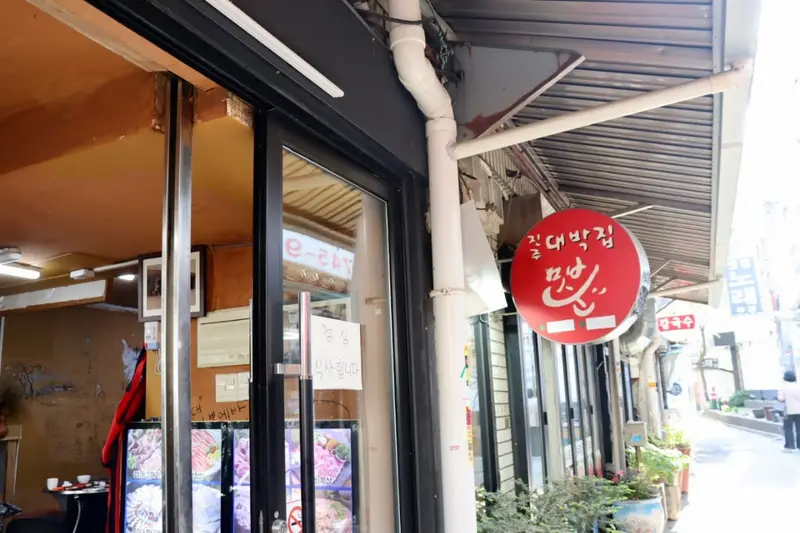
The alley next to the tent bars where meat restaurants put tables out on the street (yajang, outdoor drinking) and you grill galmaegisal (pork skirt meat) with soju. Jongno-gu designated it alongside Donhwamun-ro 11-gil in October 2025, and a Seoul Shinmun report in September 2026 found two or three in ten customers at the outdoor tables were foreign. Jinju Daebakjip (진주대박집, 14-2 Donhwamun-ro 11da-gil, near Exit 6) is one of its restaurants. These are restaurants, not tents, so this card has no cash-only label.
- Hours
- Each restaurant sets its own hours. Jinju Daebakjip: 11:00 to 23:00 every day
- Prices
- Jinju Daebakjip: galmaegisal, pork belly or pork neck 18,000 won a serving; pork jowl 19,000 won; kimchi stew 6,000 won
Foreigner access
- Korean name
- 진주대박집
- Booking
- Naver lists reservations as available for Jinju Daebakjip; how to book is not listed
Korean phone number needed: unconfirmed - English
- Menu: unconfirmed · Signs: unconfirmed · Staff: unconfirmed
The Naver Map button opens Jinju Daebakjip, since the alley has no listing of its own. - Queue app
- unconfirmed
Hotels
Experiences
Sources
- Korea Tourism Organization (TourAPI): Jongno 3-ga pojangmacha street, content ID 3056463 (Korean) (accessed 2026-11-12)
- Korea Tourism Organization (TourAPI): Nakwon-dong pojangmacha street, content ID 3056376 (Korean) (accessed 2026-11-12)
- Time Out: Jongno 3-ga, the coolest neighbourhood in the world in 2026 (September 17, 2026) (accessed 2026-11-12)
- Korea.net: Jongno 3-ga named the world's coolest neighbourhood (September 18, 2026) (accessed 2026-11-12)
- Korea.net: Alcohol in Korean Life (January 29, 2014) (accessed 2026-11-12)
- The Korea Herald: The allure of pojangmacha (December 8, 2017) (accessed 2026-11-12)
- Money Today: Jongno 3-ga street management from July 2024 (July 16, 2024, Korean) (accessed 2026-11-12)
- Herald Economy: Jongno-gu street stall management, designated streets from October 2025 (April 12, 2026, Korean) (accessed 2026-11-12)
- Seoul Shinmun: Donhwamun-ro 11-gil and Galmaegisal Alley (September 23, 2026, Korean) (accessed 2026-11-12)
- iNews24: foreign visitors at Jongno outdoor bars (September 30, 2026, Korean) (accessed 2026-11-12)
- Herald Economy: Yeouido tent bars removed (February 1, 2026, Korean) (accessed 2026-11-12)
- Naver Place: Donghae Namburseon Jongno (location on Donhwamun-ro 11-gil) (accessed 2026-11-12)
- Naver Place: Nakwon Pocha Jongno (location and menu) (accessed 2026-11-12)
- Naver Place: Jinju Daebakjip (information and menu) (accessed 2026-11-12)
- Naver blog: Jongno 3-ga stall prices and payment (November 5, 2026, Korean) (accessed 2026-11-12)
- Naver blog: ordering rules and payment at Jongno 3-ga (November 7, 2026, Korean) (accessed 2026-11-12)
- Naver blog: Sunday evening at a Jongno 3-ga stall (November 9, 2026, Korean) (accessed 2026-11-12)
- Naver blog: bank transfer and toilets at a Jongno 3-ga stall (November 10, 2026, Korean) (accessed 2026-11-12)
- Naver blog: Jinju Daebakjip outdoor tables (November 11, 2026, Korean) (accessed 2026-11-12)