Daehangno, Hyehwa and Naksan
Seoul's small-theater district, the hillside lanes of Ihwa-dong and a city wall walk with a night view over Seoul
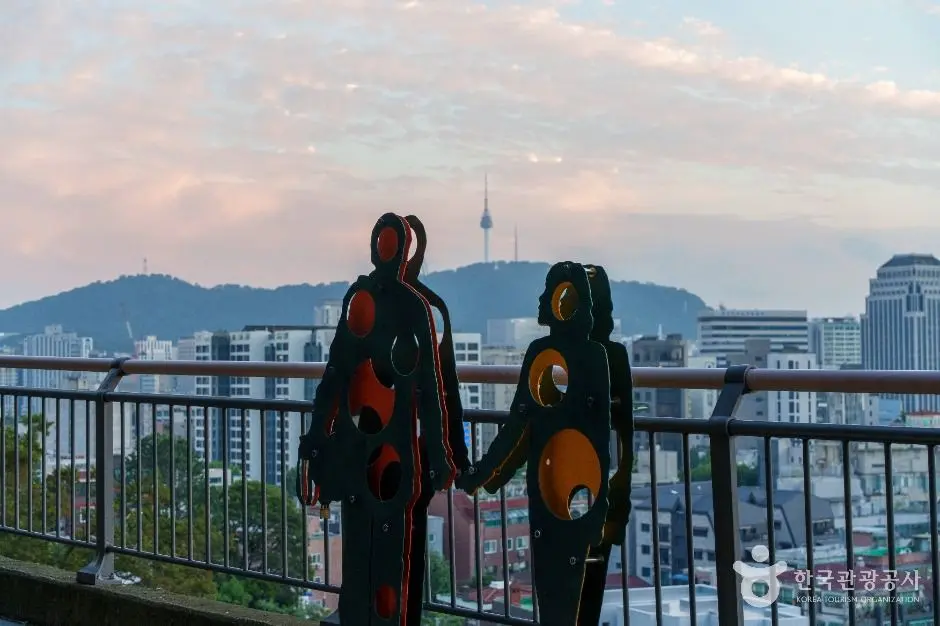
Intro
Daehangno (also written Daehak-ro) is Seoul’s theater district: the streets around Hyehwa Station where Seoul National University stood until 1975, now lined with small theaters, with Marronnier Park at the center. Behind it the ground rises steeply into Ihwa-dong, a hillside village of lanes and stairs that was painted by artists in 2006, and up to Naksan Park on the old city wall, one of the places Seoul people go for a sunset and a view over the city at night. North of the station, around Hyehwa and Myeongnyun-dong, are the Joseon state school of Seonggyungwan with its ginkgo trees and some of the neighborhood’s oldest restaurants.
Korean visitors come for two things. One is a play in a small theater, usually a comedy, followed by dinner. The other is the evening walk: Marronnier Park, up through Ihwa-dong to Naksan Park for the sunset, then down along the lit city wall to Heunginjimun and Dongdaemun. In November people add the ginkgo trees at Seonggyungwan, and on Sundays a Filipino market sets up near Hyehwa-dong Catholic Church.
Half a day in Daehangno and Naksan
- Early afternoon (November): from Exit 4 of Hyehwa Station, walk about 15 minutes to Munmyo and Seonggyungwan for the ginkgo trees at Myeongnyundang. In other months, start at step 2.
- Coffee: Vienna coffee at Hakrim Dabang (since 1956), by Exit 3.
- Marronnier Park and the red-brick Arko Art Center (free, closed Mondays). Pick up show leaflets at the Seoul Theater Center by Exit 4 if you want to see a play.
- Early dinner: kalguksu and fried fish at Hyehwa Kalguksu around 16:00 to 17:00, before the line, or sundaeguk at Sundae Sillok.
- Ihwa Mural Village: walk up through the lanes quietly, about 20 minutes from Exit 2 to Naksan Park. Plan to reach the park about 30 minutes before sunset.
- Sunset and night view from Naksan Park, or with a drink at San 1-1 or Gaeppul just below it.
- Down the wall to Heunginjimun, roughly 2 km, and the subway at Dongdaemun Station (Lines 1 and 4). For dakhanmari and DDP after that, see the night course on Seoul day courses.
If you would rather see a show, swap steps 4 to 7 for a performance: Ongals, a comedy with no dialogue, plays at Theater Joy during its runs (check the theater’s notice for dates).
Seeing a show in Daehangno
Most of Daehangno’s small-theater productions are comedies, romantic comedies and mysteries in Korean, and they change often. If you do not speak Korean, look for a non-verbal show such as Ongals, a slapstick comedy with beatboxing, magic and juggling that started on the TV show Gag Concert and has toured abroad. It runs for set periods at Theater Joy, so check the theater’s notice before you plan around it.
Buying tickets: the public theaters of Arts Council Korea (the Arko Arts Theater on Marronnier Park and the Daehangno Arts Theater) sell tickets on their official website, theater.arko.or.kr, which has an English page; the customer center (02-3668-0007) answers from 10:00 to 19:00, Tuesday to Sunday. Private small-theater shows are sold mostly through Korean booking apps, which may ask for a Korean phone number; whether that is needed is unconfirmed for each show, so ask your hotel front desk for help or go to the theater. Tickets are usually exchanged at the theater from 30 minutes before the show.
At the theater: many theaters do not allow late entry or re-entry, many shows allow photos only during the curtain call, and some small basement theaters, such as Theater Joy, have no restroom inside. Theater Joy usually has no shows on Mondays. At the Seoul Theater Center by Exit 4 you can browse leaflets for what is on now, and a same-day ticket gets you a free coffee from its machine.
Ihwa Mural Village: what to expect
Ihwa-dong became known for the murals and sculptures that about 70 artists made in 2006 for the Naksan Project, and for the TV dramas filmed in its lanes. Today there are fewer murals than in older photos. In April 2016 the two most photographed works, the sunflower stairs and the carp stairs, were painted over at night by some residents. Korean news reports linked this to complaints about tourist noise and graffiti, and to a dispute between residents over whether the area should be preserved or redeveloped. Other works have since been removed by residents, and the wings mural was erased by its own artist. What you will see are lane murals, the metal figures on the hilltop and a wide view to N Seoul Tower.
This is a residential neighborhood. The Seoul City Wall office asks walkers passing Jangsu Village and Ihwa Village to take care not to disturb the people who live there. Keep your voice down, do not point cameras at windows and front doors, avoid early mornings and late nights, and take your trash with you.
Naksan Park and the city wall at night
Naksan Park is free and open at all times. From Exit 2 of Hyehwa Station the official route goes past Marronnier Park and up Naksan-gil to the central square, about 20 minutes, with the summit 5 minutes further; you can also climb through Ihwa-dong’s stairs, or from Exit 1 through the theater lanes to the park’s 3rd viewing plaza. If you do not want the climb, take village bus Jongno 03 from Exit 5 of Dongdaemun Station to the last stop.
Arrive about 30 minutes before sunset to see the city in daylight and then lit up. The wall is lit at night. From the park, the usual way down is along the wall to Heunginjimun (Dongdaemun), roughly 2 km downhill with steps and slopes: wear sneakers, and skip it in the rain, when the stones are slippery. At the bottom, the free Seoul City Wall Museum (closed Mondays, last entry 17:30) tells the wall’s story.
The full Naksan section starts at Hyehwamun Gate by Seongbuk-dong, where the Baegak section to Bugaksan begins. The section continues past Heunginjimun to Gwanghuimun Gate in Sindang-dong. For the other sections and Seoul’s mountains, see hiking in Seoul.
Food and drink
- Kalguksu: Hyehwa Kalguksu, Gyeongsang-style noodles (guksi) 12,000 won with fried fish to share, open daily with a 15:00 to 16:00 break; Myeongnyun Son Kalguksu, hand-cut noodles 11,000 won, weekday lunch only.
- Sundae: Sundae Sillok, sundaeguk from 10,000 won and stone-pot rice sets, open until 23:30.
- Kimchi jjim: Hyehwa Dodam, braised kimchi and pork for two from 24,000 won, or a weekday lunch portion for 11,000 won.
- Jajangmyeon: Jinachun, since 1925, 8,000 won (closed Sundays).
- Coffee: Hakrim Dabang’s Vienna coffee, 6,500 won, in a coffee house from 1956.
- With a view: San 1-1 (cream latte 8,000 won, brunch and pizza, until 23:00), Gaeppul (until midnight) and Chaegingneun Goyangi, a book cafe, all next to the wall above Ihwa-dong.
- Filipino food: the Sunday market near Hyehwa-dong Catholic Church, home-style plates about 8,000 won.
Daehangno is not on our food map or cafe map.
When to go
- Evenings and weekends are when most shows run; Theater Joy usually has none on Mondays.
- Sunset is the time for Naksan Park. Plan to arrive about 30 minutes before.
- Early to mid-November for the yellow ginkgo trees at Seonggyungwan, which closes at 17:00 in winter.
- Sunday for the Filipino market, but Jinachun is closed.
- Mondays: the Arko Art Center, the Seoul City Wall Museum and the Seoul Theater Center are closed.
- Rain: Ihwa-dong’s stairs and the wall path are slippery and the view is gone.
Getting there
Hyehwa Station on Line 4 serves the whole neighborhood, and Line 4 runs straight to Dongdaemun History & Culture Park, Myeongdong and Seoul Station. Exit 2 is for Marronnier Park, Ihwa-dong and Naksan Park; Exit 1 for the theater lanes and Sundae Sillok; Exit 3 for Hakrim Dabang; Exit 4 for the Seoul Theater Center, Jinachun, Hyehwa Dodam and Seonggyungwan. Naksan Park can also be reached from Dongdaemun Station (Lines 1 and 4): village bus Jongno 03 from Exit 5, or the wall path from Dongdaemun Seonggwak Park, 2 minutes from Exit 10. From the airport, see How to get from Incheon Airport to Seoul.
Common questions
- Is Ihwa Mural Village worth visiting? Go for the hillside lanes and the view on the way to Naksan Park rather than for the murals; many of the best-known ones are gone (see above).
- Is Naksan Park free, and can I go at night? It is free and open at all times, and the wall is lit at night. The paths have steps and slopes, so wear good shoes.
- Where is the KPop Demon Hunters spot? The Korea Tourism Organization names Naksan Park as one of the places where Rumi and Jinu walk and talk in the film.
- Are there shows in English? Most Daehangno shows are in Korean. A non-verbal show such as Ongals needs no language; check its run dates.
Practical information
- Where to stay: look for hotels around Dongdaemun, on Line 4 where the wall walk ends.
- Booking restaurants: Sundae Sillok, Hyehwa Dodam and San 1-1 take Naver Booking; whether a Korean phone number is needed is unconfirmed.
- Nearby: Seongbuk-dong, by Hansung University Station on Line 4; Euljiro and Dongdaemun at the bottom of the wall; and the night course in Seoul day courses. Back to the Seoul guide.
Get There
-
Hyehwa StationLine 4
- Korean
- 혜화역
- Exit
- Exit 2
- Walk
- 1 min
One station covers the whole neighborhood. Exit 2 is for Marronnier Park (1 minute), the Arko Art Center, Theater Joy and the walk up to Ihwa-dong and Naksan Park (about 20 minutes uphill). Exit 1 is for the small-theater lanes of Dongsung-dong and Sundae Sillok. Exit 3 is for Hakrim Dabang. Exit 4 is for the Seoul Theater Center, Jinachun, Hyehwa Dodam and the walk to Sungkyunkwan.
-
Dongdaemun StationLines 1 and 4
- Korean
- 동대문역
- Exit
- Exit 5
- Walk
- unconfirmed
Exit 5 is for village bus Jongno 03, which ends at Naksan Park. Exit 10 is 2 minutes from Dongdaemun Seonggwak Park, where the Naksan wall path starts. Exit 1 is 7 minutes from the Seoul City Wall Museum.
-
Hansung University StationLine 4
- Korean
- 한성대입구역
- Exit
- Exit 4
- Walk
- 3 min
For Hyehwamun Gate, the north end of the wall's Naksan section.
Hours & Fees
- Mondays
- The Arko Art Center, the Seoul City Wall Museum and the Seoul Theater Center are closed, and Theater Joy usually has no shows
- Sundays
- Jinachun is closed. The Filipino market sets up near Hyehwa-dong Catholic Church on Sundays only
- Weekdays only
- Myeongnyun Son Kalguksu opens for lunch on weekdays only, until 13:30
Places by area
Daehangno & Marronnier Park
-
Daehangno theater district
Daehak-ro means University Street: Seoul National University's colleges of liberal arts and law stood here until the university moved to Gwanak in 1975. Marronnier Park was laid out on the old campus, theaters opened one by one, and the city named it a Street of Culture and Arts in May 1985 and, in 2004, its second Cultural District after Insadong, to protect the small theaters. Most of the shows in its small basement theaters are comedies, romantic comedies and mysteries performed in Korean. The public theaters of Arts Council Korea, the Arko Arts Theater and the Daehangno Arts Theater, sell tickets on their own website, which has English pages.
- Hours
- Show times differ by production; evenings and weekend afternoons are the main slots
- Tickets
- Prices differ by production. The Arko Arts Theater and Daehangno Arts Theater sell on theater.arko.or.kr (customer center 02-3668-0007, 10:00 to 19:00, Tuesday to Sunday). Most private small-theater shows are sold through Korean booking apps; tickets are usually exchanged at the theater from 30 minutes before the show
- Rules
- Many theaters do not allow late entry or re-entry, and many shows allow photos only during the curtain call
Foreigner access
- Korean name
- 대학로
- Booking
- Public theaters: theater.arko.or.kr. Private shows: Korean booking apps or the theater's box office
Korean phone number needed: unconfirmed - English
- Signs: unconfirmed · Staff: unconfirmed
The Arko theaters' website has an English page.
-
Marronnier Park
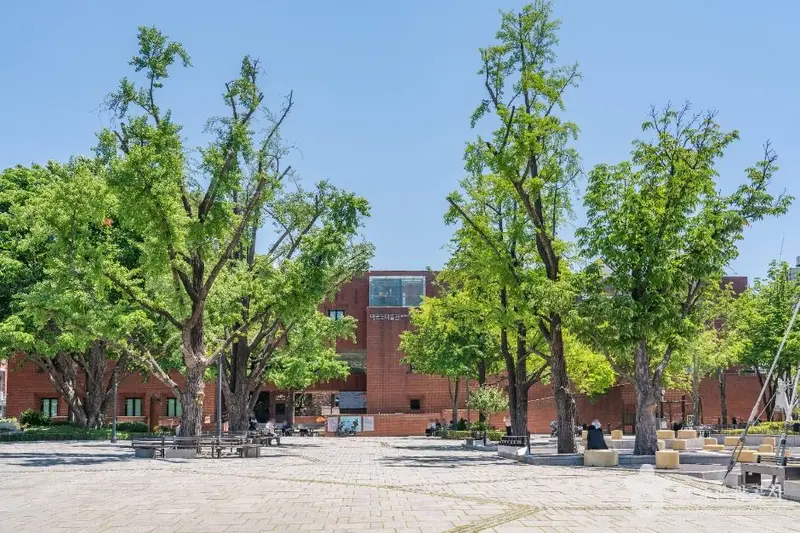
The square at the center of Daehangno, a minute from Exit 2 of Hyehwa Station, on the site of the old Seoul National University colleges. It is named for the horse chestnut (marronnier) trees planted on April 5, 1929, when the site belonged to Keijo Imperial University. The red-brick buildings of the Arko Art Center and the Arko Arts Theater stand on its edge, and the outdoor stage is used for free performances and events through the year. It is where people meet before a show and the start of the walk up to Ihwa-dong.
- Hours
- Open at all times
- Admission
- Free
Foreigner access
- Korean name
- 마로니에공원
Foreigner access details not yet confirmed
-
Ongals at Theater Joy
Ongals is a non-verbal comedy show: no dialogue, only a child's faces and gestures, beatboxing, magic and juggling, so you do not need any Korean. The troupe started on the TV comedy show Gag Concert and has toured abroad. One audience member is called onto the stage and kept involved throughout. It plays at Theater Joy (formerly the Madang Sesil Theater), in a basement 7 minutes from Exit 2 of Hyehwa Station. The show runs for set periods; check the theater's notice for current dates.
- Hours
- Runs for set periods; check the theater's notice. During its August 2026 run, shows were on Friday at 19:30 and on weekend afternoons, about 70 minutes with no intermission
- Tickets
- The listed price for the August 2026 run was 50,000 won for all seats. Not for preschool children
- Rules
- No late entry or re-entry. Photos only during the curtain call. There is no restroom inside the theater, so go before. Tickets are exchanged from 30 minutes before the show
Foreigner access
- Korean name
- 씨어터 조이
- Booking
- Korean booking apps (recent visitors booked through Naver)
Korean phone number needed: unconfirmed - English
- Signs: unconfirmed · Staff: unconfirmed
The show has no dialogue.
-
Arko Art Center
A free contemporary art museum of Arts Council Korea on Marronnier Park. It began in 1974 as the Misul Hoegwan (art hall) and moved in 1979 into this red-brick building designed by the architect Kim Swoo-geun (1931 to 1986); with the Arko Arts Theater next door (1981), its red brick is a symbol of Daehangno. Galleries may close while exhibitions are changed.
- Hours
- 11:00 to 19:00 (last entry 18:30), Tuesday to Sunday; until 21:00 on Wednesdays (last entry 20:30). Closed Mondays, January 1, and Seollal and Chuseok days
- Admission
- Free
Foreigner access
- Korean name
- 아르코미술관
Foreigner access details not yet confirmed
-
Hakrim Dabang
A coffee house on the 2nd floor that has been in the same place since 1956, listed as Seoul Future Heritage. In 1981 it was where the National Democratic Students' Federation held its first meeting, the start of what became known as the Hakrim incident. It roasts its own beans and is known for hand-drip coffee, Vienna coffee and cream cheese cake, with classical music playing. On weekends and in the evening people wait on the staircase.
- Hours
- 10:00 to 23:00, daily (last order 22:00). The Korea Tourism Organization lists it as closed on Seollal and Chuseok
- Prices
- Vienna coffee 6,500 won, cream cheese cake 6,500 won, americano 6,000 won, parfait 9,000 won
Foreigner access
- Korean name
- 학림
- Booking
- No reservations; wait on the stairs
Korean phone number needed: No - English
- Menu: unconfirmed · Signs: unconfirmed · Staff: unconfirmed
- Queue app
- unconfirmed
-
Sundae Sillok (Daehangno main branch)
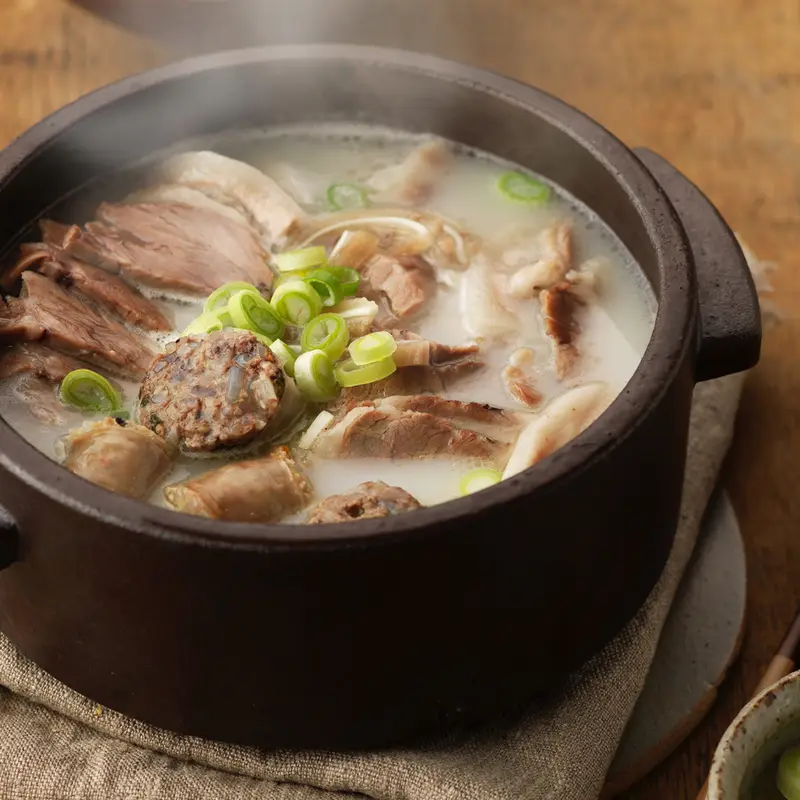
The main branch of a sundae (Korean blood sausage) restaurant run by Yuk Gyeong-hui, presented as a sundae master, which says it follows a method from an 1877 text. Order sundaeguk (sausage soup with rice), a sundae set or a set with rice cooked in a stone pot; the Korea Tourism Organization also mentions a sundae steak, an uncut sausage coiled and cooked on a hot plate. Two minutes from Exit 1 and open until 23:30, it works after an evening show. There are other branches; this is the original.
- Hours
- 10:00 to 23:30, daily (last order 23:00)
- Prices
- Sundaeguk 10,000 won (large 14,000 won), loach sundaeguk 13,000 won, sundae set 14,000 won, stone-pot rice set 16,000 to 17,000 won
Foreigner access
Google Maps for Sundae Sillok (Daehangno main branch) Naver Map for Sundae Sillok (Daehangno main branch)- Korean name
- 순대실록 대학로본점
- Booking
- Naver Booking
Korean phone number needed: unconfirmed - English
- Menu: unconfirmed · Signs: unconfirmed · Staff: unconfirmed
- Queue app
- unconfirmed
Ihwa-dong & Naksan
-
Ihwa Mural Village
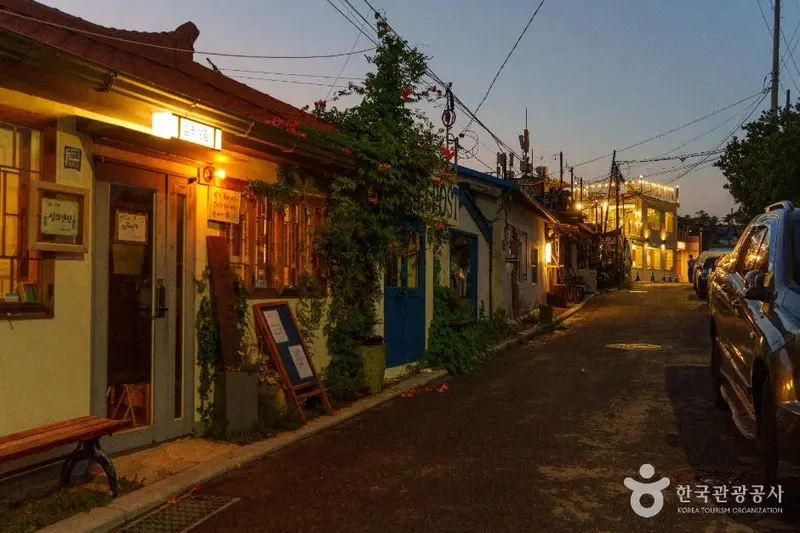
The hillside lanes and stairs of Ihwa-dong, between Daehangno and Naksan Park. In 2006 about 70 artists painted murals and made sculptures here in the Naksan Project, a public art program to improve a run-down area, and after the village appeared on TV it became a sight; it is listed as Seoul Future Heritage. People live in these houses. In April 2016 the two best-known stair murals, the sunflower stairs and the carp stairs, were painted over at night by some residents, amid complaints about tourist noise and graffiti and a dispute over the city's plans for the area. Other works have since been removed by residents, and the wings mural was erased by its artist. What remains are murals in the lanes, metal figures on the hilltop and the view to N Seoul Tower.
- Hours
- Residential lanes, open at all times. Come in the daytime or early evening, not early in the morning or late at night
- Admission
- Free
- Etiquette
- The Seoul City Wall office asks walkers to take care not to disturb the residents. Keep your voice down, do not photograph windows and front doors, and take your trash with you
Foreigner access
- Korean name
- 이화마을
Foreigner access details not yet confirmed
-
Naksan Park
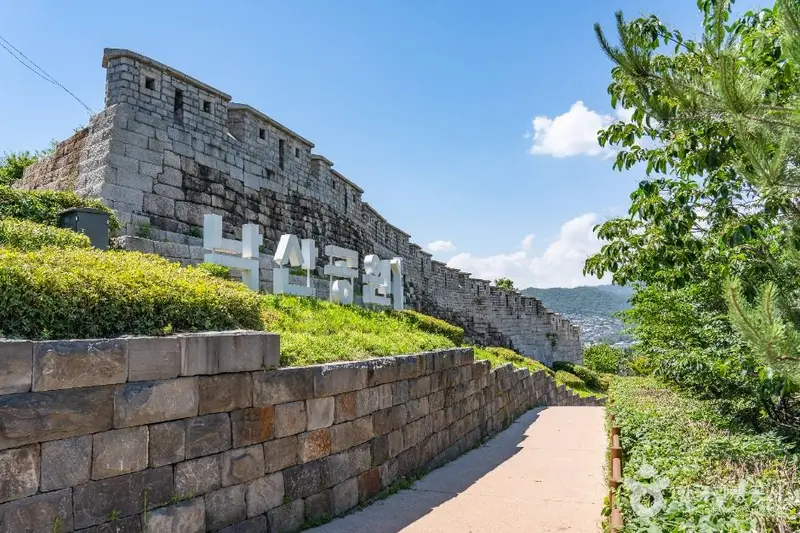
A park along the city wall on Naksan (124 m), the lowest of the four mountains around old Seoul. Its shape gave it the name Naktasan (camel mountain), and it was also called Taraksan after a royal dairy farm that supplied milk to the palace. Apartments and houses covered the slopes from the 1960s; the mountain was restored and the park opened in July 2002. The Korea Tourism Organization calls it one of the best places for a night view of Seoul, and lists it among the places where Rumi and Jinu walk and talk in the Netflix animation KPop Demon Hunters. The central square has a small exhibition hall on the mountain and the wall, a stage and a shop, and Naksanjeong pavilion looks over the city.
- Hours
- Open at all times. Naksan exhibition hall 9:00 to 17:00
- Admission
- Free
- Getting there
- From Exit 2 of Hyehwa Station, walk past Marronnier Park and up Naksan-gil, about 20 minutes to the park entrance and 5 more to the top. Or take village bus Jongno 03 from Exit 5 of Dongdaemun Station to the last stop, Naksan Park
Foreigner access
- Korean name
- 낙산공원
Foreigner access details not yet confirmed
-
Seoul City Wall, Naksan section
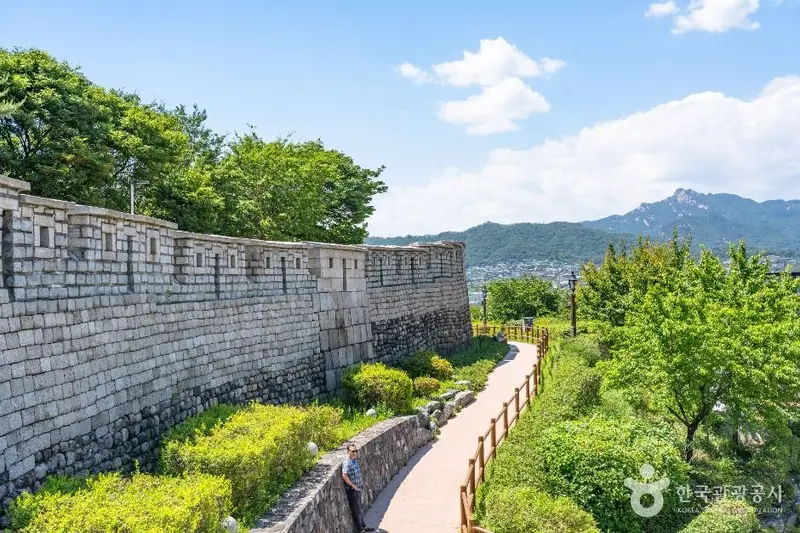
Seoul's city wall was built in 1396 and ran about 18.6 km around the old capital. Its Naksan section is 3.2 km and about 1 hour 30 minutes on foot, rated two stars for difficulty: from Hyehwamun Gate it climbs past the back of the Catholic University campus and Jangsu Village to Naksan Park, then goes down past Ihwa Mural Village and the Seoul City Wall Museum to Heunginjimun, the great east gate of Dongdaemun. A common evening walk is only the lower part: from Naksan Park downhill along the wall to Heunginjimun, roughly 2 km. The wall is lit at night.
- Hours
- Open 24 hours
- Admission
- Free
- Start and end
- Hyehwamun: 3 minutes from Exit 4 of Hansung University Station. Heunginjimun end: 2 minutes from Exit 10 of Dongdaemun Station to Dongdaemun Seonggwak Park, where the Naksan wall path starts
- Footwear
- There are steps and steep slopes; wear sneakers. The stones are slippery in the rain
Foreigner access
- Korean name
- 한양도성 낙산구간
Foreigner access details not yet confirmed
-
Seoul City Wall Museum
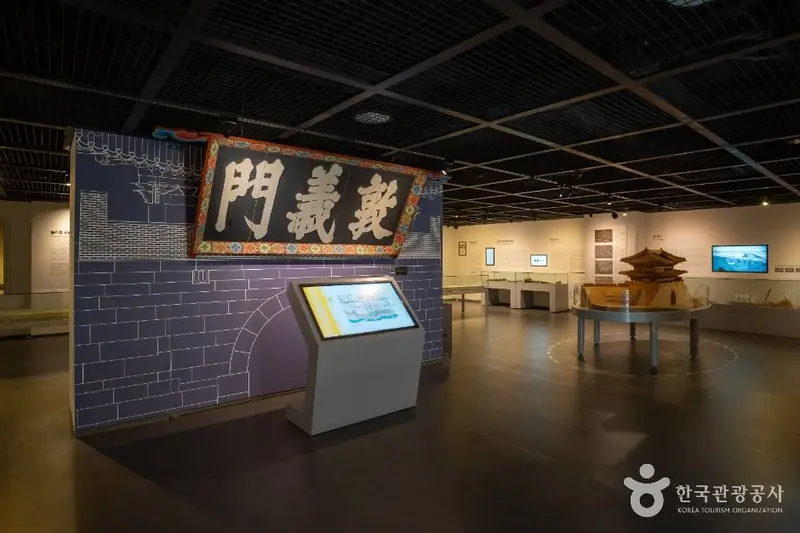
A free museum on the history of the city wall from the Joseon period to today, with permanent and special exhibition rooms and a reading room. It is a branch of the Seoul Museum of History and stands by Heunginjimun Park near the bottom of the wall walk, 7 minutes from Exit 1 of Dongdaemun Station.
- Hours
- 9:00 to 18:00 (last entry 17:30). Closed Mondays (open if Monday is a public holiday) and January 1
- Admission
- Free
Foreigner access
- Korean name
- 한양도성박물관
Foreigner access details not yet confirmed
-
San 1-1
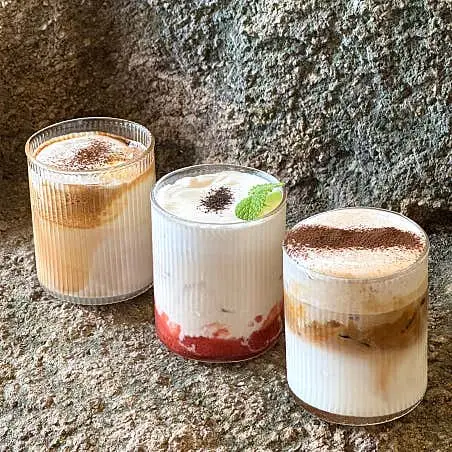
A three-story cafe built against Naksan's rock beside the city wall above Ihwa-dong. On the 1st floor the rock comes right into the room; from the 2nd and 3rd floors and the terrace you look across to N Seoul Tower and the lights of Jongno. Its signatures are a cream latte and an ice cream waffle, and it serves Korean-style brunch all day as well as pizza and pork cutlet. Pets are allowed.
- Hours
- 10:00 to 23:00, daily
- Prices
- San 1-1 cream latte 8,000 won, ice cream waffle 17,000 won, salt bread 9,600 won, pizza 21,000 to 24,000 won, pork cutlet or tteokgalbi 17,900 won
Foreigner access
- Korean name
- 산1-1
- Booking
- Naver Booking
Korean phone number needed: unconfirmed - English
- Menu: unconfirmed · Signs: unconfirmed · Staff: unconfirmed
- Queue app
- unconfirmed
-
Gaeppul
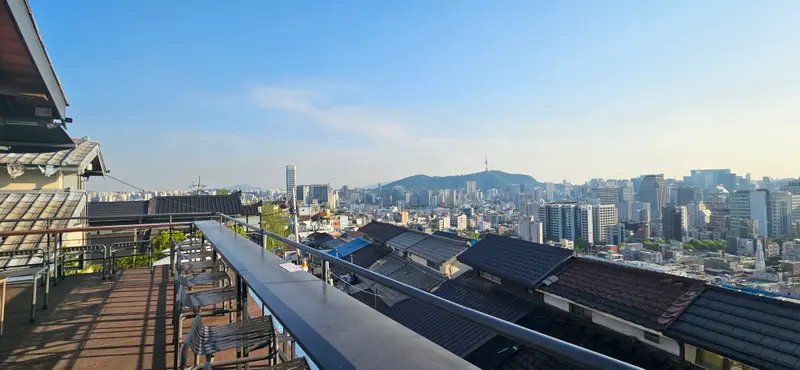
A gallery cafe next door to San 1-1, where the city wall path from Naksan Park comes down into Ihwa-dong. It serves coffee, tea and alcohol on two floors and an outdoor terrace whose tables are old silver trays; the 2nd floor has glass walls, and the terrace and windows look over the city at sunset. Open until midnight.
- Hours
- 10:00 to 24:00, daily
- Prices
- unconfirmed
Foreigner access
- Korean name
- 개뿔
Foreigner access details not yet confirmed
-
Chaegingneun Goyangi (Cat Reading Books)
A book cafe beside the city wall path in Ihwa-dong, a little below San 1-1 and Gaeppul, with books, cat-themed art and cat-shaped butter cookies. The terrace looks out past the wall over the village.
- Hours
- 10:00 to 22:00, Thursday to Monday; 11:00 to 20:00 on Tuesdays and Wednesdays
- Prices
- Americano 6,500 won; cafe latte, einspanner, matcha latte and black sesame latte 7,000 won; ice cream latte 8,000 won
Foreigner access
Google Maps for Chaegingneun Goyangi (Cat Reading Books) Naver Map for Chaegingneun Goyangi (Cat Reading Books)- Korean name
- 책읽는고양이
Foreigner access details not yet confirmed
Hyehwa & Myeongnyun-dong
-
Seoul Theater Center
A free lounge for theater run by the Seoul Foundation for Arts and Culture since 2007, right beside Exit 4 of Hyehwa Station. Leaflets for the plays and musicals now on in Daehangno are laid out on the 1st floor, which makes it a good place to see what is playing. Show a ticket for a performance that day at the information desk and the coffee machine is free.
- Hours
- 11:00 to 20:00, Tuesday to Friday; 11:00 to 19:00 on Saturdays and Sundays. Closed Mondays and public holidays
- Admission
- Free
Foreigner access
- Korean name
- 서울연극센터
Foreigner access details not yet confirmed
-
Munmyo Shrine and Seonggyungwan
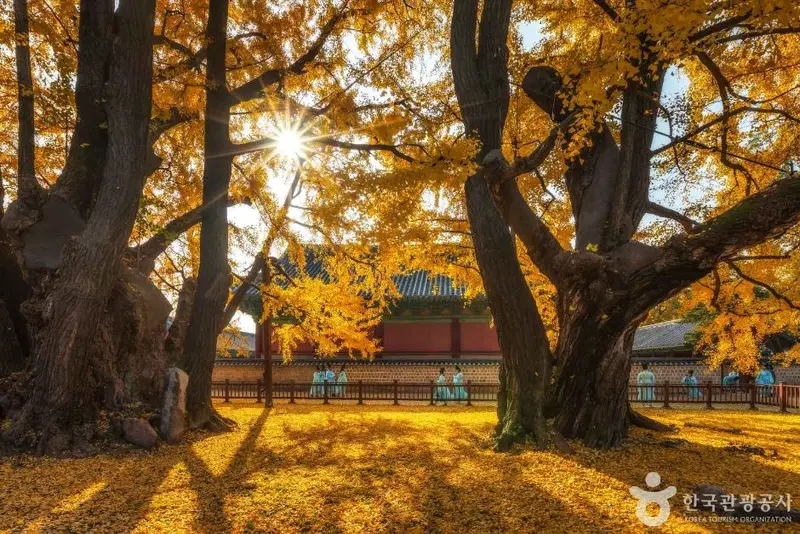
Founded in 1398 under King Taejo, this was the Joseon dynasty's highest state school, now inside the Humanities and Social Sciences Campus of Sungkyunkwan University. The shrine to Confucius and his followers (Munmyo, with its main hall Daeseongjeon) is at the front and the school (Seonggyungwan, with its lecture hall Myeongnyundang) behind it, the arrangement called shrine in front, school behind. Daeseongjeon, Myeongnyundang and three other buildings are Treasures. The ginkgo trees in front of Myeongnyundang are a Natural Monument; in early to mid-November they turn yellow, and many Korean visitors come then. In 2026 Daeseongjeon reopened after repair work. About 11 to 15 minutes on foot from Exit 4 of Hyehwa Station.
- Hours
- Roughly 9:00 to 18:00 from March to October and 9:00 to 17:00 from November to February. Go well before closing
- Admission
- Recent visitors report free entry
Foreigner access
- Korean name
- 성균관 명륜당
Foreigner access details not yet confirmed
-
Hyehwa Filipino Sunday market
On Sunday mornings a street market sets up in the lane in front of Hyehwa-dong Catholic Church, about 3 minutes from Exit 1 of Hyehwa Station, and Korean visitors call it Little Manila. Stalls sell Filipino groceries, fruit, sauces and snacks, and cooked food such as home-style plates and egg pie. It is not an official market and there is no posted schedule.
- Hours
- Sundays only, from the morning. One recent visitor gives 10:00 to 17:00
- Prices
- Home-style plates about 8,000 won (recent visitor)
Foreigner access
Google Maps for Hyehwa Filipino Sunday market Naver Map: unconfirmed- Korean name
- 혜화동성당
- English
- Menu: Partly · Signs: unconfirmed · Staff: Partly
Recent visitors describe Filipino vendors speaking English.
-
Hyehwa Kalguksu
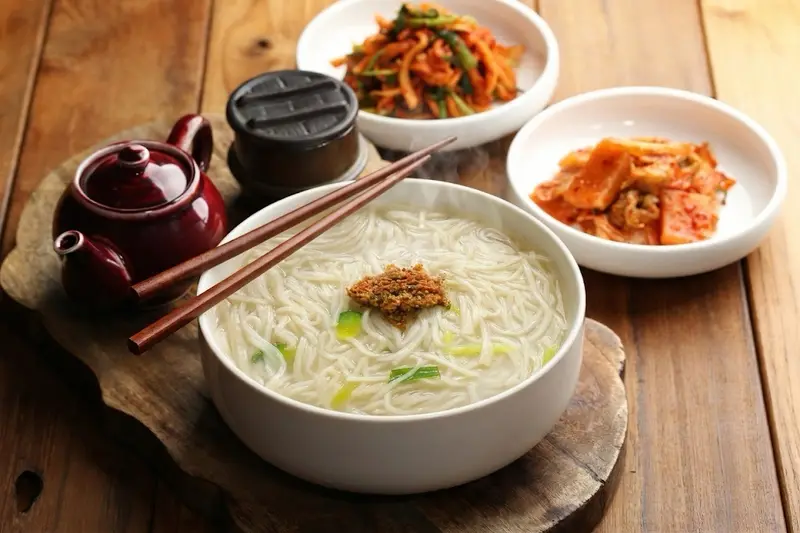
A restaurant that says it has made Gyeongsang-style kalguksu (knife-cut noodles) for 40 years. The noodle soup is called guksi here, and the deep-fried fish is the side dish to order with it; boiled pork, octopus and mung bean pancakes are for sharing. A line forms at dinner, so come for an early dinner around 16:00 to 17:00, before walking up to Ihwa-dong and Naksan. It is a few minutes' walk from Hyehwa Station.
- Hours
- 11:00 to 21:00, daily, break 15:00 to 16:00, last order 20:30. It may close on Seollal and Chuseok; check before going on holidays
- Prices
- Guksi 12,000 won. To share: fried fish 20,000 won (small) or 38,000 won (large), boiled pork (suyuk) 20,000 won (small), octopus 25,000 won, mung bean pancake 15,000 won
Foreigner access
- Korean name
- 혜화칼국수
Foreigner access details not yet confirmed
-
Jinachun
A Korean-Chinese restaurant dating from 1925, 2 minutes from Exit 4 of Hyehwa Station. People come for its jajangmyeon (noodles in black bean sauce). A restaurant with the same name in Gwanghwamun is a different branch; this one is on Daemyeong 1-gil.
- Hours
- 11:30 to 21:00, Monday to Saturday. Closed Sundays
- Prices
- Jajangmyeon 8,000 won, jjamppong (spicy seafood noodle soup) 9,000 won, samseon jajang and fried rice 10,000 won, samseon jjamppong and japchae rice 12,000 won
Foreigner access
- Korean name
- 진아춘
- Booking
- Walk-in (no booking listed on Naver)
- English
- Menu: unconfirmed · Signs: unconfirmed · Staff: unconfirmed
- Queue app
- unconfirmed
-
Hyehwa Dodam
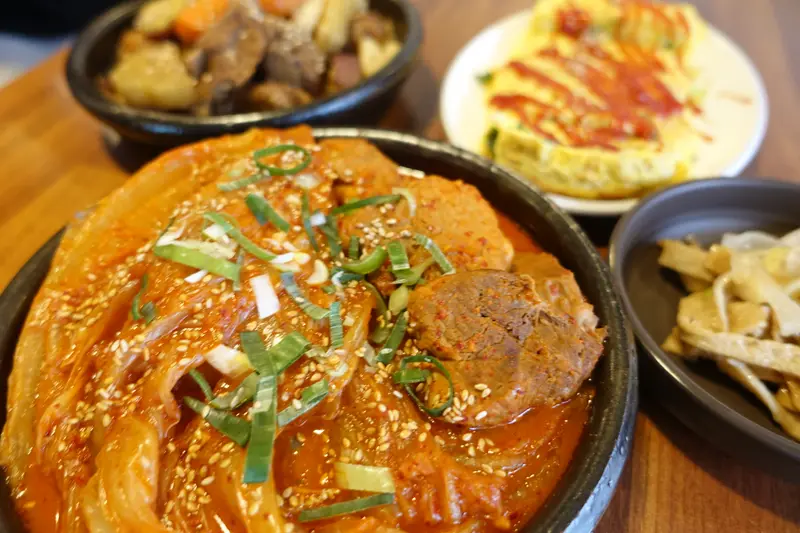
An inexpensive restaurant that the Korea Tourism Organization describes as a regular for Daehangno's actors, students and office workers, 2 minutes from Exit 4 of Hyehwa Station. The dishes are kimchi jjim (pork shoulder braised with aged kimchi), pork galbi jjim made in a pressure cooker, and a pancake of whole green onions. The braises come in small and medium sizes (24,000 and 36,000 won for kimchi jjim); on your own, come for the weekday lunch kimchi jjim.
- Hours
- 11:00 to 22:00, daily, break 15:00 to 17:00 (last order 14:00 at lunch and 21:00 at dinner)
- Prices
- Weekday lunch kimchi jjim 11,000 won; kimchi jjim 24,000 won (small) or 36,000 won (medium); pork galbi jjim 32,000 won (small) or 46,000 won (medium); stir-fried octopus 32,000 won (small); green onion pancake 16,000 won
Foreigner access
- Korean name
- 혜화도담
- Booking
- Naver Booking
Korean phone number needed: unconfirmed - English
- Menu: unconfirmed · Signs: unconfirmed · Staff: unconfirmed
- Queue app
- unconfirmed
-
Myeongnyun Son Kalguksu
A hand-cut kalguksu restaurant near Sungkyunkwan University, about 13 minutes from Exit 4 of Hyehwa Station, that opens only for lunch on weekdays. Besides the noodles there are seolleongtang (beef bone soup), boiled beef and fish pancakes. Pair it with a morning at Munmyo and Seonggyungwan.
- Hours
- Weekday lunch only, from 11:00 or 11:30 to 13:30. Closed Saturdays, Sundays and public holidays
- Prices
- Kalguksu 11,000 won, seolleongtang 14,000 won, boiled beef or octopus 30,000 won (small) or 45,000 won (large), fish pancakes 20,000 won (small)
Foreigner access
- Korean name
- 명륜손칼국수
- Booking
- Walk-in (no booking listed on Naver)
- English
- Menu: unconfirmed · Signs: unconfirmed · Staff: unconfirmed
- Queue app
- unconfirmed
Hotels
Experiences
Sources
- Seoul City Wall: Naksan section, Hyehwamun to Gwanghuimun (route, distance, hours, access, etiquette; Korean) (accessed 2026-11-13)
- Arko Arts Theater and Daehangno Arts Theater: official website (tickets, English page) (accessed 2026-11-13)
- Ministry of Culture, Sports and Tourism: performance listing, Ongals at Theater Joy, August 2026 (Korean) (accessed 2026-11-13)
- Seoul Metropolitan Government media hub: three free spaces in Daehangno, Seoul Theater Center (2026-06-02, Korean) (accessed 2026-11-13)
- Seoul Metropolitan Government media hub: Seoul Theater Center lounge (2025-05-29, Korean) (accessed 2026-11-13)
- Seoul Metropolitan Government media hub: walking Jongno's Seoul Future Heritage, Daehangno to Naksan (2026-09-01, Korean) (accessed 2026-11-13)
- Seoul Metropolitan Government media hub: Seoul Future Heritage in Daehangno, Hakrim Dabang (2016-11-24, Korean) (accessed 2026-11-13)
- Seoul Shinmun: why the sunflower and carp murals were painted over (2016-04-30, Korean) (accessed 2026-11-13)
- YTN: the dilemma of a mural village (2016-04-26, Korean) (accessed 2026-11-13)
- Metro Seoul: column on faded mural villages (2024-06-26, Korean) (accessed 2026-11-13)
- Korea Tourism Organization (TourAPI): Daehangno, Marronnier Park, Arko Art Center, Arko Arts Theater, Ihwa Mural Village, Naksan Park, Seoul City Wall Museum, Munmyo and Seonggyungwan, Hyehwa Kalguksu, Hyehwa Dodam, Sundae Sillok, Hakrim, San 1-1 and Gaeppul entries (Korean; search by name) (accessed 2026-11-13)
- Naver Place business listings (hours, menus, prices, station exits) for each place (accessed 2026-11-13)
- Ongals at Theater Joy: booking, ticket exchange, late entry and restroom (Naver blog, 2026-11-12) (accessed 2026-11-13)
- Ongals: curtain-call photos (Naver blog, 2026-09-25) (accessed 2026-11-13)
- Ongals, a non-verbal show from Gag Concert, and Naksan Park (Naver blog, 2026-10-02) (accessed 2026-11-13)
- Daehangno plays recommended in 2026 (Naver blog search results, Korean) (accessed 2026-11-13)
- Ihwa Mural Village today and etiquette (Naver blog, 2026-11-11) (accessed 2026-11-13)
- Ihwa Mural Village and the painted-over stairs (Naver blog, 2026-10-27) (accessed 2026-11-13)
- Naksan city wall at night, Ihwa-dong and Hyehwa Kalguksu (Naver blog, 2026-11-07) (accessed 2026-11-13)
- Sungkyunkwan ginkgo trees and winter hours (Naver blog, 2026-11-11) (accessed 2026-11-13)
- Myeongnyundang reopened (Naver blog, 2026-11-13) (accessed 2026-11-13)
- Sunday morning in Hyehwa-dong, the Filipino market (Naver blog, 2026-10-03) (accessed 2026-11-13)
- Hyehwa Filipino market, Sunday hours and prices (Naver blog, 2026-08-30) (accessed 2026-11-13)
- Jinachun, a Chinese restaurant since 1925, and the Gwanghwamun namesake (Naver blog, 2026-11-13) (accessed 2026-11-13)
- Hakrim Dabang, since 1956 (Naver blog, 2026-11-12) (accessed 2026-11-13)