Jeju
Korea's volcanic island: Hallasan, Seongsan Ilchulbong, waterfalls on the south coast and beaches all around
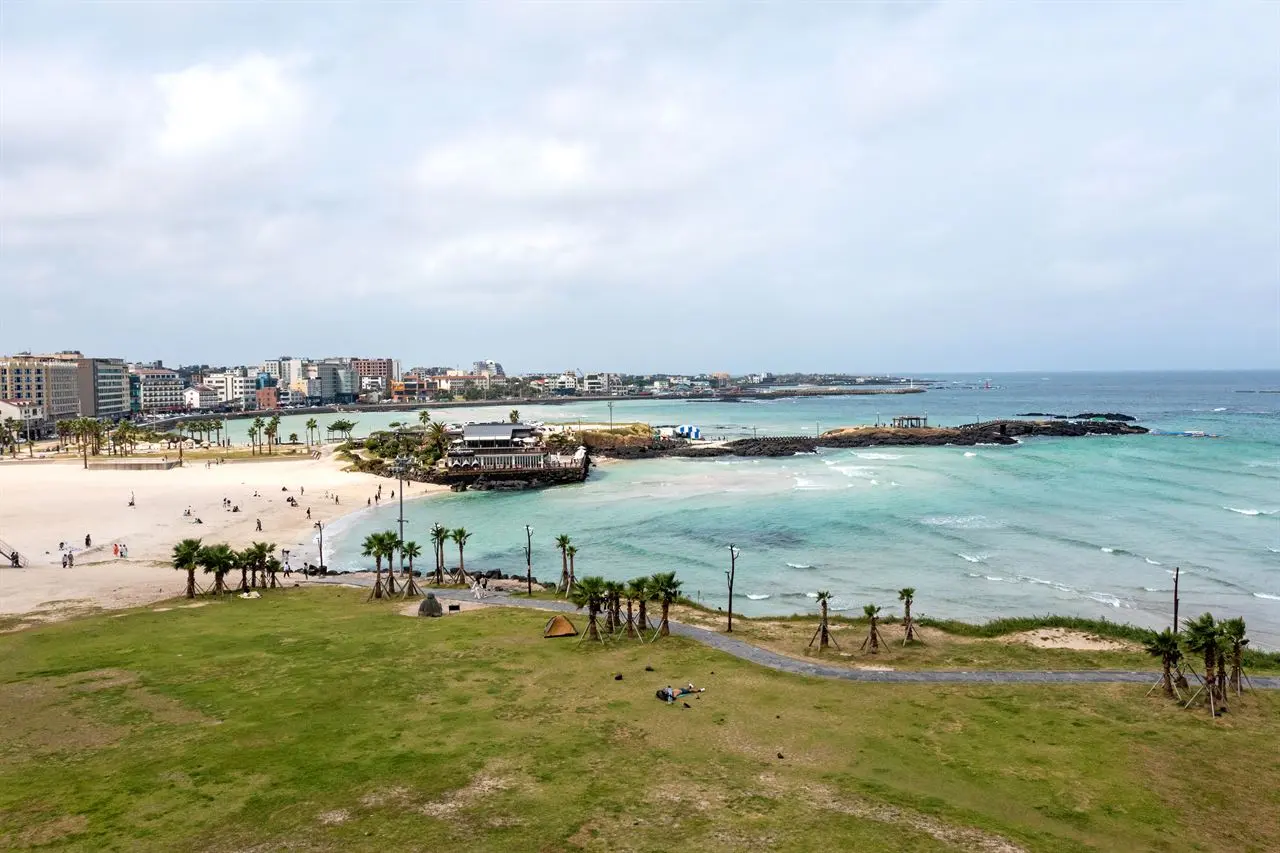
Jeju is a volcanic island off Korea's south coast, a flight of 75 to 85 minutes from Seoul. This page helps you choose which part of the island to stay in, how many days to spend, whether you need a car, what to eat and when to come, then sends you to our pages for the details.
Intro
Jeju is a volcanic island off Korea’s south coast, 75 to 85 minutes by air from Gimpo Airport in Seoul. In 2025 it had 13.86 million visitors, of whom 2.24 million were from abroad, 17.7 percent more than the year before, according to Jeju Tourism Association figures. Most foreign visitors came from China (70.2 percent), followed by Taiwan (10.4 percent), Japan (3.7 percent) and the United States (2.5 percent).
Three things draw first-time visitors:
- Volcanic landscapes. Hallasan, Seongsan Ilchulbong and the Geomunoreum lava tube system have been a UNESCO World Natural Heritage site, “Jeju Volcanic Island and Lava Tubes”, since 2007. At 1,950 m, Hallasan is the highest mountain in South Korea.
- The coast. Beaches of white sand and black lava rock, waterfalls on the south coast (one of them falls straight into the sea), and sea-view cafes on the northwest coast.
- Food. Black pork barbecue, gogi-guksu (pork noodle soup), hairtail fish and tangerines.
Areas of the island
We divide the island into five areas. Jeju Airport is in Jeju City on the north coast; everything else is a bus ride or a drive from there.
North: Jeju City
- Jeju City: The airport city. Dongmun Market and its night market, Black Pork Street, gogi-guksu restaurants that open early, and Yongduam Rock by the runway. Dongmun Market is within 10 minutes of the airport.
West: Aewol and Hallim
- Aewol: The nearest stretch of coast to the airport, about 35 minutes on Express Bus 102: the Handam Coastal Walk over black lava rock, sea-view cafes and Gwakji Beach.
- West Jeju: Hyeopjae, Hallim and Geumneung: Further west in Hallim. Hyeopjae Beach (협재해수욕장), white sand mixed with crushed shell and shallow water facing the small island of Biyangdo, with Geumneung Beach and Hallim Park beside it and the boat to Biyangdo from Hallim Port. Express Bus 102 reaches Hallim in about 50 minutes from the airport; change there to Bus 202, 784-1 or 784-2 for the beach stop, a minute from the sand.
South: Seogwipo and Jungmun
- Seogwipo and Jungmun: The south coast, across Hallasan from Jeju City. Three waterfalls (Cheonjiyeon, Jeongbang and Cheonjeyeon), the Oedolgae rock pillar, the Jusangjeolli rock columns, Olle Market and hairtail restaurants in Seogwipo town; the big resort hotels in Jungmun. Airport Limousine 600 reaches Jungmun in about 50 to 55 minutes.
- Marado and Gapado: Jeju’s Southern Islands: Two flat islands off the southwest coast. Marado, 30 minutes by boat, is the southernmost island of Korea, with a monument at its tip, a lighthouse and jjajangmyeon restaurants; Gapado, 10 minutes, is covered in green barley from mid-March to mid-May. Boats leave Unjin Port, the last stop of Express Bus 151 from the airport (75 to 78 minutes); buy tickets at the counter with your passport.
East: Seongsan and Udo
- Seongsan Ilchulbong: A 180 m volcanic cone at the eastern tip of the island, climbed by stairs in about 20 minutes, according to Visit Jeju. Gates open at 6:00 from November to February and as early as 4:30 in summer. Adults 5,000 won. Haenyeo, the women divers, give a free show at its foot at 14:00. About 1 hour 26 minutes from the airport on Express Bus 111.
- Udo: A small island 15 minutes by ferry from Seongsan Port, with a white beach of algae sand, sea cliffs and peanut ice cream. Most rental cars cannot be taken onto the island. A November 2026 blog post gives 17:00 as the last boat back in winter; check at the terminal on the day.
- On the way east: Express Bus 101 follows the northeast coast through Hamdeok, Gimnyeong and Sehwa. Hamdeok Beach (함덕해수욕장), about 20 km east of the airport beside Seoubong hill, is a turquoise-water beach on Jeju Olle route 19. Gimnyeong Beach (김녕해수욕장) has white sand over flat lava rock. Both are on East Jeju: Hamdeok, Woljeong-ri and Sehwa, with Woljeong-ri, the Sehwa market, the Haenyeo Museum and Bijarim Forest.
Center: Hallasan
- Hallasan: The summit crater, Baengnokdam, is a full-day hike on the Seongpanak or Gwaneumsa trails, and both need a reservation beyond a set shelter. The Yeongsil and Eorimok trails reach the highland below the summit in a half day with no reservation. No entrance fee. Express Bus 181 stops at Seongpanak, and Bus 240 stops at Eorimok and Yeongsil (three of its daily runs do not operate from November to March). Bus times and winter changes are on the Hallasan page. For the smaller volcanic cones (oreum) and cedar forests around the mountain, such as Saebyeol Oreum, Darangshi Oreum and Saryeoni Forest Path, see Jeju’s Oreum and Forests.
How many days
In the 2025 Jeju Visitor Survey, foreign visitors stayed an average of 4.79 days, and 91.9 percent traveled independently rather than on a package tour.
For a first visit we suggest three nights and four days, split between the north and the south:
- Arrive in Jeju City: Dongmun Market and the night market, and black pork for dinner.
- East: Express Bus 111 to Seongsan Ilchulbong, the 14:00 haenyeo show, and Udo if the weather and the last boat allow.
- Hallasan: a reservation day to the summit, or the Yeongsil trail in the morning.
- South: move to Seogwipo or Jungmun for the waterfalls, the coast and a hairtail dinner, then fly out from Jeju Airport.
This outline is our suggestion, built from the bus times on each page. With a car, you can fit more stops into each day.
Only two nights? Jeju in 3 Days Without a Car is a bus-only route with times and fares: Jeju City, Seongsan Ilchulbong and Hamdeok, then Aewol on the way to the airport.
For more days on the island, Jeju Day Courses by Bus has four one-day courses in the order Korean travelers without a car take them: Sehwa and Jongdal-ri in the east, Hyeopjae in the west, Seogwipo’s old town in the south, and Iho Teu Beach and Dodubong in Jeju City.
Where to stay
- Jeju City, old town (Dongmun Market and Tapdong): walk to the market, the night market and the sea. A good first night if you land late, since the last express buses to Seongsan and Seogwipo leave the airport by about 21:40.
- Jeju City, Shin-Jeju (Yeon-dong and Nohyeong): the airport limousines to Jungmun and Seogwipo pass through, which helps if you move on to the south coast.
- Seogwipo town: walk to Olle Market, Cheonjiyeon and Jeongbang falls and the harbor.
- Jungmun: the large resort hotels, the beach and the cliffs, with Airport Limousine 600 stopping at the hotels.
- Near Seongsan: for an early climb of Seongsan Ilchulbong, stay nearby the night before; the first Express Bus 111 from the airport reaches Seongsan Port at about 8:16.
Getting around without a car
You can reach every place on our Jeju pages by bus from the airport. Seongsan is about 1.5 hours away, Seogwipo about an hour, and Aewol about 35 minutes. The limits are frequency, with some express buses up to two hours apart, and the last buses to Seongsan and Seogwipo, which leave the airport between 21:15 and 21:40.
- No cash on buses. Since October 1, 2024, Jeju’s route buses take only transit cards, credit cards with a transit card function, or QR mobile transit cards. City buses cost 1,150 won with a card; express buses 2,000 to 3,000 won by distance (tap again when you get off).
- Visa cards: a 2025 news report said Jeju city buses started taking Visa cards in August 2025. Whether this still works and on which buses has not been confirmed, so carry a T-money card as a backup.
- Rental cars: according to the Korea Tourism Organization, visitors with a valid International Driving Permit (IDP) or a mutually recognized foreign driver’s licence may drive in Korea for up to one year from the date they enter. To rent a car, bring your IDP and your passport. A car saves time if you want several countryside stops a day.
- Udo: most rental cars cannot be taken across, so leave the car at Seongsan Port.
Flights, airport buses, rental car conditions and taxi fares are on How to Get to Jeju and Around the Island.
What to eat
Each dish links to a page where we list a restaurant, its hours and how to find it.
- Black pork barbecue: Dombedon on Black Pork Street in Jeju City (belly 23,000 won an order, sets for two from 59,000 won).
- Gogi-guksu (pork noodle soup): Jamae Guksu, Olle Guksu or Samdae Guksu Hoegwan (open until 2:00) in Jeju City, 10,000 to 11,000 won.
- Bracken fern soup (gosari yukgaejang): Woojin Haejangguk in Jeju City, 11,000 won, from 6:00.
- Hairtail (galchi): boneless braised hairtail at Saekdal Sikdang near Jungmun (19,000 won), or grilled hairtail and hairtail soup at Negeori Sikdang in Seogwipo (soup 16,000 won, from 7:00).
- Seafood from the haenyeo: abalone rice porridge and sea urchin seaweed soup at Baekgi Haenyeo-ui-jip by Gwangchigi Beach near Seongsan Ilchulbong (12,000 won each).
- Markets: Dongmun Market’s night market in Jeju City, and Olle Market in Seogwipo for tangerines, hallabong oranges and mackerel sashimi.
- Peanut ice cream on Udo (6,000 to 6,800 won).
- Where locals eat: Where to Eat in Jeju Like a Local maps 39 restaurants in five areas, from gogi-guksu and black pork to haenyeo houses, with the bus stop for each.
- Cafes: Jeju Cafes Locals Love maps 37 cafes, from sea-view rooms on the coast road to a tangerine farm, with the bus stop for each.
When to go
- March: the Jeju Fire Festival at Saebyeol Oreum ran from March 9 to 14 in 2026. The actual burning of the hillside was dropped by a 2023 decision, and the festival now uses a digital version of the hillside burning and a daljip (straw moon house) bonfire. 2027 dates have not been announced.
- March and April: canola flowers and cherry blossoms. Reports of the 2026 Seogwipo canola flower walking festival give different dates (March 28 to 29 in a news report, April 4 to 5 on a festival listing). An official cherry blossom date for Jeju has not been confirmed.
- Summer: the swimming season and the latest Udo boats and Seongsan opening times (4:30 from May to August). The 2027 beach season dates and typhoon patterns have not been confirmed.
- Winter: for Hallasan, bring crampons and warm clothing; from October to March the last entry to the summit trails is 11:30. Seongsan Ilchulbong opens at 6:00 from November to February. The last boat back from Udo is around 17:00 in winter (blog post, November 2026), so check at the terminal on the day.
- Weather: for average temperatures, rain and what to wear each month, see Korea Weather by Month and When to Go.
Before you go
- Paying with Foreign Cards in Korea: How to get a T-money card, which you need for Jeju’s cashless buses.
- Map Apps in Korea: What Google Maps can and cannot do in Korea and when to switch to Naver Map.
- SIM Cards, eSIMs and Pocket Wi-Fi in Korea: Carrier eSIM and SIM prices and airport counters.
Questions travelers ask
Is Jeju worth visiting?
Jeju suits travelers who want landscapes more than a city: Hallasan, Seongsan Ilchulbong and the Geomunoreum lava tubes are a UNESCO World Natural Heritage site, with beaches, waterfalls and seafood around the coast. It is 75 to 85 minutes by air from Gimpo. Foreign visitors stayed 4.79 days on average in 2025, and we suggest three nights for a first visit.
Do I need a car in Jeju?
No. Every place on our Jeju pages can be reached by bus from the airport, but some express buses run up to two hours apart and the last buses to Seongsan and Seogwipo leave the airport between 21:15 and 21:40. A car lets you fit more countryside stops into a day; Jeju in 3 Days Without a Car is a bus-only plan, and rental conditions are on How to Get to Jeju and Around the Island.
Is Jeju worth visiting in winter?
It suits hikers and sightseers more than beachgoers. Hallasan needs crampons and warm clothing, and from October to March the last entry to the summit trails is 11:30; Seongsan Ilchulbong opens at 6:00 from November to February. The last boat back from Udo is around 17:00 in winter, according to a November 2026 blog post, so check at the terminal on the day.
Is Jeju good with kids?
On Udo, Hagosudong Beach has soft sand and shallow water, which suits families with children. At Soesokkak in Seogwipo, a small boat costs 25,000 won for two adults and a child (48 months to under 130 cm), and children pay 2,500 won at Seongsan Ilchulbong (adults 5,000 won). For the places Korean families take their children, with ages, fees, strollers and buses, see Jeju with Kids.
Hotels
Experiences
Sources
- Jeju foreign visitors in 2025 (Jeju Tourism Association figures), Seoul Shinmun via Twig (2026-01-31) (accessed 2026-11-11)
- 2025 Jeju Visitor Survey: length of stay and independent travel, Seoul Shinmun via Twig (2026-03-31) (accessed 2026-11-11)
- Hallasan National Park: history (World Natural Heritage 2007) (accessed 2026-11-11)
- Jeju Fire Festival 2026 goes digital, Seoul Shinmun (2026-03-03) (accessed 2026-11-11)
- Jeju Fire Festival 2026, Newsis (2026-03-14) (accessed 2026-11-11)
- Seogwipo canola flowers and cherry blossoms, spring 2026, Seoul Shinmun (2026-03-12) (accessed 2026-11-11)
- Korea Tourism Organization: Hamdeok Beach (Hamdeok Seoubong Beach) (accessed 2026-11-11)
- Korea Tourism Organization: Gimnyeong Beach (accessed 2026-11-11)
- Korea Tourism Organization: Hyeopjae Beach (accessed 2026-11-11)