Buyeo: Baekje Sites, Lotus Pond and Museum
The last Baekje capital, an hour from Gongju: a stone pagoda, a riverside fortress, a lotus pond and lotus-leaf rice
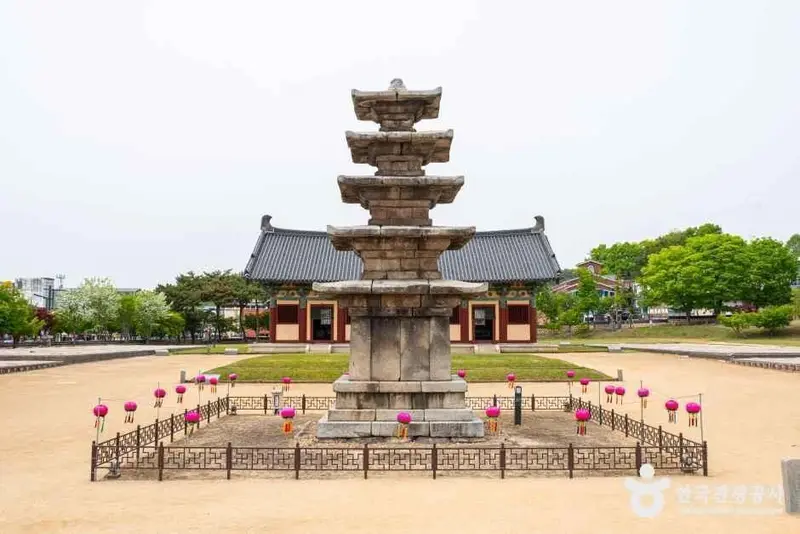
Buyeo, then called Sabi, was the last capital of the Baekje kingdom, and four of its sites are part of the Baekje Historic Areas UNESCO World Heritage listing. Four of the main sights are within about 1.2 km of the bus terminal, so you can see them on foot in a day. Buses from Gongju take about 55 minutes, and from Seoul about 2 hours. It suits travelers who have seen Gongju and want the rest of the Baekje story.
Intro
Buyeo was the last capital of the Baekje kingdom, which moved its court here from Gongju in 538 and called the city Sabi. Four of the eight sites in the Baekje Historic Areas, listed by UNESCO in 2015 as Korea’s 12th World Heritage Site, are in Buyeo: the Gwanbuk-ri site and Busosanseong Fortress, the Jeongnimsa Temple Site, the Royal Tombs in Neungsan-ri, and Naseong, the outer city wall. Two more are in Gongju, the earlier capital; see our Gongju guide.
Two things make Buyeo worth the trip: the five-story stone pagoda at Jeongnimsa, one of only two Baekje stone pagodas left, and the Gilt-bronze Incense Burner of Baekje in the national museum. Add the walk over Busosan hill to the river, a boat ride, and a lotus-leaf rice lunch, and it is a full day.
The town is small. The bus terminal is in the middle, and Jeongnimsa, Busosanseong, the museum and Gungnamji are all within about 1.2 km of it, so you can walk everything except Baekje Cultural Land, which is across the river.
A day in Buyeo on foot
This order follows the county’s Sunday city tour route and the way recent visitors walked the town. Times are approximate.
| Time | Stop |
|---|---|
| 9:00 | Museum: kiosk ticket |
| 10:00 | Jeongnimsa Temple Site |
| 11:00 | Busosanseong and Goransa |
| 13:00 | Boat to Gudeurae |
| 13:15 | Lunch: Jangwon Makguksu |
| 14:30 | Tea: Baekjehyang |
| 15:30 | Gungnamji Pond |
| 17:00 | Dinner: lotus-leaf rice |
The museum first, until December 14, 2026. While the galleries are being renovated, the incense burner hall is the only exhibition open, and tickets for all 25 time slots are released together at 9:00 at the kiosk in the Sabimaru hall, first come, first served. Get your ticket first and fit the rest of the day around your slot; if it is in the afternoon, come back from Baekjehyang, about 600 m away in a straight line, before Gungnamji.
Lunch. Jangwon Makguksu (closed Tuesdays) is by the Gudeurae boat landing. On a Tuesday, eat early at Wang Gomtang by the bus terminal (open from 10:30, closed Sundays). For dinner, Sabihyang and Yeonkkot Iyagi both reopen at 17:00 after their afternoon break.
Arriving from Gongju for the day: the 7:20, 8:20 and 9:20 buses from Gongju arrive about 55 minutes later. Walk to the museum first (about 900 m from the terminal) for a slot ticket when the kiosk opens at 9:00, then see Jeongnimsa, which also opens at 9:00, and Busosanseong.
Busosanseong, Nakhwaam and Goransa
Busosan is a low wooded hill (96.4 m) on the north side of the old capital, ringed by the earth walls of Busosanseong. The paths inside pass pavilions and shrines, including Baekhwajeong, Sajaru and Yeongillu, and the Gwanbuk-ri site at the foot of the hill is thought from excavations to be the site of the royal palace.
Nakhwaam is the cliff on the river side of the hill. The Samguk Yusa tells that the court women threw themselves from it when Baekje fell, and the rock carries the name Nakhwaam carved in the hand of the Joseon scholar Song Si-yeol. Below it, Goransa is a small temple at the water’s edge, and from its landing the hwangpo sailboat runs down the Baengmagang River to Gudeurae in about 10 minutes (one way 7,000 won). The county allows about 2 hours for the hill.
Entry is free between 12:00 and 13:00.
Jeongnimsa Temple Site
The five-story stone pagoda stands in the middle of the temple grounds, with a hall behind it and the small Jeongnimsa Museum on the site. Entry is free, and about 40 minutes is enough. During the 2026 Baekje Cultural Festival in October, the site hosted a night media art show.
Buyeo National Museum
The Gilt-bronze Incense Burner of Baekje stands alone in a dark hall built for it. Entry is free, and the museum opens at 9:00 and closes on Mondays. Until December 14, 2026, only that hall and the children’s museum are open, with the same-day kiosk ticket described above; the plans for the reopened galleries have not been announced.
Gungnamji Pond
Gungnamji is in Seodong Park, a short walk south of the town center. The pond and its island pavilion, Poryongjeong, are open at all times. In July the lotus ponds around it bloom, and the Buyeo Seodong Lotus Festival is held here (July 3 to 5 in 2026). The Korea Tourism Organization also lists a chrysanthemum exhibition here in October and November.
Baekje Cultural Land
Baekje Cultural Land is a full-size reconstruction of a Baekje royal palace, temple and village on the far bank of the river. It shows what Baekje buildings may have looked like, but none of it is original. Take a taxi from the terminal (about 12 minutes). It is closed on Mondays.
Other Baekje sites
- Royal Tombs in Neungsan-ri (Buyeo Wangneungwon): the Baekje royal tombs, a World Heritage site, about 7 minutes and about 7,800 won by taxi from the terminal (estimate). Adults 1,000 won, free from 12:00 to 13:00; same hours as Busosanseong.
- Naseong: the outer wall of the Baekje capital, a World Heritage site; no hours or fees are listed for it.
- Buyeo city tour bus: runs on weekends in spring and autumn (the 2026 season ended on October 18) and must be booked online and paid by Korean bank transfer, so it is hard to use without a Korean bank account.
What to eat
Buyeo’s dish is yeonnipbap, sticky rice steamed in a lotus leaf, served as a set with side dishes, grilled fish and meat. Sabihyang (20,000 won, two people minimum) and Yeonkkot Iyagi (lotus-leaf rice set 20,000 won, white lotus set 23,000 won) are both near Gungnamji; Yeonkkot Iyagi is closed on Mondays and Sabihyang closes at 15:00 on Wednesdays. By the Gudeurae landing, Gudeurae Dolssambap (구드래돌쌈밥) serves ssambap (rice with leaf wraps) sets from 22,000 won and a lotus-leaf rice set for 28,000 won, 11:00 to 21:00 daily.
For lunch, Jangwon Makguksu has buckwheat noodles for 9,000 won, and Wang Gomtang near the terminal has beef bone soup for 11,000 won. For lotus tea, go to Baekjehyang.
Rules and closing days
- Sabihyang serves its set to two or more people only. If you travel alone, eat at Yeonkkot Iyagi, Jangwon Makguksu or Wang Gomtang.
- Museum tickets come from one kiosk only (until December 14, 2026): no online booking, one ticket per person.
- Mondays: the museum, Baekje Cultural Land, Yeonkkot Iyagi and Baekjehyang are closed. Tuesdays: Jangwon Makguksu. Wednesdays: Sabihyang closes at 15:00. Sundays: Wang Gomtang.
- Winter: from November to February, Busosanseong, Jeongnimsa and Baekje Cultural Land close at 17:00.
Getting there
From Gongju. Intercity buses leave Gongju Bus Terminal for Buyeo Intercity Bus Terminal 13 times a day, at 7:20, 8:20, 9:20, 10:50, 11:10, 12:15, 13:38, 15:20, 15:40, 16:45, 17:10, 18:05 and 18:50 (November 18 and 21, 2026 listings). The ride takes about 55 minutes; standard 5,900 won, deluxe 7,700 won. On standard buses seats are not assigned, and tickets are bought at the terminal.
From Buyeo back to Gongju. The online listings show four direct buses, at 5:10, 11:10, 13:00 and 19:00 (about 50 minutes, 7,700 won). The Buyeo terminal timetable has about 19 departures a day that pass through Gongju, many of them long-distance buses, with the last at 20:00; buy tickets at the kiosk in Buyeo terminal. Chungnam’s C-Tour demand-responsive bus also links Gongju and Buyeo (booked in an app); whether foreign visitors can sign up has not been confirmed.
From Seoul. Express buses leave Seoul Express Bus Terminal (Gyeongbu building) for Buyeo at 9:40, 11:50, 16:30 and 19:40, and leave Buyeo for Seoul at 6:20, 8:20, 13:00 and 16:00; about 2 hours, deluxe 20,400 won. Intercity buses to and from Seoul Nambu Terminal run about 20 times a day, from 6:30 to 21:00 from Seoul and from 6:40 to 20:30 from Buyeo, about 2 hours to 2 hours 30 minutes, deluxe 20,400 won; check times on the T-money intercity bus site.
To combine Buyeo with Gongju, see Gongju Overnight Trip from Seoul: A 2-Day Itinerary, where Buyeo is the Day 2 option.
When to go
- July: lotus season at Gungnamji and the Seodong Lotus Festival.
- October: the Baekje Cultural Festival is held in Buyeo and Gongju at the same time (the 72nd ran from October 3 to 11, 2026, in Buyeo around Jeongnimsa and the Gwanbuk-ri site, 10:00 to 22:00).
- Winter: sites close at 17:00, and Baekje Cultural Land has no night opening.
For weather by month, see Korea Weather by Month and When to Go.
Questions travelers ask
Is Buyeo worth visiting?
Yes, if you are interested in Baekje history or have already seen Gongju: Buyeo has four World Heritage sites, the Jeongnimsa pagoda and the Gilt-bronze Incense Burner, and the town is small enough to walk in a day. If you have time for only one Baekje capital, Gongju is closer to Seoul.
How do I get from Gongju to Buyeo?
By intercity bus from Gongju Bus Terminal: 13 a day from 7:20 to 18:50, about 55 minutes, 5,900 won standard or 7,700 won deluxe.
How do I get from Buyeo to Seoul?
Express buses to Seoul Express Bus Terminal leave at 6:20, 8:20, 13:00 and 16:00 (about 2 hours, deluxe 20,400 won). For later buses, take an intercity bus to Seoul Nambu Terminal; the last leaves at 20:30.
When is the Buyeo lotus festival?
The Buyeo Seodong Lotus Festival at Gungnamji ran from July 3 to 5, 2026. The 2027 dates have not been announced; the lotuses bloom in July.
Is Buyeo National Museum open?
Yes, but until December 14, 2026 only the incense burner hall and the children’s museum are open, with a free same-day ticket from the kiosk (from 9:00, first come, first served). It is closed on Mondays.
Get There
-
Buyeo Intercity Bus TerminalIntercity and express buses
- Korean
- 부여시외버스터미널
- Exit
- unconfirmed
- Walk
- 7 min
Express and intercity buses from Seoul and buses from Gongju arrive here. Jeongnimsa Temple Site is about 7 minutes on foot (estimate).
Hours & Fees
- Getting around
- On foot. From the bus terminal, Jeongnimsa is about 460 m away, the Busosanseong ticket office about 560 m, the museum about 900 m and Gungnamji about 1.2 km (straight-line distances). Short taxi rides in town cost about 4,000 to 5,700 won (estimates)
- Luggage storage at the bus terminal
- unconfirmed
Places in Buyeo: Baekje Sites, Lotus Pond and Museum
-
Busosanseong Fortress, Nakhwaam and Goransa
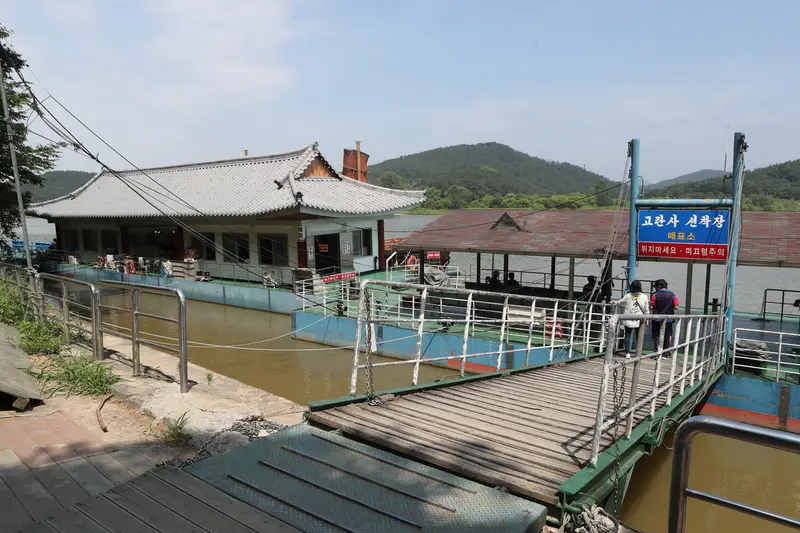
The walled, wooded hill on the north side of the Baekje capital, above the Baengmagang River; a UNESCO World Heritage site. One ticket covers the forest paths, the Nakhwaam cliff and Goransa, a small temple at the water's edge, where a boat takes you down the river to Gudeurae. Allow about 2 hours.
- Hours
- March to October 9:00 to 18:00, November to February 9:00 to 17:00. Open every day, according to Buyeo County; the Korea Tourism Organization lists Nakhwaam as closed on January 1 and on Seollal and Chuseok days, so check if you go then
- Admission
- Adults 2,000 won, youths 1,100 won, children 1,000 won, including Nakhwaam and Goransa. Entry is free from 12:00 to 13:00. The county also lists free entry for ages 65 and over and 6 and under; whether the 65-and-over rule covers foreign visitors is not stated
- River boat (hwangpo sailboat)
- Goransa to Gudeurae, about 10 minutes: one way 7,000 won, return 11,000 won (children 5,000 and 7,000 won). March to October 9:00 to 18:00, November to February 9:00 to 17:00. How often boats leave is unconfirmed
- Getting there
- About 560 m from the bus terminal (straight line), or about 2 minutes and about 4,000 won by taxi (estimate). The ticket office and tourist information center are at 247-9 Seongwang-ro
Foreigner access
Google Maps for Busosanseong Fortress, Nakhwaam and Goransa Naver Map for Busosanseong Fortress, Nakhwaam and Goransa- Korean name
- 부소산성
Foreigner access details not yet confirmed
-
Jeongnimsa Temple Site
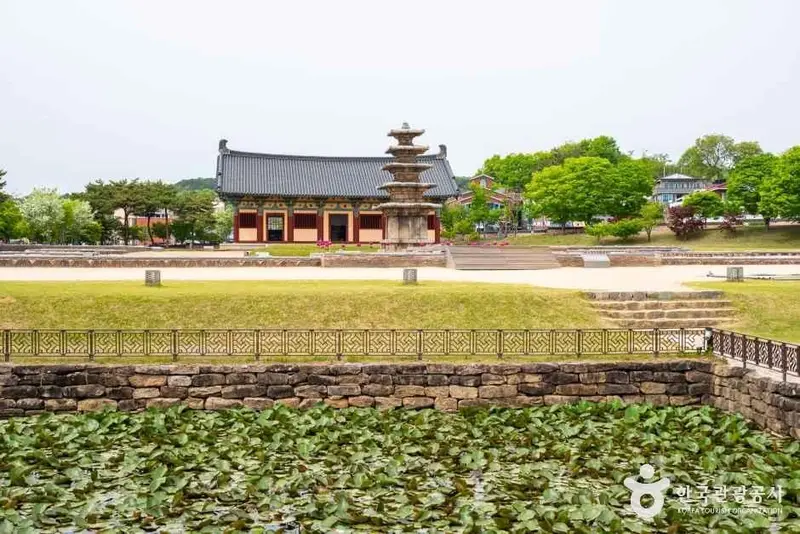
The site of a Baekje temple with its five-story stone pagoda still standing; the Korea Tourism Organization notes it is one of only two Baekje stone pagodas left, with the one at Mireuksa in Iksan. A UNESCO World Heritage site and free. It makes a good first stop: it is a 7-minute walk from the bus terminal.
- Hours
- March to October 9:00 to 18:00, November to February 9:00 to 17:00, according to Buyeo County. The Jeongnimsa Museum on the site is closed on Mondays, January 1, and Seollal and Chuseok days. Allow about 40 minutes
- Admission
- Free, including the Jeongnimsa Museum
- Getting there
- About 7 minutes on foot from Buyeo Intercity Bus Terminal (estimate)
Foreigner access
- Korean name
- 부여 정림사지
Foreigner access details not yet confirmed
-
Buyeo National Museum
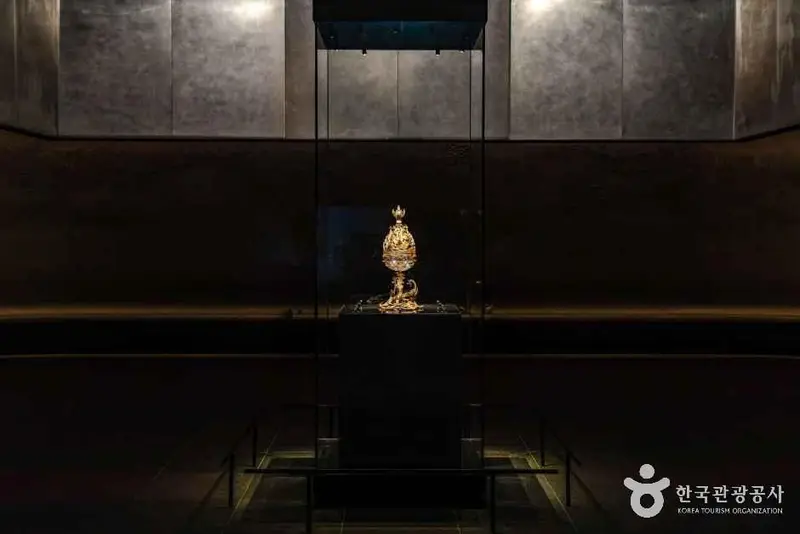
The home of the Gilt-bronze Incense Burner of Baekje, shown alone in its own hall. Free. Until December 14, 2026 the permanent galleries are closed for renovation, and only the incense burner hall and the children's museum are open, with a same-day ticket from a kiosk.
- Hours
- 9:00 to 18:00, last entry 30 minutes before closing. Closed on Mondays (on the next weekday when Monday is a public holiday), January 1, and Seollal and Chuseok days
- Admission
- Free
- Until December 14, 2026
- Only the incense burner hall and the children's museum are open. Each visitor needs a free same-day QR ticket, one per person, from the kiosk in the Sabimaru performance hall; there is no online booking. All 25 time slots open at 9:00, first come, first served, with 120 people per slot for the incense burner hall; enter within 10 minutes of your slot's start. Slots start every 20 minutes from 9:20 to 17:20
- Volunteer guides
- Tuesday to Sunday at 10:10 and 13:10, from the 3rd-floor lobby of the incense burner hall, no booking; languages other than Korean are not stated
- Getting there
- About 900 m from the bus terminal (straight line), or about 4 minutes and about 4,500 won by taxi (estimate)
Foreigner access
- Korean name
- 국립부여박물관
- Booking
- Until December 14, 2026: same-day ticket from the kiosk in the Sabimaru hall only, no online booking
Korean phone number needed: unconfirmed - English
- Signs: unconfirmed · Staff: unconfirmed
The museum website has an English section. Whether the ticket kiosk has an English screen is unconfirmed.
-
Gungnamji Pond
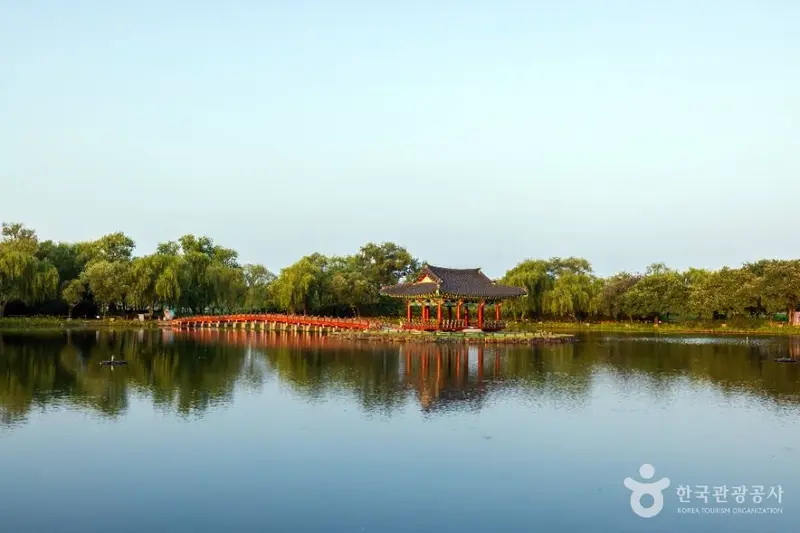
A large pond that the Samguk Sagi records being dug south of the palace in the reign of King Mu, with a pavilion on an island reached by a wooden bridge. Lotuses fill the ponds around it in July. It is open at all times and free, so it fits at the end of the day.
- Hours
- Open at all times, every day
- Admission
- Free
- Lotus festival
- The 24th Buyeo Seodong Lotus Festival ran from July 3 to 5, 2026, 9:00 to 22:00, free. 2027 dates have not been announced
- Getting there
- About 15 minutes on foot from Jeongnimsa (estimate), or about 4 minutes and about 4,700 won by taxi (estimate). Back to the bus terminal: 15 to 20 minutes on foot, or about 5 minutes and about 5,500 won by taxi (estimate)
Foreigner access
- Korean name
- 부여 궁남지
Foreigner access details not yet confirmed
-
Baekje Cultural Land
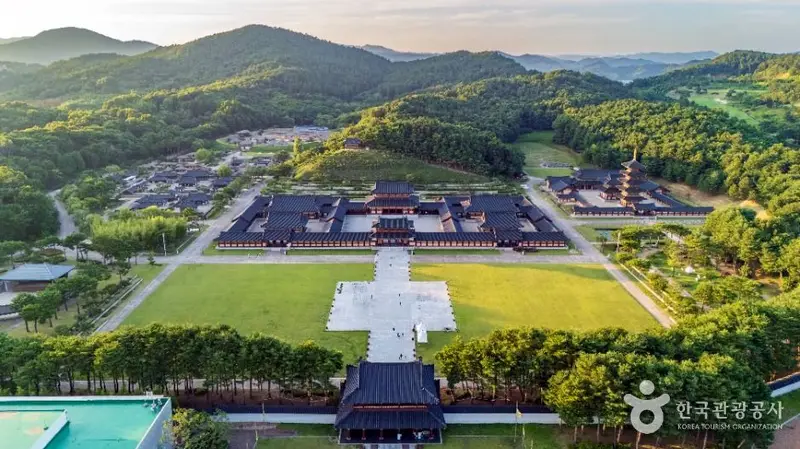
A historical theme park with full-size reconstructions of a Baekje palace, a wooden pagoda and a village. It is a modern reconstruction, not an excavated site, and it is across the river from the town, so you need a taxi.
- Hours
- March to October 9:00 to 18:00, November to February 9:00 to 17:00; tickets until 30 minutes before closing. Closed on Mondays (on Tuesday when Monday is a public holiday) and January 1. Night opening from April to November 1, on weekends and holidays, 18:00 to 22:00; there is none in winter
- Admission
- Adults 6,000 won, youths 4,500 won, children 3,000 won (includes the Baekje History and Culture Hall). Night: adults 6,000 won, youths 5,000 won, children 4,000 won
- Guided tours
- In Korean at 10:00, 11:00, 13:00, 14:00, 15:00, 16:00 and 17:00 (17:00 from March to October only), about 30 minutes, from inside Jeongyangmun Gate. English, Chinese and Japanese tours by advance booking: 041-408-7290
- Getting there
- About 12 minutes and about 12,100 won by taxi from the bus terminal (estimate). A city bus to it is unconfirmed
Foreigner access
- Korean name
- 백제문화단지
- Booking
- Tickets at the gate; foreign-language tours by advance booking
Korean phone number needed: unconfirmed - English
- Signs: unconfirmed · Staff: unconfirmed
The official website is being rebuilt (from October 2026), and a temporary page gives hours and fees.
-
Sabihyang
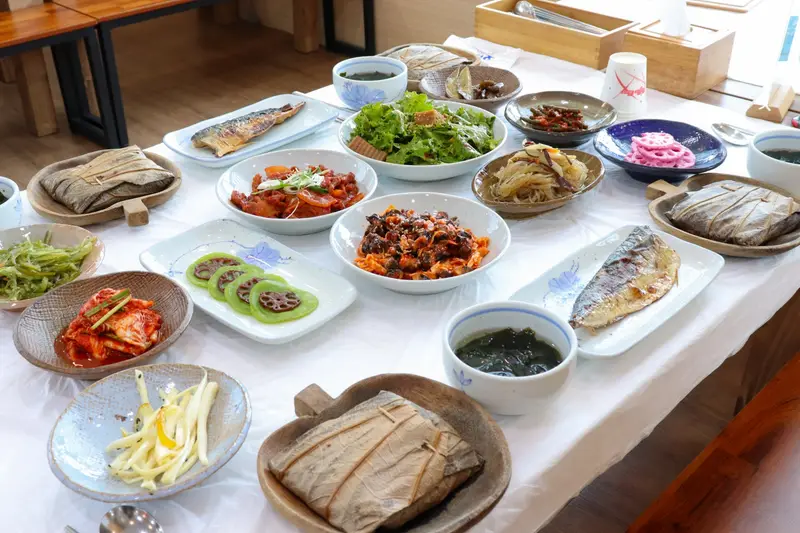
A restaurant that serves one thing, the lotus-leaf rice set, about 400 m from Gungnamji. The set must be ordered for two or more people, so it does not work for solo travelers.
- Hours
- 11:00 to 20:00 (last order 19:20); break 15:00 to 17:00 on Monday, Tuesday, Thursday and Friday, no break at weekends. Wednesday 11:00 to 15:00 only (last order 14:20). May close early when the food runs out
- Prices
- Lotus-leaf rice set 20,000 won, for two or more people (blog post, November 2026); extra tteokgalbi (grilled beef patty) 6,000 won
Foreigner access
- Korean name
- 사비향
- Booking
- Naver Booking, or walk in
Korean phone number needed: unconfirmed - English
- Menu: unconfirmed · Signs: unconfirmed · Staff: unconfirmed
There is a single set menu, so ordering is simple. - Queue app
- unconfirmed
Weekend waits (blog post, November 2026).
-
Yeonkkot Iyagi
A lotus-leaf rice restaurant about 500 m west of Gungnamji, with a white lotus set as well as the plain lotus-leaf rice set.
- Hours
- 11:00 to 21:00, break 15:00 to 17:00; last order 14:10 for lunch and around 19:30 for dinner (its Naver listing gives both 19:30 and 19:50). Closed on Mondays
- Prices
- White lotus set (baengnyeon jeongsik) 23,000 won, lotus-leaf rice set 20,000 won, stone-pot rice set 20,000 won, lotus root and kimchi dumplings 8,000 won, lotus makgeolli 20,000 won
Foreigner access
- Korean name
- 연꽃이야기
- Booking
- Walk in; no Naver Booking
- English
- Menu: unconfirmed · Signs: unconfirmed · Staff: unconfirmed
- Queue app
- unconfirmed
-
Jangwon Makguksu
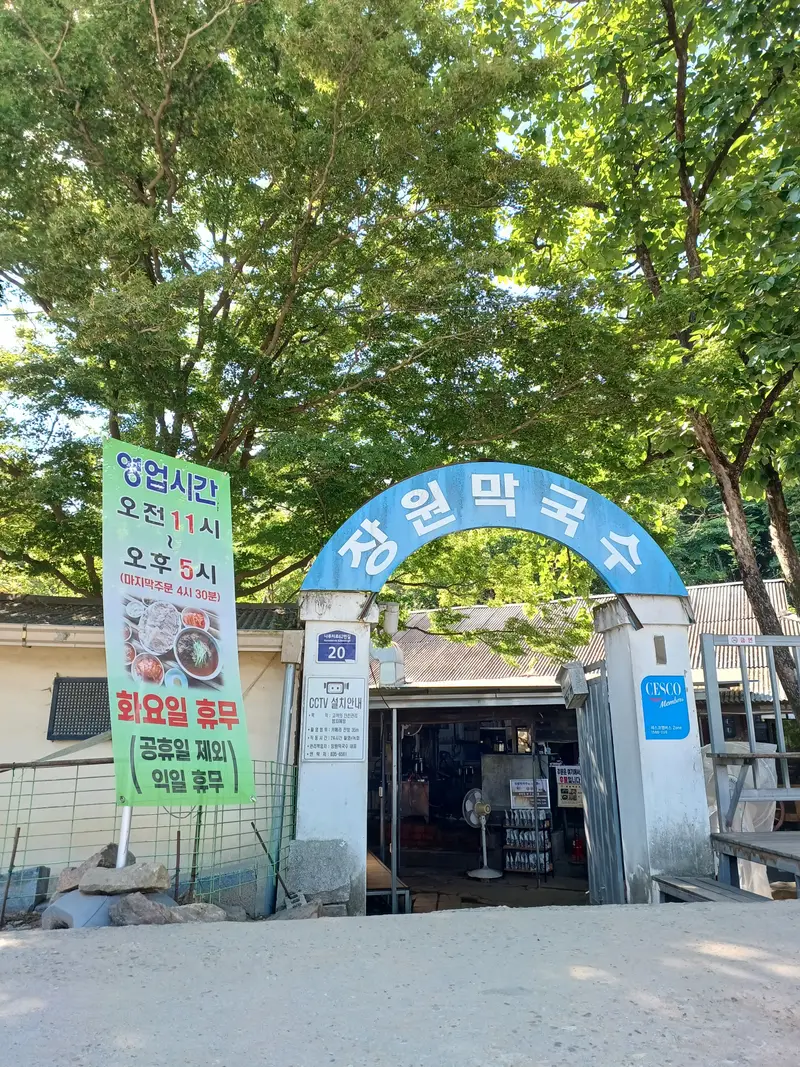
A buckwheat noodle restaurant about 140 m from the Gudeurae boat landing, so it is lunch after the boat ride down from Goransa. Two dishes on the menu; expect a line at mealtimes.
- Hours
- 11:00 to 17:00 (last order 16:30). Closed on Tuesdays; also closed on December 9, 2026
- Prices
- Buckwheat makguksu (cold noodles) 9,000 won, pyeonyuk (sliced boiled pork) 22,000 won
Foreigner access
- Korean name
- 장원막국수
- Booking
- Walk in; line at the door
- English
- Menu: unconfirmed · Signs: unconfirmed · Staff: unconfirmed
- Queue app
- unconfirmed
Lines at mealtimes.
-
Wang Gomtang
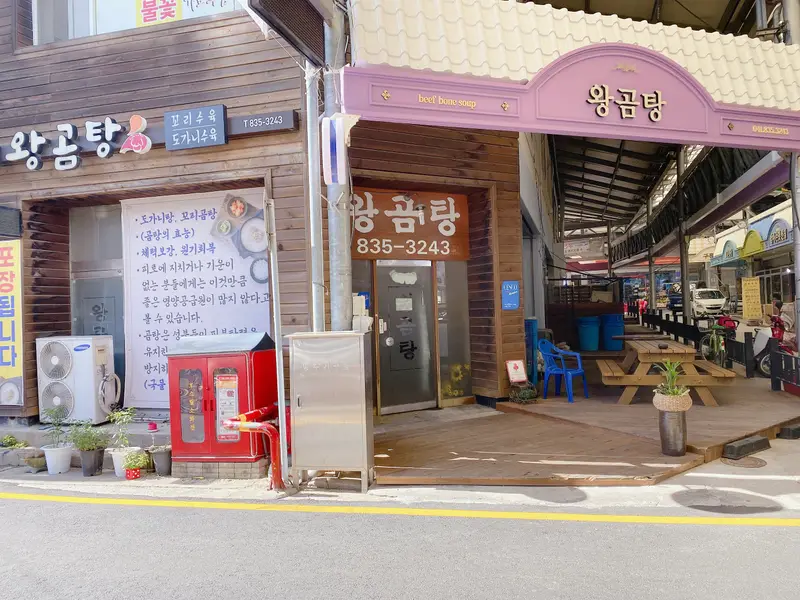
A beef bone soup restaurant about 260 m from the bus terminal, open from 10:30, so it works as an early lunch when you arrive. Closed on Sundays.
- Hours
- Monday to Saturday 10:30 to 20:00; closed on Sundays. May close early when the soup runs out
- Prices
- Gomtang (beef bone soup) 11,000 won, yangtang (tripe soup) 12,000 won, doganitang (knee cartilage soup) 15,000 won, Korean beef oxtail soup 25,000 won, suyuk (boiled beef) 29,000 won
Foreigner access
- Korean name
- 왕곰탕
- Booking
- Walk in
- English
- Menu: unconfirmed · Signs: unconfirmed · Staff: unconfirmed
-
Baekjehyang
A tea house about 500 m from Jeongnimsa, serving lotus-leaf tea, whole lotus flower tea and lotus bread; a stop between the temple site and Gungnamji.
- Hours
- 10:00 to 21:00. Closed on Mondays
- Prices
- Lotus-leaf tea 6,000 won, lotus-leaf jujube tea 7,000 won, lotus flower tea (one whole flower, for two) 20,000 won, americano 4,000 won
Foreigner access
- Korean name
- 백제향
- Booking
- Walk in
- English
- Menu: unconfirmed · Signs: unconfirmed · Staff: unconfirmed
Hotels
Experiences
Sources
- Buyeo County Culture and Tourism: opening hours of the main sights (Korean) (accessed 2026-11-13)
- Buyeo County Culture and Tourism: admission fees of the main sights (Korean) (accessed 2026-11-13)
- Buyeo County: Buyeo bus terminal timetable, as of October 1, 2026 (Korean) (accessed 2026-11-13)
- Buyeo County: city tour bus, 2026 season (Korean) (accessed 2026-11-13)
- Buyeo National Museum: visitor information (hours, closing days, renovation, volunteer guides) (Korean, updated 2026-10-01) (accessed 2026-11-13)
- Buyeo National Museum: notice on tickets for the incense burner hall and children's museum, July 28 to December 14 (Korean, 2026-07-10) (accessed 2026-11-13)
- Buyeo National Museum: time slot table attached to the same notice (slots every 20 minutes, 9:20 to 17:20) (Korean, image) (accessed 2026-11-13)
- Baekje Cultural Land: temporary information page (hours, fees, night opening, guided tours) (Korean) (accessed 2026-11-13)
- Baekje World Heritage Center: the Baekje Historic Areas listing (2015) and its eight sites (Korean) (accessed 2026-11-13)
- Buyeo Seodong Lotus Festival: official site, 2026 dates (Korean) (accessed 2026-11-13)
- Baekje Cultural Festival: official site, 2026 dates (accessed 2026-11-13)
- Korea Tourism Organization (TourAPI): Jeongnimsa Temple Site (content 126650), Busosanseong (125988), Nakhwaam (127794), Gungnamji (125984), Buyeo National Museum (130062), Baekje Cultural Land (1103949), Buyeo Naseong (250259), Baekje Cultural Festival (952988), Seodong Lotus Festival (574047) (accessed 2026-11-13)
- KOBUS (express bus reservations): Seoul Gyeongbu to and from Buyeo, departures on November 18, 2026 (accessed 2026-11-13)
- T-money intercity bus: Gongju to Buyeo, Buyeo to Gongju, Seoul Nambu to and from Buyeo, departures on November 18 and 21, 2026 (accessed 2026-11-13)
- Kakao Mobility: driving route search (source of the taxi time and fare estimates) (accessed 2026-11-13)
- Naver Place: Sabihyang (hours, menu, booking) (accessed 2026-11-13)
- Naver Place: Yeonkkot Iyagi (hours, menu) (accessed 2026-11-13)
- Naver Place: Jangwon Makguksu (hours, menu) (accessed 2026-11-13)
- Naver Place: Wang Gomtang (hours, menu) (accessed 2026-11-13)
- Naver Place: Baekjehyang (hours, menu) (accessed 2026-11-13)
- Naver Place: Gudeurae Dolssambap (hours, menu) (accessed 2026-11-13)
- Naver blog: Sabihyang lotus-leaf rice set, two-person minimum (2026-11-09) (accessed 2026-11-13)
- Naver blog: Sabihyang weekend wait and Naver Booking (2026-11-07) (accessed 2026-11-13)
- Naver blog: Buyeo on foot in a day, Gudeurae, museum, Jeongnimsa, Baekjehyang, Gungnamji (2026-11-10) (accessed 2026-11-13)
- Naver blog: Buyeo by bus, tickets to Gongju at the terminal kiosk, Wang Gomtang (2026-11-10) (accessed 2026-11-13)
- Naver blog: Gongju and Buyeo by C-Tour demand-responsive bus, fares and route (2026-11-04) (accessed 2026-11-13)