Dongseongno and the Modern History Alleys
Daegu's main shopping street next to alleys of missionary houses, churches and old tea rooms, plus Kim Kwang-seok Street
Intro
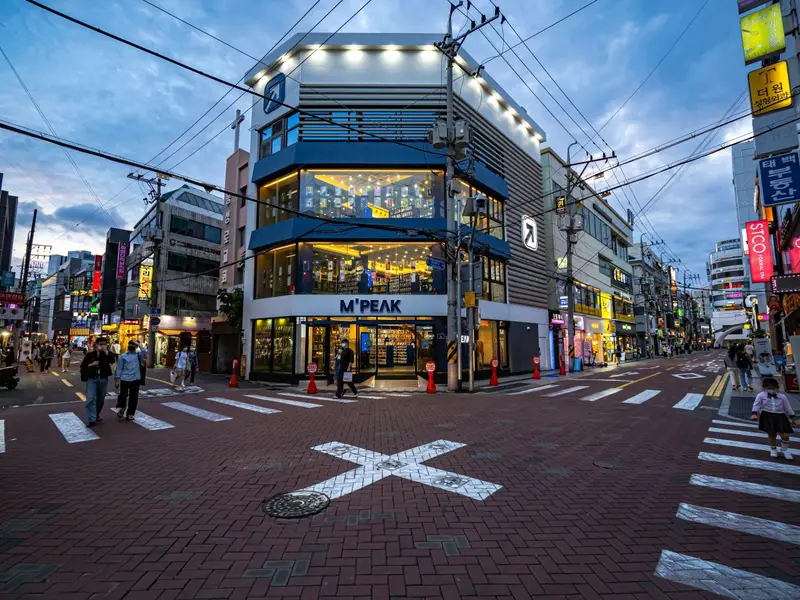
Dongseongno is Daegu’s main shopping street, and just west of it are the streets where the city’s modern history happened: houses built for American missionaries around 1910, a Gothic cathedral from the early 1900s, the stairway students took to the 1919 independence protests, a poet’s house, a herbal medicine market about 350 years old, and an alley of old family houses with a traditional tea room. The two sit side by side in Jung-gu, so you can walk the alleys in the morning and spend the afternoon and evening on Dongseongno, eating the local dishes the city lists among its ten Daegu dishes.
Kim Kwang-seok Street, a mural alley for a folk singer, is a short subway ride away.
Walking the modern history alleys
This order follows the district’s second alley course, from the hill down to the shopping streets:
- Cheongna Hill: start from exit 9 of Cheongna Hill Station (Lines 2 and 3), about 7 minutes on foot. The three red brick missionary houses stand in a garden; the grounds are open at all times.
- The 90 Steps: walk down the stone stairway, lined with flags, that Daegu students used on March 8, 1919.
- Gyesan Cathedral: the twin-spired church at the bottom of the steps. Mass is held most days, so step in quietly if a service is on. Daegu First Church is across the road.
- Yi Sang-hwa House: the poet’s house and Seo Sang-don’s house next door, a few minutes’ walk away (4 minutes from Banwoldang Station exit 18).
- The herbal medicine alley (Yangnyeongsi): the herbal medicine museum (closed Mondays) and Daegu First Church’s Gothic tower.
- Jingolmok Alley: finish with a drink at Mido Dabang, then walk 3 minutes to Jungangno Station or on to Dongseongno.
The route is about 1.6 km and takes about 2 hours with stops, according to a travel guide; a 2011 newspaper description of the course allowed 3 hours. The alleys are open at all times, but the museums and old houses keep daytime hours, roughly 9:00 or 10:00 to 17:30 or 18:00, so start in the morning. For a guided walk, ask at the Dongseongno tourist information center, which offers interpretation.
Dongseongno
The shopping streets fill the blocks between Jungangno and Banwoldang stations. The street follows the line of the east wall of the old Daegu town fortress, which was pulled down in 1907. Gyodong Market, between Daegu Station and Dongseongno, has rows of food stalls; hours vary by stall. The Hyangchon Culture Center, in a 1912 bank building, tells the story of the writers and artists who gathered in Daegu during the Korean War (1,000 won, closed Mondays).
The Dongseongno tourist information center at 435 Jungang-daero offers interpretation and luggage storage.
Kim Kwang-seok Street
This 350 m alley beside Bangcheon Market is lined with murals and sculptures of the singer Kim Kwang-seok (1964 to 1996), who lived here. It was made in 2010. Take Line 2 to Kyungpook National University Hospital Station, exit 3, about 8 minutes on foot, or Line 3 to Daebonggyo Station, exit 4. It is open at all times and free.
What to eat
Daegu’s city government lists ten local dishes. Four of them are easy to try around Dongseongno:
- Ttaro gukbap: spicy beef soup with the rice served separately. Gukil Ttaro Gukbap (11,000 won, open 5:00 to midnight) and Gyodong Ttaro Sikdang (12,000 won, open 24 hours) are both 2 to 3 minutes from Jungangno Station exit 4, so this works for breakfast or a late supper.
- Dongin-dong jjimgalbi: beef short ribs braised with lots of garlic and chili powder. Nakyoung (22,000 won per person) and Bongsan (23,000 won) face each other on a short alley about 1 km east of Dongseongno, 11 minutes from Chilseong Market Station exit 3. Both close at 21:00.
- Napjak mandu: thin, flat fried dumplings, eaten with chili flakes and soy sauce. Misungdang (4,500 won) is south-west of the center near Myeongdeok, 5 minutes from Namsan Station exit 2 on Line 3.
- Makchang: grilled or boiled pork intestine, usually an evening dish. Maksamga in Gyo-dong opens at 17:00 on weekdays and 16:00 at weekends (13,000 won a plate).
For a snack, Jungang Tteokbokki sells rice-cake tteokbokki for 5,000 won until 19:30 (closed Sundays). For coffee in an old house, Lilac Garden 1956 is near Seomun Market, which is the next stop if you have the afternoon; see Seomun Market.
The other six official dishes are mungtigi (raw beef slices), nonmegi maeuntang (spicy catfish stew), bokeo bulgogi (spicy blowfish), nureun guksu (noodles), muchimhoe (spicy raw fish salad) and yakki udon (stir-fried noodles).
Half a day or a full day
- Half a day: the alley walk in the morning, ttaro gukbap for lunch, then the shops of Dongseongno.
- A full day: add Seomun Market in the afternoon and makchang or jjimgalbi for dinner, or swap the market for Kim Kwang-seok Street.
Getting there
From Dongdaegu Station, Subway Line 1 reaches Jungangno in about 7 minutes and Banwoldang in about 9 minutes, for 1,500 won with a transit card. Cheongna Hill Station is one stop from Banwoldang on Line 2. For trains from Seoul, see How to Get from Seoul to Daegu.
Get There
-
Jungangno StationLine 1
- Korean
- 중앙로역
- Exit
- Exit 1 (Jingolmok), Exit 4 (ttaro gukbap restaurants)
- Walk
- 3 min
4 stops from Dongdaegu Station
-
Banwoldang StationLines 1 and 2
- Korean
- 반월당역
- Exit
- Exit 18 (Yi Sang-hwa House), Exit 15 (Mido Dabang)
- Walk
- 4 min
-
Cheongna Hill StationLines 2 and 3
- Korean
- 청라언덕역
- Exit
- Exit 9
- Walk
- 7 min
For Cheongna Hill, the start of the alley walk
-
Kyungpook National University Hospital StationLine 2
- Korean
- 경대병원역
- Exit
- Exit 3
- Walk
- 8 min
For Kim Kwang-seok Street
Hours & Fees
- Dongseongno tourist information center
- 435 Jungang-daero, phone +82-53-252-2696. Interpretation service and luggage storage; hours are not listed
Places in Dongseongno and the Modern History Alleys
-
Dongseongno
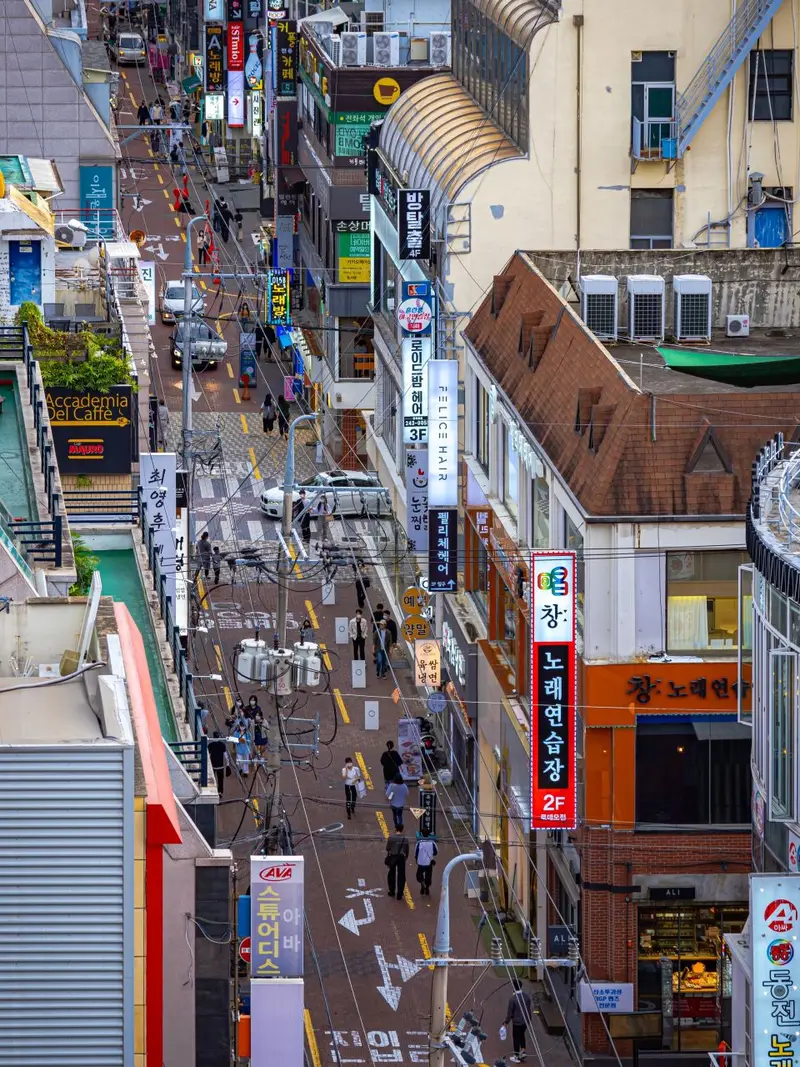
Daegu's biggest shopping and eating street, laid along the line of the east wall of the old Daegu town fortress, which was pulled down in 1907. The city tourism site counts about 900 m from the Daegu Station crossroads to the Dongseongno tourist information center; the wider area runs south to Banwoldang and west to Jungang-daero.
- Hours
- Open at all times; shop hours vary
- Admission
- Free
Foreigner access
- Korean name
- 동성로
Foreigner access details not yet confirmed
-
Cheongna Hill
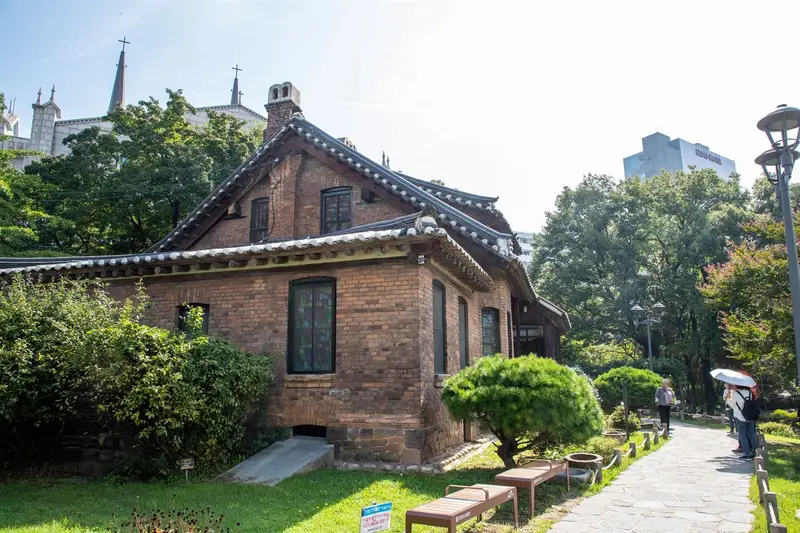
An ivy-covered hill with three red brick houses built for American missionaries around 1910 (the Switzer, Chamness and Blair houses), the usual start of the modern history alley walk. NewJeans filmed part of the "Ditto" music video here.
- Hours
- Open at all times, every day
- Admission
- Free (no fee listed for the grounds)
- Inside the houses
- The Blair house is closed inside for now; whether the other two open inside is unconfirmed
Foreigner access
- Korean name
- 동산 청라언덕
Foreigner access details not yet confirmed
-
March 1st Independence Movement Road (90 Steps)
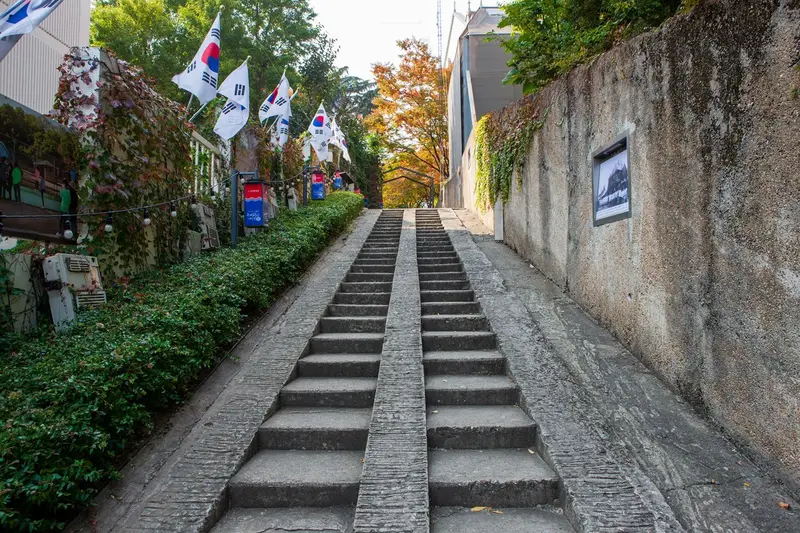
A stone stairway of about 90 steps down from Cheongna Hill toward Gyesan Cathedral, the path Daegu students took to join the independence protests of March 8, 1919.
- Hours
- Open at all times, every day
- Admission
- Free (no fee listed)
Foreigner access
Google Maps for March 1st Independence Movement Road (90 Steps) Naver Map: unconfirmed- Korean name
- 3·1만세운동길(90계단)
Foreigner access details not yet confirmed
-
Gyesan Cathedral
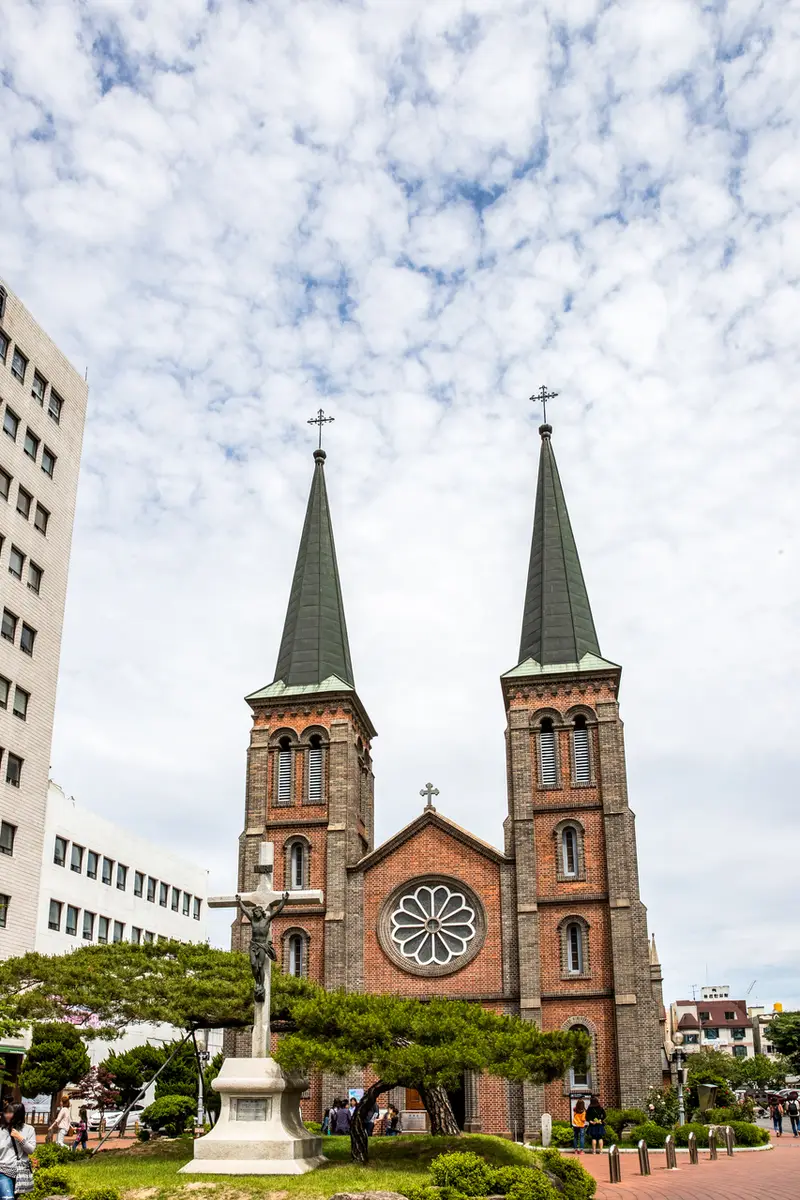
The first Western-style Gothic church in the Gyeongsang region, built as a parish in 1898 and rebuilt after a fire in 1901 to a design by Father Poisnel, who also built Myeongdong Cathedral in Seoul. Its stained glass came from France. Daegu First Church faces it across the road.
- Sunday mass
- 6:30, 8:30, 9:30, 11:00, 16:00, 17:30, 20:00 and 21:30
- Weekday mass
- Monday 6:30; Tuesday to Friday 6:30, 11:30 and 19:30; Saturday 6:30, 16:00 (children's mass) and 19:30 (youth mass)
- Visiting hours
- unconfirmed
- Admission
- unconfirmed
Foreigner access
Google Maps for Gyesan Cathedral Naver Map: unconfirmed- Korean name
- 계산성당(대구 계산동성당)
Foreigner access details not yet confirmed
-
Yi Sang-hwa House
The home of Yi Sang-hwa, the anti-colonial poet of "Does Spring Come to Stolen Fields?". The house of Seo Sang-don, a leader of the National Debt Repayment Movement, is next door.
- Hours
- 10:00 to 17:30, every day (Korea Tourism Organization). The Naver listing gives an opening time of 9:00 and a closing time of 17:30 or 18:00
- Admission
- unconfirmed
Foreigner access
- Korean name
- 이상화 고택
Foreigner access details not yet confirmed
-
Daegu First Church (Christian History Museum)
The first church in the Daegu and Gyeongbuk area, founded in 1893, in a Gothic building with a 33 m bell tower in the middle of the herbal medicine alley. A Christian history museum is inside.
- Museum hours
- 10:00 to 17:00, closed Sundays and Mondays
- Admission
- unconfirmed
Foreigner access
Google Maps for Daegu First Church (Christian History Museum) Naver Map: unconfirmed- Korean name
- 대구제일교회(대구기독교역사관)
Foreigner access details not yet confirmed
-
Daegu Yangnyeongsi Herbal Medicine Museum
A museum on the 350-year history of Daegu's herbal medicine market, with displays of medicinal herbs and hands-on foot baths and soap making.
- Hours
- 9:00 to 18:00 (last entry 17:30). Closed Mondays (open when Monday is a public holiday), January 1, and Seollal and Chuseok days
- Admission
- unconfirmed
Foreigner access
Google Maps for Daegu Yangnyeongsi Herbal Medicine Museum Naver Map: unconfirmed- Korean name
- 대구약령시 한의약박물관
Foreigner access details not yet confirmed
-
Jingolmok Alley
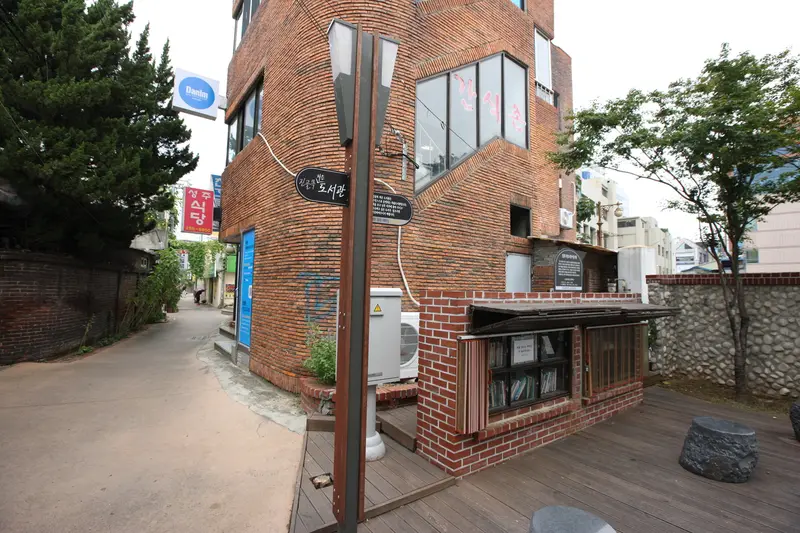
An alley of old family houses whose name means "long alley" in the local dialect, once home to wealthy Daegu families, near the end of the alley walk. Mido Dabang is here.
- Hours
- Open at all times, every day
- Admission
- Free
Foreigner access
- Korean name
- 진골목
Foreigner access details not yet confirmed
-
Hyangchon Culture Center
A 1912 bank building that recreates the arts scene of Hyangchon-dong when writers and artists took refuge in Daegu during the Korean War. In the basement is Nokhyang, the oldest classical music listening room in Korea.
- Hours
- April to October 9:00 to 19:00, November to March 9:00 to 18:00, last entry 30 minutes before closing. Closed Mondays (the next day when Monday is a public holiday) and January 1
- Admission
- 1,000 won adults, 500 won seniors and teenagers, free for children aged 7 and under
Foreigner access
Google Maps for Hyangchon Culture Center Naver Map: unconfirmed- Korean name
- 향촌문화관
- Booking
- Tickets at the door
Korean phone number needed: No - English
- Signs: unconfirmed · Staff: unconfirmed
-
Kim Kwang-seok Street
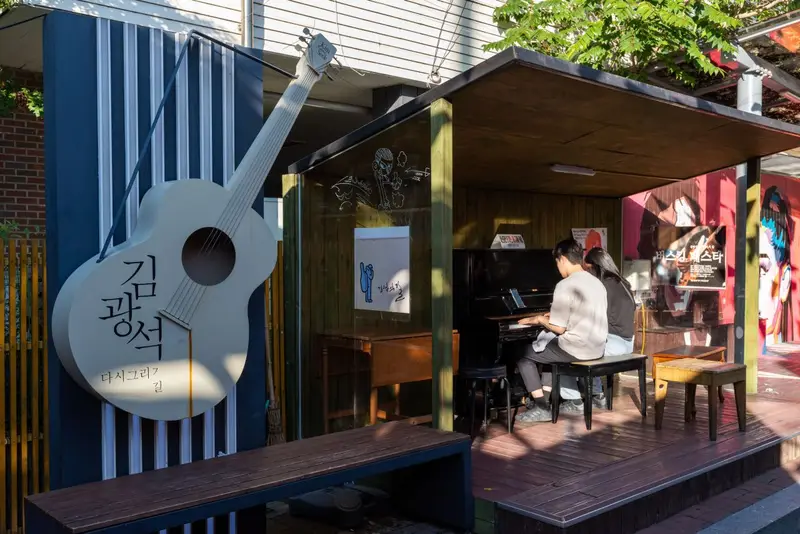
A 350 m alley of murals and sculptures beside Bangcheon Market, made in 2010 for the folk singer Kim Kwang-seok (1964 to 1996), who lived here. It is away from the other sights, so treat it as a separate stop by subway.
- Hours
- Open at all times, every day
- Admission
- Free
Foreigner access
- Korean name
- 김광석 다시그리기길
Foreigner access details not yet confirmed
-
Gukil Ttaro Gukbap
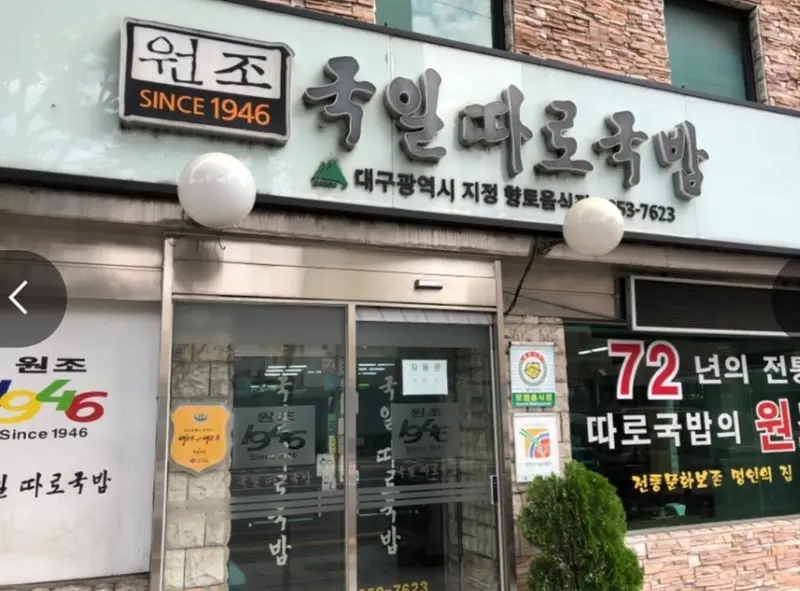
A ttaro gukbap restaurant whose sign says it has served since 1946: a spicy beef soup with the rice brought separately, one of the city's official ten Daegu dishes. Open from 5:00 to midnight, 3 minutes from Jungangno Station exit 4.
- Hours
- 5:00 to 24:00, every day
- Prices
- Ttaro gukbap 11,000 won, special ttaro gukbap with extra beef 12,000 won, ttaro guksu (with noodles) 11,000 won
Foreigner access
- Korean name
- 국일따로국밥
Foreigner access details not yet confirmed
-
Gyodong Ttaro Sikdang
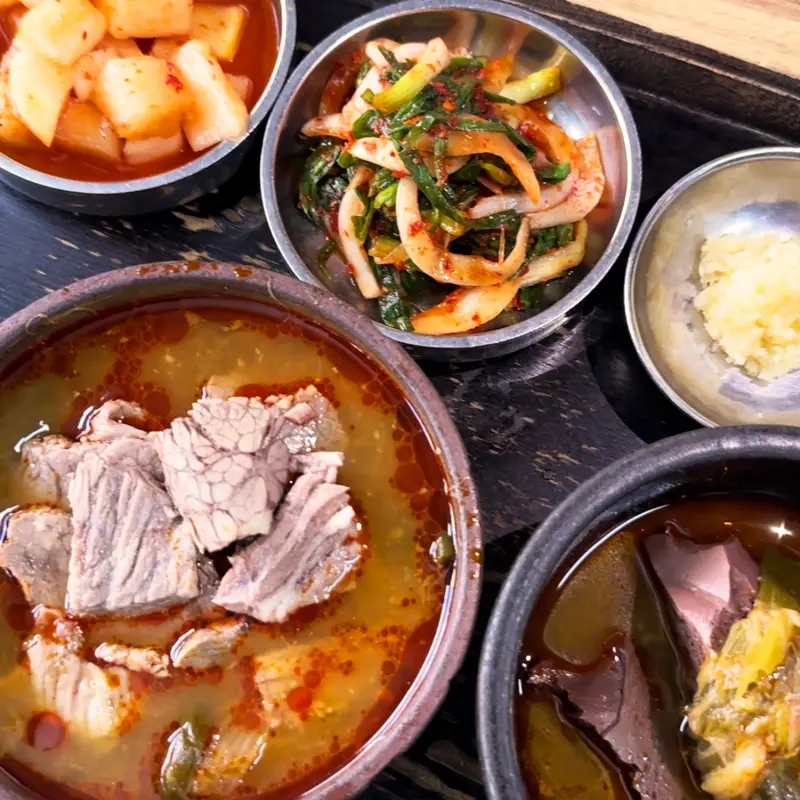
The other well-known ttaro gukbap restaurant near Jungangno, open 24 hours, 2 minutes from exit 4.
- Hours
- Open 24 hours
- Prices
- Ttaro gukbap 12,000 won, seonji suljuk (ox blood soup) 14,000 won, boiled beef head meat 29,000 won
Foreigner access
- Korean name
- 교동따로식당
Foreigner access details not yet confirmed
-
Nakyoung Jjimgalbi
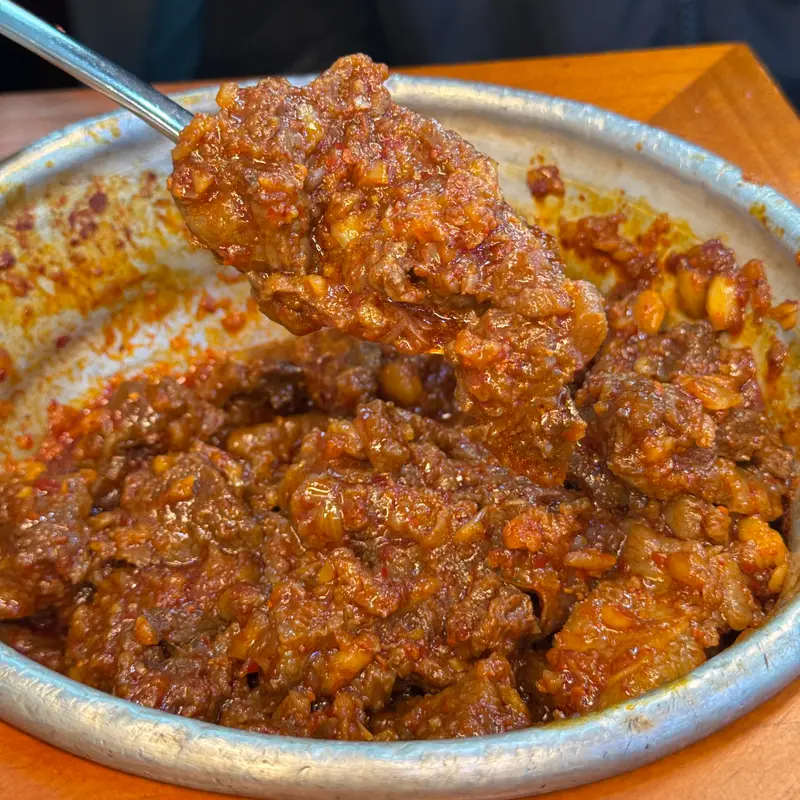
The best-known restaurant on Dongin-dong's jjimgalbi alley, about 1 km east of Dongseongno: beef short ribs braised with garlic and chili powder, served in a thin aluminum pot. Prices are per person.
- Hours
- 10:00 to 21:00, every day (last order 20:30)
- Prices
- Jjimgalbi with imported beef 22,000 won, with Korean hanwoo beef 30,000 won, beef stew 9,000 won
Foreigner access
- Korean name
- 낙영찜갈비 본점
Foreigner access details not yet confirmed
-
Bongsan Jjimgalbi
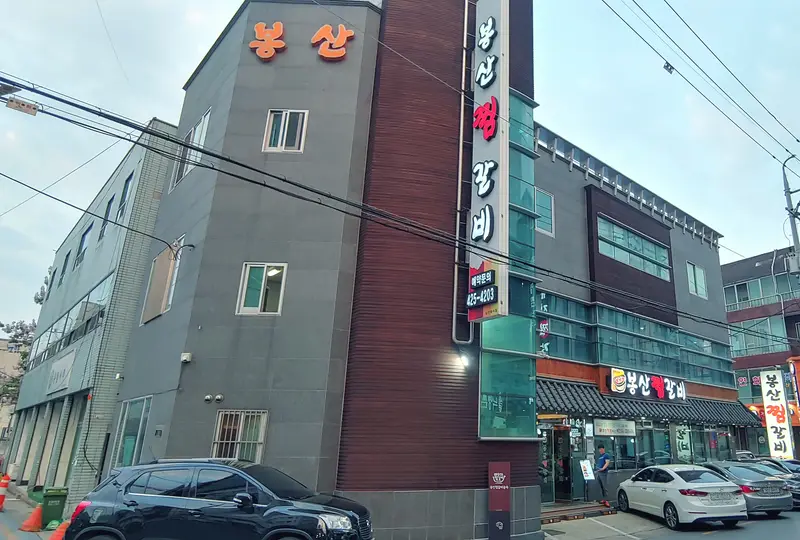
Across the alley from Nakyoung, the other main jjimgalbi restaurant in Dongin-dong. Prices are per person.
- Hours
- 9:00 to 21:00, every day (last order 20:30)
- Prices
- Jjimgalbi with Australian beef 23,000 won, with Korean hanwoo beef 32,000 won, rib meat stew 8,000 won, rice 1,000 won
Foreigner access
- Korean name
- 봉산찜갈비
Foreigner access details not yet confirmed
-
Misungdang Napjak Mandu
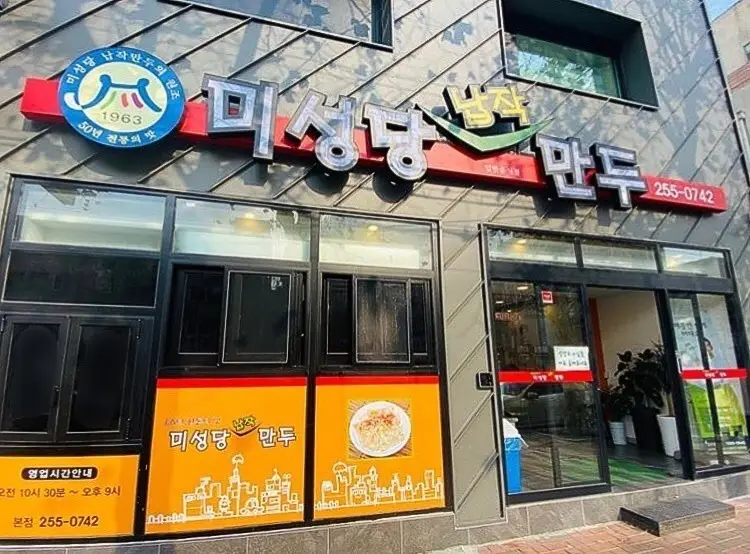
The main shop for napjak mandu, one of the ten Daegu dishes: thin, flat fried dumplings eaten with chili flakes and soy sauce, often with jjolmyeon chewy noodles. It is south-west of the center near Myeongdeok, a 5-minute walk from Namsan Station exit 2 on Line 3.
- Hours
- Monday to Friday 10:30 to 21:00, Saturday and Sunday 10:30 to 20:00
- Prices
- Napjak mandu 4,500 won, jjolmyeon 6,000 won, udon 5,000 won, other dumplings 6,000 won
Foreigner access
- Korean name
- 미성당납작만두 본점
Foreigner access details not yet confirmed
-
Maksamga
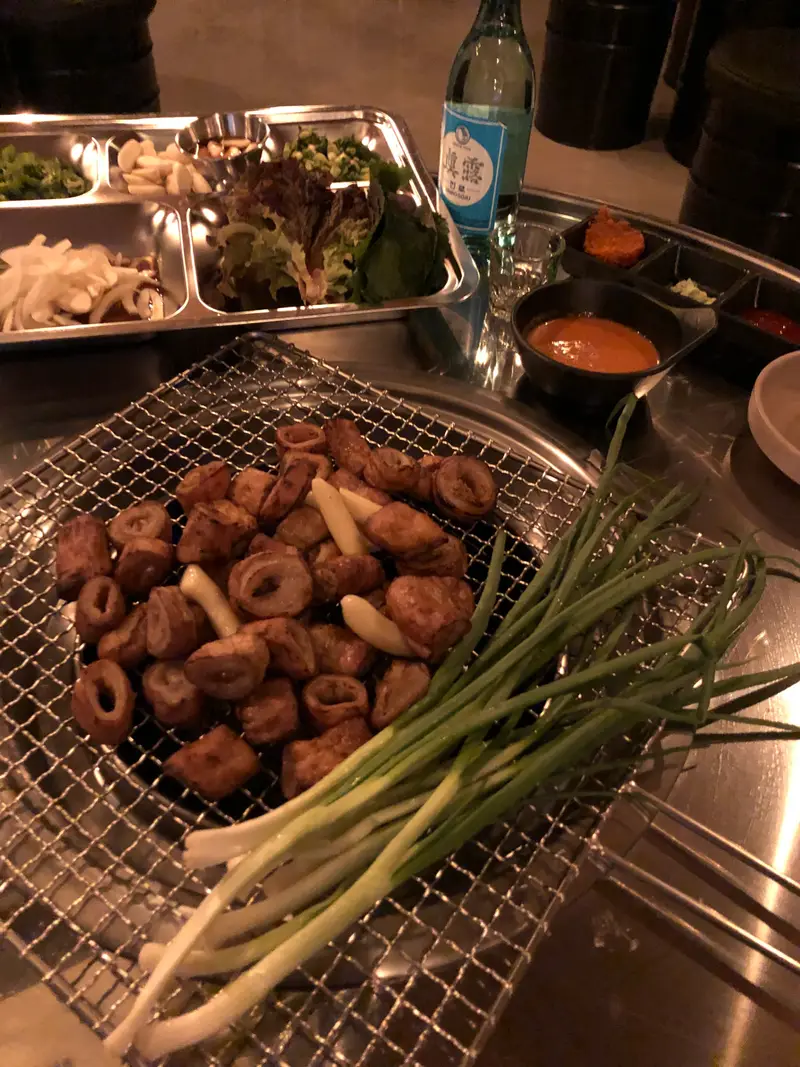
An evening makchang (pork intestine) restaurant in Gyo-dong, 8 minutes from Jungangno Station exit 3. Makchang is one of the ten Daegu dishes.
- Hours
- Monday to Friday 17:00 to 24:00, Saturday and Sunday 16:00 to 24:00 (last order 23:00)
- Prices
- Boiled makchang 13,000 won, makchang sundae 13,000 won, grilled pork tail 13,000 won, spicy squid 13,000 won, kimchi cold noodles 6,500 won
Foreigner access
- Korean name
- 막삼가
Foreigner access details not yet confirmed
-
Jungang Tteokbokki
A long-running snack shop in a Dongseongno side street, known for rice-cake tteokbokki. It closes early when it sells out.
- Hours
- 11:30 to 19:30, closed Sundays
- Prices
- Tteokbokki 5,000 won, dumplings 5,000 won, sundae 5,000 won
Foreigner access
- Korean name
- 중앙떡볶이
Foreigner access details not yet confirmed
-
Mido Dabang
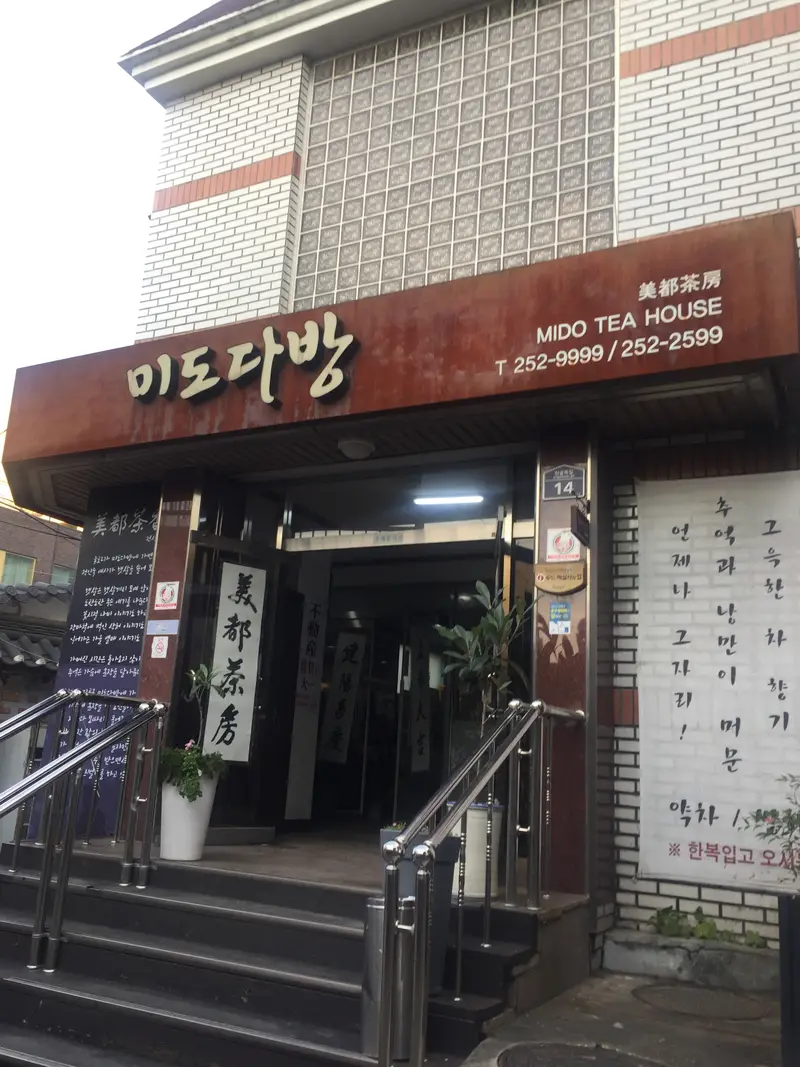
An old-style dabang (tea room) in Jingolmok Alley, on the walk between the herbal medicine alley and Dongseongno.
- Hours
- 9:30 to 22:00, every day
- Prices
- unconfirmed
Foreigner access
- Korean name
- 미도다방
Foreigner access details not yet confirmed
-
Lilac Garden 1956
A cafe in an old house and garden off Seoseong-ro, down an alley signposted as the birthplace of the poet Yi Sang-hwa (a different site from Yi Sang-hwa House). It is a 10-minute walk from Seomun Market Station exit 1.
- Hours
- 11:00 to 20:00, closed Mondays
- Prices
- Americano 4,000 won, cafe latte 5,000 won, iced einspänner 6,500 won, yuja tea or omija tea 5,500 won
Foreigner access
- Korean name
- 라일락뜨락1956
Foreigner access details not yet confirmed
Hotels
Experiences
Sources
- Korea Tourism Organization (VisitKorea): Dongseongno, Dongsan Cheongna Hill, the Blair, Switzer and Chamness missionary houses, March 1st Movement Road, Gyesan Cathedral, Yi Sang-hwa House, Daegu Christian History Museum, Yangnyeongsi Herbal Medicine Museum, Jingolmok, Kim Kwang-seok Street, Hyangchon Culture Center, Daegu modern alleys and Gyodong Market entries (Korean; search by name) (accessed 2026-11-13)
- Daegu Tourism: the ten Daegu dishes (Korean) (accessed 2026-11-13)
- Daegu Tourism: Dongseongno (Korean) (accessed 2026-11-13)
- Daegu Tourism: tourist information centers (Korean) (accessed 2026-11-13)
- Daegu Transportation Corporation: station names and distances (Korean) (accessed 2026-11-13)
- Maeil Shinmun: the modern alley course (May 19, 2011) (Korean) (accessed 2026-11-13)
- Say Hi Korean: Daegu modern alley course 2 (accessed 2026-11-13)
- Naver Place: Dongseongno, Cheongna Hill, Yi Sang-hwa House, Jingolmok, Kim Kwang-seok Street (hours and nearest stations) (Korean) (accessed 2026-11-13)
- Naver Place: Gukil Ttaro Gukbap (hours and menu) (Korean) (accessed 2026-11-13)
- Naver Place: Gyodong Ttaro Sikdang (Korean) (accessed 2026-11-13)
- Naver Place: Nakyoung Jjimgalbi (Korean) (accessed 2026-11-13)
- Naver Place: Bongsan Jjimgalbi (Korean) (accessed 2026-11-13)
- Naver Place: Misungdang Napjak Mandu (Korean) (accessed 2026-11-13)
- Naver Place: Maksamga (Korean) (accessed 2026-11-13)
- Naver Place: Jungang Tteokbokki (Korean) (accessed 2026-11-13)
- Naver Place: Mido Dabang (Korean) (accessed 2026-11-13)
- Naver Place: Lilac Garden 1956 (Korean) (accessed 2026-11-13)